CLICK IMAGE: Tanzil Website


OUR MISSION:
UNCOVERING the original message of the Arabic Qur'an by using Lexicons compiled more than 1,000 years ago.

ISOLATING Fact from Fiction.


RECOVERING Hope and regaining the perspective where Humanity is one, God's Message is one, and our Future CAN become one we all look forward to!


© 2010 IQRATHECHALLENGE: INTELLECTUAL PROPERTY PROTECTED BY D.M.C.A. ALL RIGHTS RESERVED.

© 2010 IQRATHECHALLENGE: INTELLECTUAL PROPERTY PROTECTED BY D.M.C.A. ALL RIGHTS RESERVED.
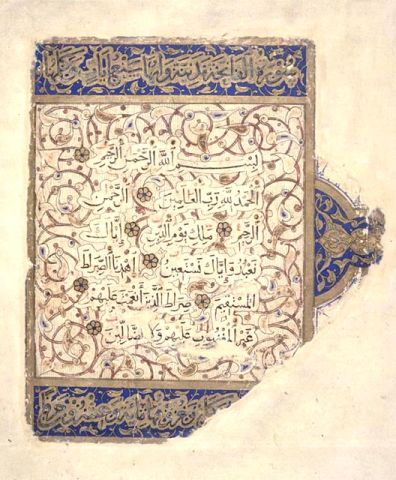
Image: 14th C. Qur'an, Mamluk origin, Library of Congress; Rights obtained.

A BREAKTHROUGH project which helps understand the Qur'an AS REVEALED -not just 'as explained.'

---------------------------------------------------------------------------

Wednesday, February 24, 2010

Day 47; HQ4:91-101, pages 93+94


Welcome Friends:  Ahlan wa sahlan!
In our last reading we were introduced to the contrast of ‘amn’ - أمنversus ‘khawf’ خوف – the concepts of ‘security, or feeling of safety’ versus ‘fear, or sense of alarm.’  Knowing that these two are ‘opposing concepts’ will help us better understand today’s verses. 
Let us keep in mind that our topic continues with Hypocrites attempting to play both sides!
COMMENTS:
1.  Verses 91-94 should be read together, with special attention to the root verb ‘amana’ – أَمَنَ-* because we have unfortunately narrowed down the connotation of this word in our minds, to the result that, in Muslim understanding, the verb applies to belief only.
Verse 91 mentions the word “ya’man” يأمن and talks of those who wish to keep themselves ‘safe’ from the Believers as well as from those who fight them.
Verses 92-93 discuss the issue of mistakenly causing the death of a “mu’min” (same root verb) and the result of such an act if it is done deliberately. 
Verse 94 tells the Believers not to answer a greeting of Peace by accusing that person of not being a ‘Mu’min.

In verses that forbid us from harming a “Mu’min,” most of us tend to understand this word to mean ‘a Muslim,’ a ‘Believer’ who is of ‘our’ faith.  But is the Qur’anic intent limited to that narrow meaning? (This, despite our knowledge that every life is sacred, and that someone who believes in God would not harm any of His creatures, and would resort to the legal system for retribution, and when fighting would abide by the rules of a just warfare).
         
This issue should be a HIGH PRIORITY in Muslim Dialogue today, and the resulting research would form a powerful deterrent to all indiscriminate acts that take place ‘in the name of God,’ especially among civilian populations.

We do know, generally speaking, that a Mu’min translates to a ‘Believer,’ but in verses such as these, what exactly does a “Mu’min” translate to?  
Linguistic research and Qur’anic (context) show us that a “mu’min” could also be a person who trusts us, feels no fear of us, believes in our sincerity.  This is clear in the following verse which uses the term “mu’min lana” (مؤمن لنا):

“And at nightfall they came to their father, weeping, (16) [and] said: "O our father! Behold, we went off racing with one another, and left Joseph behind with our things; and thereupon the wolf devoured him! But [we know that] you would not trust us even though we speak the truth" - (12:17) وَمَا أَنتَ بِمُؤْمِنٍ لَّنَا وَلَوْ كُنَّا صَادِقِينَ

Before that, in HQ12:11 the brothers had asked their father to trust them(...ما لك لا تأمننا على يوسف...):

"O our father! Wherefore will you not trust us with Joseph, seeing that we are indeed his well-wishers?

Back to our verses:  We are often entrusted by someone who does not share our faith.  Do we uphold such a trust, or betray it?  We know the answer to that:  In fact, the Trusting person’s belief has nothing to do with anything, since, as always, we maintain people’s trust (HQ23:8; 70:32).  Each of us is a ‘Trustee,’ an ‘Ameen,’ which if you remember, was Muhammad’s nickname –The Ameen (الأمين) - throughout his life, long before he became a Messenger of God at 40, peace upon him.
Is it conceivable that ANY moral person -anywhere on earth- would betray trust? (See HQ2:283; 3:75 for similar connotation.) 
Such an act can never be justified, and societies throughout history have considered this immoral, and have penalized such treachery.
This is why it is indeed an act of heinous MURDER to take the life of unwary persons no matter what killing apparatus is used (such victims would not be prepared for the minimum defensive measures of fight or flight).  Killing in ‘cold-blood’ has no justification, yet what is even worse than that, is killing someone who trusts another NOT to.  As the lexicon elucidates, the word ‘amaanah’ أمانة trustworthiness is opposite of ‘khiyaanah’ خيانة treason.  A person might be trusted because of a uniform, being a fellow citizen, a fellow traveler, a neighbor, or just because he first approached others in peace.  No need to elaborate any further: This should work both ways, to the benefit of unwary populations at all times.     

2.  Verse 95 tells us that Believers are NOT of one level- some are passive while others are active, striving hard in their wealth and in themselves- so how can they be deemed equal? 
Here we find the word ‘daraja,’ which we usually translate as ‘degree’ or ‘grade,’ but it denotes motion in Arabic, as in ‘to step’ or proceed forward or upward*.  This helps us better understand HQ2:228, where the ‘darajah’ which the  ‘men/active persons’ or ‘rijaal’ have, is relevant to divorced females. (Doesn’t it denote higher maneuverability in ‘rijaal,’ and therefore a higher responsibility?  To think it denotes the ‘higher worth’ of one gender over another makes no sense.)
Anyway, here the term ‘darajah’ is much clearer, seen only in terms of action versus inaction and passivity.
Muhammad Asad’s note 122 explains  (جهد)‘striving hard’ from the root verb ‘jahada’- he also explains.(مجاهد- جهاد)
Verse 96 tells us that those who exert a higher effort deserve higher rewards, which is only just.

3.  Fast forward, and  we are given a peek into the end of our lives on earth, when the angels of Death ask those who have ‘wronged themselves’ as to what state they were in… and they offer the lame excuse that they were ‘weak, downtrodden’ on earth.  The angels then ask them a valid question, “Was God’s earth not spacious enough for you to move away in its expanse (from those whom you claim were holding you back)?”  Their inaction had stunted their growth in life, and lost them the chance to avail themselves of its bounties.  Verses 97-100 indeed show us the benefit of travel! 

4.  Following the same line of thought related to traveling God’s wide earth, we arrive at the verse related to reducing hardship while traveling, this time with regard to the prayer itself (in Feb. 18th posting we discussed ‘Tayammum’ or ‘dry ablution,’ also granted to travelers).  With ‘prayer shortening’ which we call ‘qasr,’ all units of four are shortened to two.  Although not mentioned here, in practice there is more which we have received through the Messenger’s direct example.  Muhammad Asad tells us about this in his note 127, while Yusuf Ali elaborates in his note 617.  

5.  This is a clear example of a ritual that has gone forward, without need for books or learning, passed down through families generation after generation.  This offers us one example of what we spoke about earlier, namely the difference between Muhammad’s being ‘Prophet’ and ‘Messenger,’ peace upon him.  In common matters of his everyday life, the Qur’an called Muhammad ‘Prophet,’ and even his companions were known to give him their own, often conflicting opinions.  On the other hand, in matters which relate directly to the Message (such as Prayer), those who believe in the Message he brought should also acknowledge him as the Messenger from whom they learn and emulate. It is in this capacity that God commands those of Faith, or Believers, to obey him, as we noted in earlier posts.  

Enough said!
Our next Reading is from HQ4:102-113.

Peace unto all!
أمن:
الراغب الأصفهاني:"أصل الأمن طمأنينة النفس وزوال الخوف… و"آمن" إنما يقال على وجهين: أحدهما متعديا بنفسه، يقال "آمنته": أي جعلت له الأمن، ومنه قيل لله مؤمن، والثاني: غير متعد، ومعناه صار ذا أمن…والإيمان هو التصديق الذي معه أمن."
لسان العرب: الأَمْنُ: ضدُّ الخوف. والأَمانةُ: ضدُّ الخِيانة.
معجم المقاييس: (أمن) أصلان متقاربان: أحدهما الأمانة التي هي ضدّ الخيانة، ومعناها سُكون القلب، والآخر التصديق. والمعنيان كما قلنا متدانيان. قال الخليل: الأَمَنَةُ مِن الأمْن. والأمان إعطاء الأَمَنَة. والأمانة ضدُّ الخيانة.

درج:
 معجم المقاييس: يدلُّ على مُضِيِّ الشّيءِ والمُضيِّ في الشّيء. من ذلك قولُهم دَرَجَ الشّيءُ، إذا مَضَى لسبيله. ورجَع فُلانٌ أدراجَه، إذا رَجع في الطّريق الذي جاء منه. ودَرَج الصَّبيُّ، إذا مَشَى مِشْيته.
لسان العرب: دَرَجُ البناءِ ودُرَّجُه، بالتثقيل: مَراتِبُ بعضها فوق بعض. والدَّرَجَةُ واحدةُ الدَّرَجات، وهي الطبقات من المراتب. والدَّرَجَةُ: المنزلة، والجمع دَرَجٌ. ودَرَجاتُ الجنة: منازلُ أَرفعُ من مَنازِلَ. والدَّرَجانُ: مِشْيَةُ الشيخ والصبي. ويقال للصبي إِذا دَبَّ وأَخذ في الحركة: دَرَجَ. ودَرَج الشيخ والصبي يَدْرُجُ دَرْجاً ودَرَجاناً ودَرِيجاً، فهو دارج.

Tuesday, February 23, 2010

Day 46; HQ4:80-90, pages 91+92

Welcome Friends:  Ahlan wa sahlan!
COMMENTS:
1.  Although Verse 80 may seem like another call to support and obey the Messenger, it is much more than that. This verse is a statement, a warning, and a solace.
·   It is a general statement of fact, that any who obey and support the Messenger of God will be doing so as part of the obedience they owe God, and also that they are free to turn away from him completely- if they so choose. 
·   It holds a grave warning to ALL those interacting with the Messenger, that it is God Himself they will be answering to in their hidden intentions and decisions, as well as in their outward actions. 
·   It is a Solace to the Messenger Muhammad, peace upon him:
People obeying the Messenger would be obeying God, but whatever they choose is their own responsibility, for you are not their keeper.

How troubling it must have been for the Messenger of God, and indeed any of His Messengers, to find some people simply turning their backs on God’s Message!  But the Qur’an teaches us that this is only part of the amazing diversity that is Humanity. 
Readers who remember our posting of Feb 4th will note that here too, obedience is owed Muhammad in his capacity as God’s Messenger (since the title ‘Messenger’ relates to the Message itself while the title ‘Prophet’ relates to the normal everyday issues of his life, peace upon him.  See Feb 4th for details).
Verse 81 continues in its discussion of Hypocrites; here their lips voice the words of obedience while they hide their true sentiments and, furthermore, devise corruptive strategies by night (Asad’s note 96 explains the word ‘baata’  -"بات") BUT God is compiling ALL they devise and attempt to hide "يكتب ما يبيتون-.  (Another warning for any who listen!)
Let them be, rely on God and He will suffice.

2.  Verse 82 poses a question and presents a statement of fact.  WE should be fully aware of the significance of the word ‘tadabbara’ تدبّر *, which means to ‘follow through to the end result,’ realizing the consequences and full implications of something.

Do they not then ‘recognize the full implications’ of the Qur’an?  For had it been from any (source) other than God they would have found in it much discrepancy.

In HQ47:24 we find the same verb:
Do they not then ‘recognize the full implications’ of the Qur’an?  Or are, upon certain hearts/minds, their locks (clamping them shut)?


3.  Verse 83 is about the actions of hypocrites who spread false rumor.  People should verify reports that are vital to a community’s well-being by asking responsible persons.  Here we are introduced to the contrast of ‘amn’ - أمنversus ‘khawf’ خوف – the opposing concepts of ‘security, or feeling of safety’ and ‘fear, or sense of alarm.’  Our realization that these two are ‘opposites’ will help us understand other verses (Tanzil: امن خوف –Do not put the ‘hamza’ (ء) on the ‘alef’ (أ) for more results). 
In verse 84, the encouragement to ‘Fight then in God’s cause; you are only responsible for yourself…and inspire/rouse the Belivers’ is not an ‘incitement’ to war, as explained by Asad’s notes 101-102.   The final part of the verse makes it quite clear, that they are fighting to ‘curb the Deniers might’ (Asad); to ‘restrain the Unbelievers’ fury’ (Ali).

4.  Verse 85 makes us ‘shareholders’ in any deeds we facilitate, whether good or bad!  M. Asad:
“Whoever rallies to a good cause shall have a share in its blessings; and whoever rallies to an evil cause shall be answerable for his part in it: for, indeed, God watches over everything.”

 Yusuf Ali considers the person a ‘partner’ in the first and a sharer of ‘burden’ in the second.

5.  Verse 86 is oft-quoted to show a Believer’s etiquette regarding greetings of Peace/.  We should always return in kind, or better than what we are offered.  The final part of the verse is one we should pay close attention to: “….indeed God Is of everything, One Who Holds to Account   حسيبا!  According to Muhammad Asad:
“Lit., "greet with better than it, or return it". In the above context, this obviously refers to an offer of peace by people with whom the believers are at war as well as to individual persons who, while possibly belonging to the enemy, have, to all outward appearances, peaceful intentions. In accordance with the injunctions, "if they incline to peace, incline thou to it as well" (8:61), and "if they desist (from fighting), then all hostility shall cease" (2:193), the believers are obliged to make peace with an enemy who makes it clear that he wants to come to an equitable understanding; similarly, they must show every consideration to individual persons from among the enemies who do not actively participate in the hostilities (see also verse 94 of this surah).(Quran Ref: 4:86)”

6.  Verse 87: “Allah, no god but He” is an affirmation we are already familiar with (HQ2:255; 3:2).
Copy-paste "الله لا إله إلا هو" (with quotes) if you wish to read them all in Tanzil (click topmost image). 
Read Posting of Jan 2nd:  “Allah is NOT an uncommon word for God.”

The latter part of verse 87 asks:  “…and who is more truthful of ‘Hadeeth’ than God?
Although we mostly relate the word ‘Hadeeth’ to Prophet Muhammad’s Sayings, peace upon him, the word means something ‘that was not there before, *’ and is the opposite of ‘old’ or قديم ‘qadeem.’  It also means something that is being announced in real time "خبر" In this context it refers to the Qur’an as being the latest communication from God.  In that context we can take the Prophet’s Hadeeth to be his communication.
See the verses which mention the Qur’an as the ‘best’ of Hadeeth (HQ39:23) أحسن الحديث, or ‘this Hadeeth هذا الحديث (HQ18:6; 53:59; 56:81; 68:44).
  
7.  Verses 88-89-90 continue to discuss the Hypocrites: Beginning with, the Believers’ futile hopes that such persons would  ultimately join their ranks, to the fact that such persons’ aim is to make the Believers deny God and His Messenger (just as they themselves have done), to the fact that such persons would never join the ranks of the Believers until they have made a decision of conscience to ‘forsake’ their old ideology and ways, which Asad calls ‘forsaking the domain of evil,’ to the result that IF they ultimately do revert to open enmity, Believers can put a firm stop to them, even if it entails the death penalty…unless: UNLESS they are attached to a community with whom the Believers have a covenant or peaceful agreement, or they are reluctant to fight … so if they abstain from fighting and offer Peace, God does NOT give Believers any way against them (does not allow them to harm them). 
As we might remember, parts of these verses are also taken out of context (“..slay them wherever you may find them”..), to validate a mindset that goes against the ever-present thread of Justice that flows through the entire Qur’an!

Enough said!
Our next Reading is from HQ4:91-101.


Peace unto all!
  (دبر)  هو آخِر الشَّيء وخَلْفُه خلافُ قُبُلِه... والتدبير: أنْ يُدبِّر الإنسانُ أمرَه، وذلك أنَّه يَنظُر إلى ما تصير عاقبتُه وآخرُه، وهو دُبُره.
(حدث) معجم المقاييس: كونُ الشيء لم يكُنْ. يقال حدثَ أمرٌ بَعْد أن لم يكُن. والرجُل الحَدَثُ: الطريُّ السّن. والحديثُ مِنْ هذا؛ لأنّه كلامٌ يحْدُثُ منه الشيءُ بعدَ الشيء.
لسان العرب:  الحَدِيثُ: نقيضُ القديم. والحُدُوث: نقيضُ القُدْمةِ. حَدَثَ الشيءُ يَحْدُثُ حُدُوثاً وحَداثةً،وأَحْدَثه هو، فهو مُحْدَثٌ وحَديث، وكذلك اسْتَحدثه. والحديثُ: الجديدُ من الأَشياء. والحديث: الخَبَرُ يأْتي على القليل والكثير، والجمع: أَحاديثُ.

Let's TWEET this!

Tweet me!