CLICK IMAGE: Tanzil Website


OUR MISSION:
UNCOVERING the original message of the Arabic Qur'an by using Lexicons compiled more than 1,000 years ago.

ISOLATING Fact from Fiction.


RECOVERING Hope and regaining the perspective where Humanity is one, God's Message is one, and our Future CAN become one we all look forward to!


© 2010 IQRATHECHALLENGE: INTELLECTUAL PROPERTY PROTECTED BY D.M.C.A. ALL RIGHTS RESERVED.

© 2010 IQRATHECHALLENGE: INTELLECTUAL PROPERTY PROTECTED BY D.M.C.A. ALL RIGHTS RESERVED.
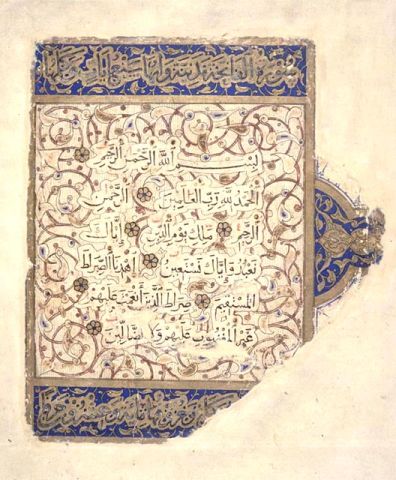
Image: 14th C. Qur'an, Mamluk origin, Library of Congress; Rights obtained.

A BREAKTHROUGH project which helps understand the Qur'an AS REVEALED -not just 'as explained.'

---------------------------------------------------------------------------

Saturday, May 1, 2010

Day 99; Qur’an 9: 48-61, pages 195+196

Welcome Friends:  Ahlan wa sahlan!
Yesterday’s Posting was thought-provoking! 
Wouldn't the Qur’an’s WISDOM truly help us IF we made it an integral part of our lives, and realized, for example, that when reluctant people do NOT join us… it IS actually a blessing?  Yesterday’s Verse 47 showed us the damage their negativity would have upon the most enthusiastic of us.
Yusuf Ali’s Translation of this Chapter.
Muhammad Asad’s Translation of this Chapter.
Their commentaries can only be read in verse by verse view.

COMMENTS:
PAGE 195 Arabic Qur’an.
1.  Verses 48-49 continue to discuss the ‘reluctant’ persons who, in this instance, are the Hypocrites who lagged behind (as we saw in Verses 41-42).  Even before the Battle of Tabuk, they were plotting ‘fitnah’ فتنة . See Ali/Asad and their definitions of this word as ‘sedition/discord.’  One of the characteristics of the Hypocrites was that they would be grieved by any good fortune which the Prophet enjoyed, while any misfortune which he received would make them gloat!

2. Verses 50-51:  Note the beauty of what the second verse indicates.  Many of us tend to quote this verse when touched by misfortune – not realizing that its connotation is positive- and indicates good fortune!

“If good befalls you, it grieves them, but if Misfortune befalls you they say, we have already taken our precautions, and they turn away rejoicing. (50)
Say: Nothing will ever befall us except what God has compiled/brought together FOR us; He is our Protector, and on God should the Faithful rely” (51)
From Posting of March 21st:

“Our Readers will recall our discussion of March 10th  regarding the meaning of the term ‘kataba’ – ‘to put together,’ when we said that God either ‘compiles/puts together’ something ‘UPONعلى - ’ someone, which becomes a unit of accountability/responsibility, OR ‘puts together’ ‘FOR- ‘لــ someone, as a unit of exemption/privilege.”

3. Verses 52-53 also start with the command ‘Say!’ directed at the Hypocrites.  The first verse shows them that, contrary to all their hopes, only Good can befall the Faithful (even if it seems to be a negative occurrence, which further confirms the statement in Verse 51).   
The second verse tells them that their spending will never redeem them BECAUSE they are ‘Faasiqs فاسقين-’ (Remember the definition of ‘fisq-فسقmentioned in Posting of April 1st?) Such persons have already committed the Breach of Faith which placed them at the point of no return.  We already know that neither outward deeds, nor intention, can be redeeming factors, each on its own.  It is the combination: deeds PLUS intention; our inner motivation AND our actions, which validate each other and combine to redeem us!
After that, Verse 54 highlights what constitutes a ‘Breach of Faith.’   

PAGE 196 Arabic Qur’an.
4.  Verse 55 addresses Prophet Muhammad, peace upon him, directly, and the rest of us, indirectly. 
I do not agree with Yusuf Ali’s explanation because he translated the word ‘awlaad-أولاد’ as ‘sons,’ although it means ‘children.’ As for the word ‘tu’jibka-تعجبك ‘ from the root-verb ‘ajaba عجب [i]’ which means ‘to esteem, or hold a high opinion of,’ he translated it as ‘dazzle.’ Asad said, ‘excite your admiration.’ 
This verse tells the Prophet (and us) not to over-estimate the worth of any children or wealth the Hypocrites may possess.  Such shall be TO them agents of suffering in this life, causing them to overstep their own selves (زهق [ii]) and debasing themselves even as they continue to Deny.  What a picture!  This should be a wake-up call to all who are ‘ruled’ –going against their better selves- to serve their children or their wealth! This issue must be of great importance as it is mentioned again in HQ 9: 85.
5. Verses 56-59 continue the description of such persons, ending by presenting a beautiful sentiment and statement; the first is what they should have felt, and the second is what they should have said! 
It is therefore advisable for us to say, as proof of OUR feelings of contentment in what God has given us: “God is enough for us.  God will grant us of His Bounty; unto God Alone do we turn with hope!”(حسبنا الله، سيؤتينا الله من فضله... إنا إلى الله راغبون)
6.  Verse 60 presents us with a list of persons who are deserving of our regular ‘taxes,’ well-explained by both Ali and Asad.  It is interesting to note that, during the rule of Omar Ibn Abdel-Aziz (717-720 AD) of the Ummayad Dynasty, the distributors of the ‘Zakaat’ could not find anyone needy enough to deserve it!  That was a testimony, not only to the years of dedicated giving and the competence of the distributors, but also to the fact that the concept of the ‘Zakaat-tax’ WHEN well-implemented, can render entire communities ‘Need-free’!
7.   Verse 61 shows us that there are indeed those who have ‘molested/maligned’ (Ali/Asad) the Prophet, peace upon him, by what they have said against him, and it then responds to their allegations.  After that, the verse takes the issue to a higher level, raising the bar by mentioning his superior title of ‘Messenger of God’ so as to impress upon such persons the seriousness of their offense.  The verse makes the distinction that, any who ‘molest/malign’ the Messenger of God, will suffer grievous penalty (Ali/Asad).
Enough said!
Our next Reading is from HQ 9: 62-72

Peace unto all!


[i] (عجب) ، يدلُّ على كِبْر واستكبارٍ للشَّيء.

[ii] (زهق) يدلُّ على تقدّم ومضيّ وتجاوز. من ذلك زَهَقَتْ نفسه. ومن ذلك: [زَهَقَ] الباطل، أي مضى. ويقال زَهَقَ الفرسُ أمامَ الخيل، وذلك إذا سَبَقَها وتقدَّمها. ويقال زَهَقَ السّهم، إذا جَاوَزَ الهَدَف. ويقال فرسٌ ذات أَزَاهيقَ، أي ذات جَرْيٍ وسَبْقٍ وتقدم. ومن الباب الزَّهْق، وهو قَعْرُ الشيء؛ لأن الشيء يزهق فيه إذا سقط.

Friday, April 30, 2010

Day 98; Qur’an 9: 36-47, pages 193+194

Welcome Friends:  Ahlan wa sahlan!
Yusuf Ali’s Translation of this Chapter.
Muhammad Asad’s Translation of this Chapter.
Their commentaries can only be read in verse by verse view.

COMMENTS:
We continue with the last verse on PAGE 192, before we go on to PAGE 193:
Click for Arabic Qur’an.
1.  These two verses discuss the ‘Inviolable’ months.  Both Yusuf Ali (36-37) and Muhammad Asad (36-37) have done a good job in offering us the generally accepted and historically recognized explanation for these verses.
 
It is interesting to note that there have been other explanations which have departed from the traditional and led to much debate and controversy, such as that of Dr. Niyazi Izzedine (Arabic info).  Such arguments, as I understood, have reread the historical narrative and offered another perspective, using Qur’anic reference as well as comparison of the ‘lunar to solar’ calendar at the time of revelation.  They argue that, although verse 36 DOES indeed discuss the importance of not violating the FOUR months God has made ‘inviolable’ when He created this earth, the four months mentioned here are NOT related to the other months (11, 12, 1, 7 : Thul-Qi’dah, Thul-Hijjah, Muharram, and Rajab which are Inviolable by reason of Pilgrimage).  According to this argument, the Inviolable Months intended here are the first four consecutive months of the year: ‘Muharram- Safar- Rabee 1 and Rabee 2,’ (in English: the Inviolable Month, The Zero Month, the month of First Spring, and the month of Second Spring).  They contend that this period of 4 months was intended to cover the entire spring season- and was made Inviolable by God from the first moment of Creation for the sake of wildlife conservation and the preservation of the balance of Life on earth.  They tell us that Prophet Muhammad, peace upon him, fought to reinstate this balance after Qureish had tampered with it, and that this verse presents this issue as worthy of fighting for and upholding as a matter of faith.   

This certainly IS a very interesting take on the ‘Divine Purpose’ for the ‘Inviolable’ months (the Pilgrimage months PLUS four in Spring), and could be seen to add an issue we had not thought of to our standard of accountability : Conservation! (‘THAT is the upright Standard of Accountability’- ذلك الدين القيّم).
Were Muslims to adopt such a perspective, we would be heartbroken to note that, after the Prophet, peace upon him, was sent as a Mercy to the Worlds …… we went right ahead, forgot his teachings, and hunted to extinction so many species of wildlife on earth!
2.  Verses 38-39-40 are related to the Battle of Tabuk, and are interspersed with heart-wrenching questions and warnings addressed to Believers, such as:
·    …what is the matter with you, that, when you are asked to go forth in the cause of God, you cling heavily to the earth…?
·  …do ye prefer the life of this world to the Hereafter…?
·  …unless ye go forth, He will punish you with a grievous penalty, and replace you with others..!

Verse 40 offers a beautiful flash-back to Prophet Muhammad’s first moment of escape from his own people, peace upon him.  A moment where, due to hopelessness in them, he had to step into the unknown and deliver his life, his 13 years of struggle, AND his Message, into the hands of complete strangers.  On his way to ‘Yethrib,’ his destination, in that tiny cave, as he was anxiously shouldering the burden of that moment… there was another escapee with him.. a friend… who needed to hear words of consolation from his blessed lips:

“Don’t be sad…”  The Prophet said to Abu Bakr.  “God is indeed with us!” 

With these words, God sent calmness and tranquility upon him, aided him with unseen forces, and ultimately rendered his message supreme.

PAGE 194: Click for Arabic Qur’an.
3.  Verse 41 is a command, telling People of Faith what is best for them.
4.   Verses 42-46 speak directly to prophet Muhammad, peace upon him, telling him about those who ‘lagged behind’ when he took the rest of the able-bodied men to battle.  Those who lagged behind were all Hypocrites, except for three persons whom we mentioned earlier, in Posting of February 17th.  I’ve included that footnote below [i].
5.  In Verse 43 we hear the ‘voice’ of God clearly, as He questions the Prophet regarding the decision he had made to accept their excuses for remaining behind.
6.  Verse 47 informs us of the negative effect RELUCTANT people will have upon any endeavor!
Enough said!
Our next Reading is from HQ 9: 48-61

Peace unto all!
[i] Three Believers were enjoying the weather and their harvest, and kept procrastinating about getting themselves ready for the Battle of Tabuk, until the Prophet, peace upon him, and the army had left.  There was no way for them to catch up, and finding themselves in town with the women, children, and hypocrites they felt ashamed of what they had done.  They were thinking of making up excuses, but couldn’t, and told the truth when they apologized to the Prophet upon his return.  The Prophet did not admonish them, but God did not allow him or the Believers to take them back into their folds until they had TASTED the loss of what they had taken so lightly.  The three men were treated as if they were invisible, the wives of the married men were told to leave them alone, and not a single person in the entire town spoke one word to them, even in response.  The two older men gradually stayed in their homes, while the younger one kept attending all the congregational prayers for fifty days, till the very last night.  Before dawn the next morning Qur’an was revealed HQ9:118 describing their pain and their repentance and declaring that God had indeed ‘forgiven them so that they might repent.’  The entire town rejoiced, a man on horseback was dispatched to give each of them the good news but someone had already climbed a hill and shouted out the good news, and therefore was able to reach them first.  HQ9:43-46; 90; 102-105; 106; 118 see M. Asad’s note 155 in Ch.9. 
We might be the ones asking for forgiveness, but when we do we must know… that God already has forgiven! 

Let's TWEET this!

Tweet me!