.jpg)
Welcome Friends: Ahlan wa sahlan!
We ended our last Reading by seeking God’s Direction; the one thing on earth that never expires.
Muhammad Asad’s Translation of our new Chapter.
Their commentaries can only be read in verse by verse view.
The Spider
سورة العنكبوت
From Yusuf Ali’s Introduction:
“This Surah is the last of the series began with Surah 17, in which the growth of the spiritual man as an individual is considered, especially illustrated by the way in which the great Prophets were prepared for their work and received their mission, and the nature of Revelation in relation to the environments in which it was promulgated. (See Introduction to Surah 17). It also closes the sub-series beginning with Surah 26, which is concerned with the spiritual Light, and the reactions to it at certain periods of spiritual history (See Introduction to Surah 26).
The last Surah closed with a reference to the doctrine of the Ma'ad, or final Return of Man to God. This theme is further developed here, and as it is continued in the connecting link between the present series and those three Surahs.”
From Muhammad Asad’s Introduction:
“MOST of the authorities are of the opinion that this surah is one of the last to have been revealed in Mecca, while some maintain that it is one of the earliest Medina revelations. Others again assert that while the main body of the surah is Meccan, the first ten or eleven verses were revealed at Medina. And, finally, there are some scholars who hold the opposite view, ascribing the first nine verses to Mecca, and the rest to Medina. On the whole, it would seem that, historically, the surah marks the transition between the Mecca and Medina periods.
The title has been derived from the parable of "the spider's house" in verse 41, a symbol of false beliefs and false values, which in the long run are bound to be blown away by the winds of truth.”
COMMENTS:
1. Today’s Reading begins with Verse 1 which consists of the Disjointed letters (A L M), discussed on Sept 1st where we said:
“....such letters usually introduce the 'Compilation -كتاب' – and … are in reality 'sounds' not letters…”
Following these ‘sounds’ this time however, we find neither mention of ‘the Compilation’ nor the ‘Quraan.’ What we DO find mentioned, are the ‘Cognizant Humansالناس-’ whose strength of Faith is ‘tried’ so as to distinguish the True from the False. This most severe of ‘trials’ is called ‘Fitnah فتنة-.’
We discussed this word on May 15th and noted that its root-verb, 'fatana- فتن' literally denotes 'trial by fire,' as in "the firing of metal to extract gold."
Here, persons who are indeed True can stand out, and are similarly ‘extracted’ or ‘marked out,’ as seen in Verses 2- 3. These verses are far-better explained by Asad (who correctly translates ‘علم’ as ‘mark-out’ rather than Ali’s ‘know’).
IMPORTANT: There are two Arabic words which our generation does not distinguish between and often uses interchangeably. We also mistakenly translate both as 'to know:' Their root-verbs are 'arafa' and 'alama' (عرف - علم). We already discussed 'arafa' on Jan 22nd, and showed how it is the opposite of 'nakara' and denotes 'familiarity and reassurance.' This is why we NEVER find the Qur'an attributing that verb to God. However, He does make things 'ma'roof' to us, as in the case of 'arrafaha lahum,' where He familiarizes and reassures us of the Garden/ Al Jannah... but to say that God 'ya'rif'' -He is familiarized with or reassured by.. this is an unbefitting common mistake!
God always 'ya'lam.' He 'knows the distinctive attributes' of everything and furthermore He 'allama' 'demarcates' (marks out for us) certain attributes so that we can distinguish them.
IMPORTANT: There are two Arabic words which our generation does not distinguish between and often uses interchangeably. We also mistakenly translate both as 'to know:' Their root-verbs are 'arafa' and 'alama' (عرف - علم). We already discussed 'arafa' on Jan 22nd, and showed how it is the opposite of 'nakara' and denotes 'familiarity and reassurance.' This is why we NEVER find the Qur'an attributing that verb to God. However, He does make things 'ma'roof' to us, as in the case of 'arrafaha lahum,' where He familiarizes and reassures us of the Garden/ Al Jannah... but to say that God 'ya'rif'' -He is familiarized with or reassured by.. this is an unbefitting common mistake!
God always 'ya'lam.' He 'knows the distinctive attributes' of everything and furthermore He 'allama' 'demarcates' (marks out for us) certain attributes so that we can distinguish them.
Put أم حسبتم in Tanzil, and note that all three occurrences (HQ 2:214; 3:142; 9:16) indicate that Forbearance and Self-exertion are the virtues by which some shall stand out above others.
Those who commit misdeeds are dissuaded in Verse 4.
Verses 5- 6 speak to those who anticipate meeting God, assuring them/ us that, while God sees and knows everything, the time for such a meeting is imminent/ approaching. The verses also tell us that that one’s exertion (jihaad) is indeed for one’s own Self, for God is Self-sufficient.
All these verses point us towards exemplary attitudes and behaviors, and when we reach the final statement we realize that it is in SELF-FULFILLMENT that we prove ourselves -for our own satisfaction and benefit; God does NOT need any of this (غني-- free of all need; see April 26th ).
2. After showing us that Faith is proven by Self-exertion ‘jihaad,’ Verses 7- 13 continue, describing how God ‘covers’ for the misdeeds of those who had attained Faith AND performed goodness, rewarding them as per the BEST of what they were doing.
This concept of ‘covering’ for the previous misdeeds of those who ‘do their best’ has been mentioned a few times in the Qur’an so far. It is indeed worthwhile to be counted among such persons[i]!
3. Verse 8 describes a different ‘jihad,’ when idolatrous /denying parents ‘exert themselves’ to make their children believe as they do.
First, God tells us of what He has ‘enjoined[ii]’ upon us Cognizant Humans, and that is to treat our parents always as best we can. Put both words وص إنسان in Tanzil and notice that this is the first time this concept appears- out of three.
Then, God tells us NOT to obey our parents with respect to Faith in Him Alone (while remaining within the framework of kindness to them), making us aware of the fact that we shall return to Him and He will inform us of everything we were doing.
We referred to this verse when we discussed ‘Jihaad’ on May 4th, and pointed to the meaning of the word, saying that this ‘jihaad’ of parents hardly constitutes an ‘armed’ struggle or ‘Holy War.’
Verse 9 is a promise to those who attain Faith and perform Goodness, that they shall indeed be ‘entered’ into (the ranks of) the Righteous.
Verses 10- 11 describe the Hypocrites’ fluctuating positions, and God’s knowledge of them. Read Asad’s footnote to Verse 11; it’s interesting to realize that ‘Munaafiqs’ first and foremost deceive themselves.
Verses 12- 13 recount the words and empty promises of those who Deny, ending with the statement that they shall be questioned upon Resurrection regarding their Falsehood.
4. Verses 14- 15 tell us of Prophet Noah, peace upon him. Here we read an interesting statement regarding the length of his stay among his people:
“alfألف- (a composition of, large number/ ‘thousand’)
sanah سنة- (year)
illaإلّا- (minus)
khamseenخمسين- (fifty)
‘aamaعاماً- (year- but using a different noun).”
The distinction between the two words ‘sanahسنة- ’ and ‘aamعام- ’ deserve discussion:
We usually understand both to mean ‘year,’ but there is a difference:
Explaining the Distinction:
Some think that the word ‘Sanah’ is ‘generic,’ and is used to mean ‘year’ in general, whereas the word ‘Aam’ is specific to a certain year, as in ‘the Year of the Elephantعام الفيل-’.
Others think that ‘Sanah’ would be a word denoting a year of scarcity or distress, whereas ‘Aam’ would denote a year of abundance (as seen in the story of Joseph, when he interpreted the king’s dream in Verses 12:47-48).
Actually, I couldn’t find much in this regard, except that one of the Lexicons[iii] did favor the second opinion.
If so understood, Verses 14-15 would indicate that Prophet Noah stayed in the midst of his people for a very large number of years, out of which only 50 were advantageous… but God Alone knows the Truth.
To me, this is all ‘gheyb’ and how long he stayed is not the point. What matters is the Qur’an’s precision[iv] and how different words are used to denote different concepts.
Anyway, this was a ‘Sign’ for all people.
Verse 16 is about Prophet Abraham, peace upon him, as he showed his people the absurdity of the Falsehood they were worshipping and pursuing.
Read his eloquent argument in Verses 17- 18, where he announces that it would be to their advantage to worship God, to be Aware of Him, and to be productive.. and that if they belied… there were communities before them who had similarly belied…(a warning).. and that the sole responsibility of the Messenger is to deliver in all clarity.
Verse 19 asks a valid question, and we realize how well ALL these verses suit Qureish!
5. Then, Verses 20- 23 begin with the command: ‘Say!’ speaking directly to the Messenger Muhammad, peace upon him, instructing him to tell his people to walk the earth and look around. Doing so, they’d realize how Creation began, and how it could be brought back again by God who can do anything. (What this tells us is that all the answers are in front of us if only we saw them!)
Then there is ‘Dissuasion,’ as the final statement tells us that those who Deny God’s Signs and His Meeting are indeed those who have despaired of His Mercy, and it is they who shall meet Painful Suffering.
I lean towards Asad’s interpretation here, rather than Ali’s (the traditional). While the traditional interpretation is that they ‘SHALL despair’ of God’s Mercy (in the Hereafter), I see the verse indicating that they have already despaired- which is one reason why they deny Him (especially since the verb is in the past tense).
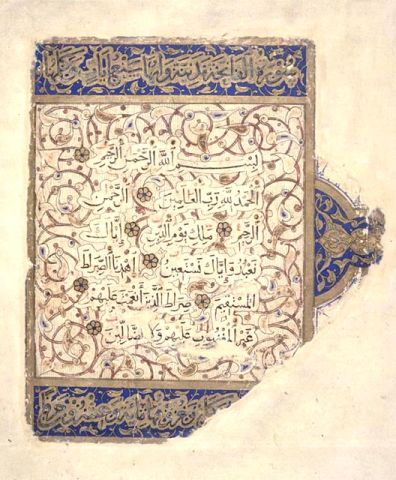
PAGE 399 Arabic Qur’an.
6. In Verses 24- 25 Abraham receives his people’s response; they decide to kill or burn him (‘harriqoohحرِّقوه-’) but God saves him from the fire; a Sign for People who Believe.
His argument seems to explain the nature of things, from which we learn that when people do the wrong thing in Life, no matter for what reasons, they have plenty to regret upon Resurrection!
In Verse 26 we learn that Prophet Lot, peace upon him, believed in Abraham (we already learnt of their relationship when we discussed HQ 11:74). Abraham ‘emigrated’ toward his Lord and was granted Isaac (a son) and Jacob (a grandson). This verse also tells us that, it is in Abraham’s progeny that God rendered Prophet-hood and the Compilation, granting him his recompense in Life- while in the Hereafter he is indeed among the Righteous.
These verses also add further information:
· That his people were ‘preventing access/ impeding the path قطع السبيل-’ which indicates ‘impeding the path of nature regarding males and females,’ or ‘waylaying’ (laying in ambush for youths who came into their town), or even both (I don’t think it indicates ‘highway robbery,’ as some believe).
· That their sexual acts were public, committed in open assemblies.
· Their reckless response (bring The Suffering upon us from God!).
· Prophet Lot’s prayer, asking his Lord for Support.
Note, dear Readers, that Prophet Lot at the beginning of these verses accuses his people of ‘the Faahisha/ the pervasive atrocity-’ plural: ‘fawaahishفواحش- .’
NAMING it such, and labeling it again (as in HQ 7:80, 27:54), ascertains that Homosexual activity is one of the ‘Inviolables’ of the Straight Path, and is included in the Ten Commandments.
Enough said!
Our next Reading is from HQ 29:31-52.
Peace unto all!
[i] When we have time, God-willing, we’ll discuss the many categories of misdeeds we may commit (إثم -سيئة -ذنب -خطأ-خطيئة -معصية) as well as God’s many methods of favorable resolution (عفو-مغفرة -تكفير -تجاوز). Each category is different: It is amazing how different these words actually are; indeed they are never lumped together: Some misdeeds are of the category that may be forgiven, while others are not. Some misdeeds automatically generate their own consequences in life, and are irrelevant to the hereafter.
[ii] (وصي) يدلُّ على وَصلِ شيءٍ بشيء. ووَصَيْتُ الشَّيءَ: وصَلْتُه. ويقال: وطِئْنا أرضاً واصيةً، أي إنَّ نَبتَها متَّصلٌ قد امتلأَتْ منه. ووَصَيْتُ اللّيلَةَ باليوم: وصَلْتُها، وذلك في عملٍ تَعمَلُه. والوصِيَّة من هذا القياس، كأنّه كلامٌ يُوصَى أي يُوصَل. يقال: وصَّيْتُه توصيةً، وأوصَيْتُه إيصاء.
*وقال الراغب الأصفهاني: وصى: الوصية: التقدم إلى الغير بما يعمل به مقترنا بوعظ من قولهم: أرض واصية: متصلة النبات، ويقال: أوصاه ووصاه. ووصى: أنشأ فضله، وتواصى القوم: إذا أوصى بعضهم إلى بعض.
وفي لسان العرب: وصي: أَوْصى الرجلَ ووَصَّاه: عَهِدَ إِليه؛ والوَصِيُّ: الذي يُوصي والذي يُوصى له، وهو من الأَضداد.
[iii] الراغب الأصفهاني:
سنه
"...سانهت فلانا، أي: عاملته سنة فسنة، وقولهم: سنيهة، قيل: ومنه قوله تعالى: }لم يتسنه{ [البقرة/259]، أي: لم يتغير بمر السنين عليه، ولم تذهب طراوته... وقال عز وجل: }أربعين سنة{ [المائدة/26]، }سبع سنين دأبا{ [يوسف/47]، }ثلثمائة سنين{ [الكهف/ 25]، }ولقد أخذنا آل فرعون بالسنين{ [الأعراف/130]، فعبارة عن الجدب وأكثر ما تستعمل السنة في الحول الذي فيه الجدب، يقال: أسنت القوم: أصابتهم السنة…
وقوله: }لا تأخذه سنة ولا نوم{ [البقرة/ 255]، فهو من الوسن لا من هذا الباب.
عوم
- العام كالسنة، لكن كثيرا ما تستعمل السنة في الحول الذي يكون فيه الشدة أو الجدب. ولهذا يعبر عن الجدب بالسنة، والعام بما فيه الرخاء والخصب، قال: }عام فيه يغاث الناس وفيه يعصرون{ [يوسف/49]، وقوله: }فلبث فيهم ألف سنة إلا خمسين عاما{ [العنكبوت/14]، ففي كون المستثنى منه بالسنة والمستثنى بالعام لطيفة (قال برهان الدين البقاعي: وعبر بفلظ (سنة) ذما لأيام الكفر، وقال: (عاما) إشارة إلى أن زمان حياته عليه الصلاة والسلام بعد إغراقهم كان رغدا واسعا حسنا بإيمان المؤمنين، وخصب الأرض. انظر: نظم الدرر 14/404) موضعها فيما بعد هذا الكتاب إن شاء الله، والعوم السباحة، وقيل: سمي السنة عاما لعوم الشمس في جميع بروجها، ويدل على معنى العوم قوله: }وكل في فلك يسبحون{ [الأنبياء/33].
[iv] To be precise we should also say that this verse tell us that Noah was saved together with the Companions of the ‘boat or ship,’ the ‘safeena’ Ali and Asad have both called it ‘Ark,’ although this is the only time the word ‘Fulkفلك- ’ is not used.

