CLICK IMAGE: Tanzil Website


OUR MISSION:
UNCOVERING the original message of the Arabic Qur'an by using Lexicons compiled more than 1,000 years ago.

ISOLATING Fact from Fiction.


RECOVERING Hope and regaining the perspective where Humanity is one, God's Message is one, and our Future CAN become one we all look forward to!


© 2010 IQRATHECHALLENGE: INTELLECTUAL PROPERTY PROTECTED BY D.M.C.A. ALL RIGHTS RESERVED.

© 2010 IQRATHECHALLENGE: INTELLECTUAL PROPERTY PROTECTED BY D.M.C.A. ALL RIGHTS RESERVED.
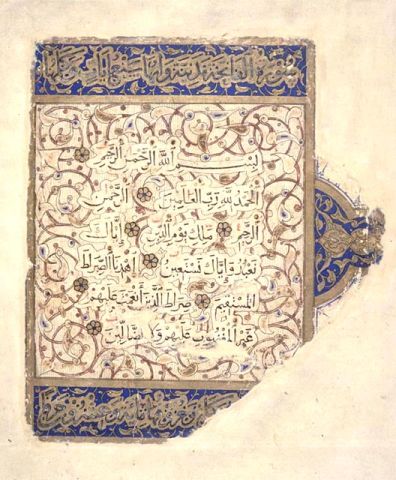
Image: 14th C. Qur'an, Mamluk origin, Library of Congress; Rights obtained.

A BREAKTHROUGH project which helps understand the Qur'an AS REVEALED -not just 'as explained.'

---------------------------------------------------------------------------

Wednesday, April 7, 2010

Day 78; Qur’an 7: 23-37; Pages 153-154


Welcome Friends:  Ahlan wa sahlan!
We encountered the story of Adam in our second Chapter, The Cow (put ‘Adam’ in ‘Search this Site’). 
Looking back at what we discussed then -and at our posts now- I see how this project has inadvertently become so much heavier than it was intended!  Now, with the explanations of both Yusuf Ali and Muhammad Asad at our fingertips, Readers can easily compare. (Open them in separate windows.) 
I will continue to provide comments on these translations as well as linguistic background.

Explanation of this Chapter/Sura -Yusuf Ali’s
Explanation of this Chapter/Sura- Muhammad Asad’s 

COMMENTS:
PAGE 153: Click for Arabic Qur’an
1.  Today’s Reading starts out with the cry of both Adam and his Mate after having discovered their fallibility and realized that they’ve wronged their own Selves:

“They both said: Our Lord! We have wronged our Selves.  Unless You forgive us and have mercy upon us, we shall surely be among the Losers!”

We notice here, as we do throughout the Qur’an, that anyone who asks God, addresses Him as my/our RABB, which is usually translated as ‘Lord or Guardian Lord’ (definition Jan 2nd).  Remember, it is He Who compiled UPON Himself all Mercy, and we are its recipients!
Newcomers to our project might not realize that Adam was given these beautiful words ‘kalimaat’ of supplication (to say), for he was indeed already forgiven (see HQ 2:37; in a distinct departure from the Biblical narrative and the concept of original sin).

2. Verse 26 shows us that God sent us ‘garments’ at three levels:

‘O children of Adam We have bestowed upon you garments to cover your fallibilities سوءاتكم and as adornment ‘ريشا’ but the garment of Awareness/ Consciousness (Taqwa تقوى) that is best, that is of the signs of God that they may remember.”
Garments therefore are of three ascending levels:

-Essential garments that protect us from hurt or harm (physical/ psychological) by covering weaknesses/ fallibilities.  This would include everything we wear, all made from material we find or produce.  This might begin with undergarments, but it also covers the entire spectrum of necessities such as hats and coats, armor and spacesuits, and even prosthesis.

-Non-essential garments that embellish or adorn us, which would include everything we wear over the essentials, or whatever we adorn the essentials with.  ‘Reesh- [i]
ريش’ in Arabic denotes prosperity (see definition in our 1,000 year old Lexicon below), and has come to describe ‘feathers’ on birds, although in our colloquial dialects we still say a rich person is ‘mreyyish.’
 
This is the origin of the English word ‘rich,’ defined in dictionaries as:
“having wealth or great possessions; abundantly supplied with resources, means, or funds.”
We will note, as we have done in many words prior to this, that there is NO mention of its Arabic origin (!) in Etymology:
bef. 900; ME; OE rīce (adj.) ≪ Celtic; c. G reich wealthy; akin to L rēx, Skt rājan king
As we proceed in our Qur’anic Readings we will come across many such words of Arabic origin.  Arabic once was, after all, as English is today: the Lingua Franca -the vehicular language that traversed the boundaries of its original community, to transfer information to others.  Didn’t we just read in our last Oasis about the origin of graduation robes and hats?)

-The garment that radiates from our Awareness; Heedfulness; consciousness; ‘Taqwa.’ That is referred to as ‘…that is best, that is of the signs of God….’.
It is quite obvious that, of the garments mentioned -physical, psychological/spiritual- the best, which is one of God’s Signs is the ‘garment’ of Awareness.

Verse 27 then warns us not to be seduced by the Deviant/Sheytaan who got our parents out of the garden, stripping them of their garment, and laying bare their fallibility.  The garment they were given to wear- but had not yet comprehended- was that of Awareness.  They were taken on a ‘test-drive’ to understand what Awareness is; keeping our Accountability to God in our sight at all times, avoiding the intoxicating psychological seduction which preys upon our desires, and  steering clear of any potholes in the road! (See HQ 20: 116-123.)

3.  Verse 27 also holds an important statement of FACT:  The Deviant and his group see humans from a dimension of existence in which humans DO NOT SEE THEM.  So anyone who tells you that they see such ‘creatures,’ are in fact seeing ‘projections’ of their own mind.

PAGE 154: Click for Arabic: [7:31]
4.  Verse 29 and verse 31 both mention the word ‘masjid.’  Ali takes this literally, as in a place of prostration -‘sujood,’ while Asad relates it to acts of worship in general (see his note 23.

5.  Verse 32 is well-explained by both.
Verse 33 is VERY important in that it lists the FIVE MAJOR inviolable acts محرّمات, or deeds made forbidden by God (also mentioned in HQ 6:151; 17:32).  We notice that ‘ithm’ Hindrance is among them, which also relates to the matter of intoxicants, as seen in Jan 19, 20 and March 17.

6.  Verse 35 informs the children of Adam that they would not be left without guidance, and that fulfilling their obligation guarantees the reward.
Verse 36 seems to allude to the fact that many who ignore their obligations will do so out of Arrogance!

7.  Verse  37 highlights the gravity of attributing to God things He did not authorize, as well as belying/denying His Signs… and takes us to the last part of life on earth, when God’s Messengers (angels of Death, this time!) take the Soul and it holds its last ‘live’ conversation!

Enough said!
Our next Reading is from HQ 7: 38-51.
Peace unto all!


[i]   (ريش)  يدلُّ على حُسْن الحال، وما يكتسب الإنسانُ من خَيْر. فالرِّيش: الخير. والرِّياش: المال. ورِشْت فلاناً أَرِيشُه رَيشاً، إذا قُمْتَ بمصلحةِ حالِه.  يقال رِشْتُ فلاناً: أنلتُه خيراً.ومن الباب رِيشُ الطائر.

Tuesday, April 6, 2010

Day 77; Qur’an 7:1-22; Pages 151-152

Today we start a new Chapter,  The Heights- ‘Al A’raaf,’ so-named because of this word’s recurrence الأعراف in verses 46, 48.  This chapter was also revealed in Mecca.

سورة الأعراف
COMMENTS:
 PAGE 151: Click for Arabic: [7:1]
1.   Alif. Lām. Mīm. Sād.
Whenever disjointed ‘letters’ مقطّعات appear at the beginning of Qur’anic chapters (as we saw in HQ 2 and 3), they are usually followed by mention of the Compilation.  These letters have also been called ‘Chapter  Openers’ فواتح السور.   Yusuf Ali discusses the matter at length in his Appendix I, and Muhammad Asad in his Appendix II.
Indeed, scholars throughout the ages have pondered and offered suggested meanings and reasons for these, most notable is that the Compilation, in all its perfection, is made up of such letters, and since no one can use the same ‘building blocks’ to create anything even near in standard, the letters will always stand as a challenge to all. 
They have also suggested that each letter is linked to the specific Chapter which it introduces, both by meaning and by number of recurrences; ie.. each letter is indicative of subject-matter, and is also necessary to maintain numeric balance (as to the number of recurrences of that specific letter within this chapter).
 
All these suggestions are valid, and there is no doubt that these letters are of similar value to other letters in the Qur’an.  But what many people have missed is that: These are not letters: they are sounds!  The Qur’an, as its name denotes, is ‘articulated,’ recited, voiced and listened to.  Therefore, although these letters/sounds may be written as one letter each, when read and articulated, each one of them becomes two letters or more as in…ي = ya =  يا(2), and as for الم- we have to say: ا = alif = الف 3 letters ….. ل laam=3 letters لام….. مmeem = ميم3 letters.  That is the only way to read them.  Compare this with the letters of the first word ألم in HQ 94:1:
ألم نشرح لك صدرك-
We pronounce that ألم as ‘alam;’ 3 letters only.  So the so-called ‘disjointed letters’ with which many Chapters start, are not letters at all, but human sounds.
I see this as an indication that the Qur’an is on an interactive level of its own- unlike any other compilation.  Just as simple human interaction with the three ‘letters’–الم- inevitably makes them nine, whenever we read and attempt to understand the Qur’an, each word, each statement, each concept, becomes so much more! 
We will soon be discussing a little-known aspect of the Arabic language: the fact that each of its letters/sounds has a distinct meaning that can be traced back to the initial stages of speech development in early Humans. (Yes, you understood it right: Arabic DOES go back that far, and that IS something we can all explore!)

2. Verse 2 directs the Messenger Muhammad regarding his duty to convey the Message whether or not his people are likely to accept it, informing him/us that it is a Reminder unto the Faithful.  Here we find a hint as to the Messenger’s initial unease and constraint, which also seems to have characterized the initial stages of Prophet Moses’ mission, peace upon them both.  Prophet Moses asked God to relieve him of his personal, physical constraint (not of the mission!) in HQ 20:25 رب اشرح لي صدري.
We have clear indication that Prophet Muhammad was also relieved of his personal, physical constraint in HQ 94:1 ألم نشرح لك صدرك- and was able to convey the Message regardless of recipients’ response. 
In HQ 6:125 (Posting of March 30th) we got an understanding of this constraint from the recipients’ point of view.

3.  In short, Verses 3-5 tell Qureish/us to follow what was sent down to them/us from Our Lord, reminding them/us of previous townships that were destroyed for their consistent wrong-doing, and only when too late did their people admit to their wrong-doing ظلم the gravest of which is ‘shirk’- ‘associating partners with God’ (see HQ 31:13).

4. Verses 6-9 take us to the Hereafter, where everyone – Recipients AND Messengers - shall be questioned, and will obtain a knowledgeable account of all that had transpired because God had never been absent (see Ali’s note 994).  
Qureish, who was expert at trade and its dealings, is given a reckoning, as in a ‘scale’ whereby good/heavy and bad/light deeds are measured… at a Time when balance/weight will be in Truth (Ali/Asad). 
Those with deeds heavy in the balance will be the Successful, whereas those with deeds light in the balance will be Losers- because of their wrong-doing.

Verse 10 is a statement to us all, in that God has ‘placed us with authority/ given us a bountiful place’ on this earth (Ali/Asad) with means of livelihood- yet we are rarely productive in gratitude!

5. Verse 11 takes us all the way back …. to the time of creation, when humans –as a species- were first created, then after a length of time, formed, then after a length of time, presented to the angels who showed respect when commanded to do so, except for Iblees/ ‘the Unforthcoming Downcast’ [i]. The conjunction ‘thumma’-ثم - indicates successive stages apart (as in HQ 71:14), separated by an interval of time as seen in footnote [ii] and in HQ 80:19-22. 
As for ‘Adam,’ English-speakers will be even more amazed at the Arabic meaning of this word: 
Linguistically, ‘Adam is a noun representing someone of ‘adaptability! موافقة وملاءمة’.  ‘Adam’ is created from superficial earth-matter, or ‘the adamah of earth-أدمة الأرض  as seen on our 1,000 year old Lexicon[iii] - in stages or intervals of time!
  
(In the earlier stages of creation The Qur’an calls this Being ‘bashar,’ and only at the final stage of creation does it say ‘insaan.’ We will be discussing this in time, when we encounter these two terms.)

PAGE 152: Click for Arabic: [7:12]
6.  In Verses 12-15 the Unforthcoming Downcast/ Iblees, is asked why he did not show respect to the Adaptable Earth-Being/ Adam, to which he responded, “I am better than he…” seeing that he was created of ‘superior matter’ - fire which, in his opinion, was superior to wet earth طين. 
We have more on this in HQ18:50: Iblees had so far been of the jinn, the hidden/concealed (although some understand this to indicate a distinct creature called ‘Jinn’, others say he was a ‘jinn,’ ‘in hiding,’ so-named for having well-hidden his arrogance from all creatures).  At any rate, he breached faith ‘fasaqa’ at that point in time by disobeying God’s command and refusing to show respect to the Adaptable Earth-Being/ Adam; it is Iblees’ arrogance that led him to disobey, for which he was demoted and commanded to get out, abased and humiliated.  But he asked for the postponement of his sentence, till the day when humans will be resurrected, and his request was granted. 
Copy + paste: إبليس آدم and then again شيطان آدم and compare: in the initial stage of Adam’s creation (when the Deviant/ Sheytaan was not yet active) he is called ‘Iblees,’ and was called ‘sheytaan’ at the very point of becoming  active against Adam! (We must keep in mind that a human who is actively deviant and aggressive is also called ‘sheytaan’ as we saw in HQ 2:14; 6:12; 121.)
Verses 16-18 narrate an exchange between Iblees and the Creator, in which he vows to lie ‘in wait/in ambush’ (Ali/Asad) for humans on the Straight Path, approaching them from the four directions.
 
There are four interesting points to be mentioned here:

·    Iblees is not reported to have mentioned the possibility of approaching them from the top or the bottom- both directions reserved for worship!

·   His exchange indicates the importance of the Straight Path, considered an area for him to concentrate on.  Look back to our last Posting, and see the countless temptations related to greed and desire, all on the Straight Path! 

·   No wonder the ‘Opener’ Faatiha is an integral part (rukn ركن) of our Prayers!  We ask God in every single unit ‘rak’ah’ ركعة of our 17 daily units (in 5 daily prayers) to guide us (to) AND grant us the Straight Path.. اهدنا! 
‘Ihdina’ means both ‘guide us’ and ‘gift/grant’ us, and since, as given to us, the ‘Opener’ Faatiha does NOT include the preposition ‘to’ إلى/ل between the words ‘ihdina’ اهدنا and the ‘siraat al mustaqeem’ -this further highlights that it intends both, ‘granting us’ AND ‘guiding us!’اهدنا الصراط المستقيم

·   The fourth point of interest here, is that Iblees states his expectations, in that most among humans will be found unproductive and ungrateful, to which he is told to get out disgraced and ‘expelled/disowned’ (Ali/Asad).

7.     Verses 19-22 tell us about Adam/ the Adaptable Earth-Being and his mate (unnamed in the Qur’an).  If we let go of our preconceptions, and the influence of ‘Biblical’ as well as ‘Traditional Islamic’ narratives, we’ll better understand this according to the Qur’an.   
The Adam and Mate story, in brief, as attested by Arabic Linguistics and Qur’anic context:
They were given the Garden to live in, finding protection and sustenance everywhere; where all within it was theirs to pick except one tree, which they were told not to approach.  ‘Sheytaan’ (who prior to that was known as Iblees) insinuated to them to disobey, addressing their two major human impulses: Eternal Possession and Existence (verse 7:20).  Also in HQ20:120:
“So the Deviant/Sheytaan insinuated unto him, saying: "O Adam! Shall I lead you to the tree of Eternity; and a kingdom that will never decay?"

The result was that by disobeying, they came face to face with what had hitherto been concealed from them of their own fallibility/ vulnerability سوءة.  In the Lexicon of Al Asfahaani (deceased 503 A.H. see footnote) the word سوأ [iv] is opposite of "hassana – "حسن and denotes “Everything that causes us physical or psychological injury or distress..”!!  Their distress/injury was both:

·   Physical (possibly related to discovering human needs, including the need for protection from the elements).
·   Psychological/ spiritual (possibly related to discovering the importance of honoring Trust, coupled with guilt and feelings of loss).

As we have seen, the Arabic word “saw’ah” denotes human fallibility, and is totally unrelated to the Biblical or Traditionally maintained concept of ‘private-parts’ (as we saw in the story of Adam’s two sons, when the same word was mentioned HQ 5:31- March 10th).  We have also noticed that, unlike the Biblical version,  the Female was not responsible for initiating wrongdoing, nor was the tree named (the Bible calls it the Tree of Knowledge of good and evil).  So what made the narrative more like a ‘fairy-tale’? 

Our forefathers may have misunderstood - but what is OUR excuse?

The last two verses in today’s Reading tell us that Iblees/ Sheytaan actually ‘promised’ them that he was offering sound advice, and then we see the pair thatching some of the garden’s foliage upon themselves (NOT their privates), and being called upon and questioned by their Lord.

The narrative continues in tomorrow’s Reading. 

Our next Reading is from HQ7:23-37.
Peace unto all!


[i] (بلس) فالأصلُ اليَأْسُ، يقال أبْلَسَ إذا يَئِسَ. قال الله تعالى: إذَا هُمْ فِيهِ مُبْلِسُونَ [المؤمنون 77]، قالوا: ومن ذلك اشتُقّ اسم إبْليس، كأنَّهُ يَئِسَ مِنْ رحمة الله. ومن هذا الباب أبْلَسَ الرجُلُ سَكَت، ومنه أبْلَسَتِ النّاقة، وهي مِبْلاَسٌ، إذا لم تَرْغُ مِنْ شِدَّةِ الضَّبَعَة. فيقال إنَّ البَلَسَ الواجم.
الراغب الأصفهاني: الحزن المعترض من شدة البأس. ولما كان المبلس كثيراً ما يلزم السكوت وينسى ما يعنيه قيل أبلس فلان إذا سكت وإذا انقطعت حجته.

 [ii]  ثم: تفيد المهلة- مجيء الثاني بعد الأول بفاصل زمني.

[iii] (أدم) الموافقة والملاءمة، وذلك قول النبي صلى الله عليه وآله وسلم للمُغيرةِ بن شُعْبة- وخَطَب المَرْأَةَ-: "لو نظَرْتَ إليها، فإنّه أحْرَى أن يُؤْدَمَ بينكما". يقال طعام مَأْدوم. قال أبو عبيد: ويقال آدَم اللهُ بينهما يُؤْدِم إيداماً فهو مُؤْدَمٌ بينهما. والأدَمَةُ الوسيلة إلى الشيء. وناس تقول: أديم الأرض وأَدَمَتُها وجهها.

[iv]  الراغب الأصفهاني: سوأ- السوء: كل ما يغم الإنسان من الأمور الدنيوية، والأخروية، ومن الأحوال النفسية، والبدنية، والخارجة، من فوات مال، وجاه، وفقد حميم، وقوله: } بيضاء من غير سوء{ [طه/22]، أي: من غير آفة بها، وعبر عن كل ما يقبح بالسوأى، ولذلك قوبل بالحسنى، قال: }ثم كان عاقبة الذين أساءوا السوأى{ [الروم/10]، كما قال: }للذين أحسنوا الحسنى{ [يونس/26]، والسيئة: الفعلة القبيحة، وهي ضد الحسنة، قال: }بلى من كسب سيئة{ [البقرة/81]، قال: }لم تستعجلون بالسيئة{ [النمل/46]، }يذهبن السيئات{ [هود/114]، }ما أصابك من حسنة فمن الله وما أصابك من سيئة فمن نفسك{ [النساء/79].


Let's TWEET this!

Tweet me!