CLICK IMAGE: Tanzil Website


OUR MISSION:
UNCOVERING the original message of the Arabic Qur'an by using Lexicons compiled more than 1,000 years ago.

ISOLATING Fact from Fiction.


RECOVERING Hope and regaining the perspective where Humanity is one, God's Message is one, and our Future CAN become one we all look forward to!


© 2010 IQRATHECHALLENGE: INTELLECTUAL PROPERTY PROTECTED BY D.M.C.A. ALL RIGHTS RESERVED.

© 2010 IQRATHECHALLENGE: INTELLECTUAL PROPERTY PROTECTED BY D.M.C.A. ALL RIGHTS RESERVED.
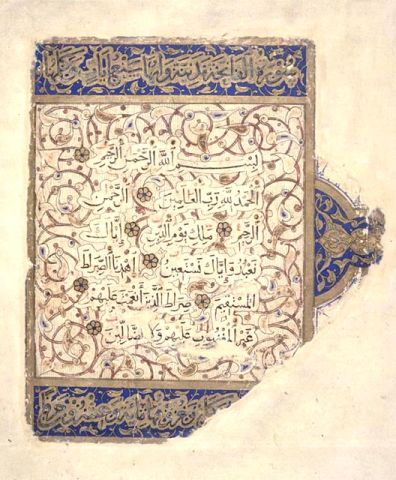
Image: 14th C. Qur'an, Mamluk origin, Library of Congress; Rights obtained.

A BREAKTHROUGH project which helps understand the Qur'an AS REVEALED -not just 'as explained.'

---------------------------------------------------------------------------

Saturday, December 4, 2010

Day 264; Qur’an 57: 1-29, pages 537-541


Welcome Friends:  Ahlan wa sahlan!
Yusuf Ali’s Explanation of this Chapter.
Muhammad Asad’s Explanation of this Chapter.

Their commentaries can be read in ‘verse by verse’ view.

سورة الحديد
‘Iron’
Literally: ‘a most sharp, powerful, and preventative element’


From Introduction of Yusuf Ali:

“The present Madinah Surah is chiefly concerned with spiritual humility and the avoidance, and a warning that retirement from the world may not be the best way of seeking the good pleasure of God. Its probable date is after the Conquest of Makkah, A.H. 8.”

From Introduction of Muhammad Asad:

“THE MENTION in verse 25 of “iron” and all that this word implies (see note 42 below) so impressed the contemporaries and successors of the Prophet that this surah has always been known as “the surah in which iron is mentioned” (Tabari). From the reference to the conquest of Mecca (al-fath) in verse 10 it is obvious that the earliest date of its revelation would be the end of the year 8 H.”

COMMENTS:

Although it is believed that this Chapter was revealed after the Believers had entered[i] Mecca, there are indications that it may have been revealed a few years earlier, namely, after the Peace Treaty of Hudaybiyyah (depending on which event is considered ‘Fat-H’ فتح).
This chapter calls upon Believers to support their professed faith with deeds and give generously in the way of God, offering insight into certain imperceptible realities about God, His ‘Divine/ Natural’ system of Creation, the Hereafter, and invites all who profess their faith in God to also believe in His Messenger Muhammad.
Its introductory verse is striking; many chapters of the Qur’an[ii] begin with such a statement:

‘Motivated/ Moving to God is everything in the Exalted Expanses and on Earth,
and He is The Invincible, The Wise.’


Definition of ‘Tasbeeh’ (for the benefit of New Readers):

The root-verb ‘sabaHa’ is related to ‘swimming,’ the continuous bodily motions which keep us from drowning.
Life, dear Reader, necessitates similar unrelenting ‘motion/ motivation’ to keep us afloat[iii], but then, to get ahead, we must exert even more effort!

This explanation is consistent with HQ 73:7, where six verses begin by addressing the Messenger peace upon him, giving him his ‘agenda’ by night and by day:

·       During nighttime he is to ‘realize, identify, and confirm/ rattil[iv]’ the Qur’an.
·       During daytime he is to maintain long periods of motion/ motivation.  

‘Indeed, you do/shall have in the daytime prolonged movement (motion/ motivation).’
  

 PAGE 537 Arabic Qur’an

1.   Just as we noted that the last chapter concluded with a command to do ‘tasbeeh,’ we note today that this chapter begins with a statement of fact, asserting that everything, indeed, does ‘tasbeeh!’
Regular Readers will remember how we explained the concept of ‘tasbeeh,’ and said that it was related to the constant ‘motion’ by which everything fulfills its innate God-given characteristics (see how often this is mentioned in the Qur’an).  Indeed, everything ‘moves/ yusabbiHhu’[v] to fulfill itself so naturally, that its mere existence is its ‘tasbeeh;’ whatever stops moving, ceases to exist (even swimmers drown).  Yet more is expected of us, cognizant humans: 
We are expected to move with intent and focus, effecting not just physical, but also psycho-spiritual potential, growing in knowledge and awareness… facilitating the growth of others and progressing together in God’s direction.

2.   After announcing that everything in the Exalted Expanses and on Earth is ‘motivated to God..’ Verse 2 tells us that the Dominion of the Exalted Expanses and the Earth is His Alone, and that He is The Deliverer of Life and Death, and that He Alone is of all things ‘Qadeer’ (explained below). 
Verse 3 continues with God’s attributes, that He is The First and The Last, the Evident and the Immanent, and the Knower of all things.
QADEER: 
Earlier, we had hastily explained the word ‘Qadeer’ as ‘Capable’ (the traditional understanding of the word), but seeing the word now in CONTEXT, and remembering the Arabic LANGUAGE and the 1,000 year old definition of the root-verb ‘qadara,’ we come up with a completely different understanding.  
Regular Readers will remember the amazing concept of ‘qadr’ (put words in ‘Search’); where God gives everything in ‘qadr’ (an amount WITH capacity for PROJECTION to its utmost).  We also said that ‘qadr’ is embedded in everything He bestows upon us, but only now do we realize the connection between our ‘tasbeeh/ motion/ motivation,’ which through action, can gradually transform into reality what was - until that point – only a ‘projection/ qadr.’  When one possibility becomes a reality, new options open up for us, and so on. 
So, rather than ‘sabaHha/ sabaha’ being motion ‘in celebration of God’s praise,’ it is motion in fulfillment of God’s ‘Qadr,’ as per HIS attribute of ‘Qadeer’ (being ‘Creator and Projector’).

See HQ 64:1, where the first verse announces this quite clearly[vi].
Also, notice that (in HQ 21:87, 39:67) the words ‘SubHhaan Allah’ indicate that we have acknowledged God’s ‘Qadr!’   
Wow.
Isn’t it EXCITING when we discover things together!  So, the next time around God-willing, when/if we redo this Blog from beginning to end, there are a few corrections we’ll have to make, and this is one of them:  That God has ‘projected’ into everything a multitude of ‘ends’ which might be fulfilled, each ‘fulfillment’ or ‘non-fulfillment’ dependent on one’s motion/ motivation, relative to circumstance and environment.  The possibilities are limitless for each of us, and each choice we make opens up – or closes - a new set of possibilities and projections, aiding or thwarting our rise to potential (achieving potential IS the ultimate aim; put ‘potential’ in ‘Search’).
 Dear Reader:
The ‘motion/ motivation’ of ‘Tasbeeh’ encompasses everything we do, and certainly includes our reflection (by thought and word) on God’s great attributes.  
Yusuf Ali’s[vii] earlier explanation of the word was just a few steps away from our understanding, as you can see here.
When we imagine the impact that each action by each creature might have upon each projection, we come closer to BEGINNING to realize how great God is.  No wonder the Qur’an so often tells us of the deficit in people’s ‘esteem’ of God…. وما قدروا الله حق قدره ....
Isn’t it a tragedy to find that most scholars have reduced Tasbeeh/ Tasbih to indicate a form of remembrance/ thikr, where the person simply utters words such as ‘Subhaan Allah’ a certain number of times?  Isn’t it indicative of even greater alienation that many ‘Muslims’ (especially those who do not speak Arabic) have reduced ‘tasbeeh’ even further to signify the string of beads (rosary) used to take count? 
Notice, dear Reader, how something we treasure can change with time when we’ve lost sight of its original concept.  Finally, even its symbolism disappears, and what remains is a hollow name.

PAGE 538 Arabic Qur’an

3.    In Verse 4 we are told for the sixth (and last) time that God created the Exalted Expanse and the Earth in six aeons /epochs/ terms (NOT days), and how at length (‘thumma- ثم’) He secured and sustained it in His full command (New Readers: Put ‘Arch’ in ‘Search;’ put ‘aeons days’ in ‘Search’). 
Then, we are given a ‘shocker’:
‘… AND HE IS WITH YOU WHEREVER YOU MAY BE, AND GOD IS ALL-SEEING OF WHAT YOU ARE DOING.’
WITH us? 
Not simply ‘observing us from a distance,’ or ‘knowing what we do,’ but actually WITH us… everywhere.. wherever we may be? 
This verse, dear Reader, should stop us in our tracks when we find our steps leading to unfavorable places or deeds! 
Then, Verse 5 asserts that the Dominion of the Exalted Expanses and the Earth is His, and to God all matters are returned. 
In Verse 6 (as in Verse 4), we find God’s creation of natural phenomena linked to His Knowledge of us. 
Doesn’t it make us think, dear Reader, when we find this final mention in the Qur’an of God’s merging of night and day into each other, that He also mentions His knowledge of what goes on within the dark recesses of our minds/ chests?  Now that we know what ‘SubHhaan-Allah’ means, let us say it: 
SubHhaan-Allah, we do acknowledge God’s limitless ‘Qadr’ (despite being unable to fully appreciate it).

4.     One of the central themes in Verses 7- 24 is that we should SPEND of what God has made us ‘successors of;’ with a direct call to spending in Verses 7, 10, 11, 18, 24.
Notice that ‘faith’ is always joined by good deeds, in this case, it is about spending (in God’s way, spreading the wealth to the benefit of mankind).
Verse 7 begins quite plainly: Whatever material wealth we may think we ‘possess’ is not truly ours, but rather, it comes and goes to different people through succession/ ‘khilaafah’ (most notably due to people dying and leaving it to those who succeed them).
 ‘Khalafa:’
Regular Readers will remember the definition of the root-verb ‘khalafa:’ ‘To come after (in location or in time); to succeed someone who is absent/ deceased’ (put word in ‘Search’).  I prefer Yusuf Ali’s ‘heirs’ to Muhammad Asad’s ‘trustees.’
This section includes heart-melting questions which ask:
·     ‘And why are you not trusting/ having faith in God, even as the Messenger invites you to trust/ have faith in your Sustainer…?’ (Verse 8)
·  ‘And what is with you that prevents you from spending in God’s way…?’ (Verse10)
·     Who is it that shall loan God a beautiful loan after which He shall multiply it, and his is a generous reward? (Verse 11) 
Remember that the Qur’an is interactive, and that every question it asks does get a response, even in our silence.
We also notice that Verse 8 (after having questioned listeners as to their faith in God), reminds them of their ‘solemn pledge/ meethaaq’ given to God, IF they are indeed Believers! 
Upon searching for this pledge, we find it in HQ 5:7, where we learn that Believers had pledged to hear and to obey.
Verse 9 tells listeners why God was sending these evident ‘Signs/ Ayaat’ unto His worshipper (Muhammad): 
He was sending them so that (li) He would take ‘you’ out of the Darknesses into the Light, indeed God is Most Gracious, Unceasingly Compassionate towards you.
Verse 10 clearly indicates that, although both groups are promised the best, it is those who had exerted themselves in times of duress who shall end up far surpassing others who had exerted themselves in easier times; they are considered literally ‘of greater tread/ step,’ having made larger strides forward/ upward (‘darajah’ does NOT mean ‘rank,’ but ‘stepping up.’  Put word in ‘Search’). 
Regular Readers also know that ‘Fat’H’ probably refers to the Peace Treaty of Hudaybiyyah, which this verse seems to consider a defining historic marker! 
What a difference there must have been between the two times; at the beginning, the need was more critical and the sacrifice greater.
See the Chapter of ‘The Opening/ The Victory’ where we discuss the word ‘Fat’H’ in detail; put ‘Hudaybiyyah’ in ‘Search.’

PAGE 539 Arabic Qur’an

5.    Verses 12- 15 transport us to a certain Time/ Yawm (in the Hereafter), where we witness an exchange which takes place ‘en route’ between the Faithful and the ‘Hypocrites’ (Munafiqeen: ‘Those in camouflage’).  The Faithful, whose Light travels (runs [viii]) with them, are given glad tidings of Gardens beneath which rivers flow, to reside therein in comfort… a great Deliverance/ salvation indeed.  Meanwhile, the Hypocrites are begging that they wait for them/ look towards them, so that they could grasp some of their light!  The response is astounding:  The Hypocrites are told to retrace their steps and seek Light!  (It is too late at that stage of their existence; they should have thought of gaining light earlier on.)  Retracing their steps back through time is impossible, which is why the verses continue, showing how they become separated from the others, ‘walled out’ from them.  The ‘divider’ separating them contains ‘Mercy’ at the other side, which they don’t see, while ‘Suffering’ is displayed on their side.  They ask the Believers, ‘Were we not with you?’  The response is that they were ‘with’ them, but had been tempting themselves/ playing with fire (literally ‘trying themselves by fire’), and had waited/ lingered/ bided time, and had doubted, and been misled by their aspirations until God’s Command came upon them, and they were (ultimately) deceived by ‘the Deceiver,’ with regard to God (see HQ 35:5 which shows us how ‘deceptive’ the immediate life of this world can be, especially when one is ‘prodded’ to deviancy by the Deviant/ SheyTaan: the negative force within each of us). 
Then, in Verse 16, we read one of the MOST heart-melting questions in the Qur’an: 
·       ‘Isn’t it time for Those who have attained Faith, that their hearts/ minds become tranquil in the Remembrance of God….?
(Root-verb: khasha’a- خشع-- is all about being ‘calmly subdued, in full tranquility or stillness.’  For the Faithful, nothing is as powerful at granting ‘calm’ as the remembrance of God.
 Although the definition does not point to it, from reading the Qur’an where the word is 16 times mentioned, it seems that this tranquility is in trusting ‘anticipation’ for what is to come!  That is why no single English word can define ‘Eman,’ which is Faith, Trust, and a feeling of ‘amn,’ security in God’s care.

The rest of this verse warns Those who have attained faith NOT to be like those who had received the Compilation earlier.. those whose hearts/ minds had hardened with the passage of time, and those amongst whom many (not all) are now Deserters/ Breachers of Faith (Faasiq).  
Then, Verse 17 gives such persons (who may be listening) hope for change, for God does revive the earth after it is dead, such signs He has made evident for us if we were to secure knowledge. 
Verse 18 announces to men and women who are genuine, heart-feeling and charitable (from root-verb SaDaqa) that they, and whoever ‘loans’ to God a goodly loan, shall receive it multiplied manifold, and they shall have a generous recompense.  

PAGE 540 Arabic Qur’an

6.    Verse 19 identifies for us WHO the ‘SiDdeeq’ and the ‘Shaheed/ Witness’ are:  They are those who have attained complete faith/trust in God and His Messenger (and therefore, have also obeyed them, as HQ 4:69 specifies).  They shall have their own reward and their own light, as for the Deniers who have belied God’s Signs, they shall be the ‘companions’ of the extreme Heat (‘jaHeem: literally, the hot, scalding place).    
Then, in Verses 20 and 21 we find eye-opening statements defining this immediate life for us, and telling us what to do in its fleeting time.
Notice the commands: KNOW and RACE:
Know that the immediate lowly life is but a …’ (Verse 20).
Race towards Forgiveness from you Lord and a garden which is…’ (Verse 21).
Read these two verses carefully, dear Friend!
Verse 22 tells us that no irreparable blow can strike this earth or our Selves, but that it already is in a compilation (of Creation) before God brings it into being, which is easy for God (explained below). 
The next verse tell us why (we are so being told):
‘So that you neither sorrow for what passes you by, nor exult in what comes to you…’
Indeed! After Verse 20 had defined for us that the life of this world is no more than a temporary, delusional convenience… nothing on earth we miss or catch can merit the loss of our heads with sorrow or exaltation.
The verse ends by telling us that God does not like every conceited braggart, which helps us understand that pride and exaltation generate more harm than sorrow  (put ‘muSseebah’ in ‘Search’; see 10 times mentioned in Qur’an).  Also see what kinds of behaviors ‘God does not like.’
Dear Reader:
We have discussed the issue of everything being in ‘a compilation’ of Creation before[ix] (put ‘turn of events’ in ‘Search’).  
Regular Readers know that this does not mean that all ‘blows’ are ‘from God,’ and no one is responsible for them.  What this means is that anything which happens has happened within A DIVINE SYSTEM, a NATURAL PROCESS which brought it about.  When A takes place, B will necessarily follow and so on, not necessarily by our choice, but because that is how the turn of events takes place, in ‘God’s system’ or ‘sunnatul-Lah.’  That ‘system’ has been compiled by Him, and each of us is responsible for putting in motion whatever circumstances bring about the outcome. 
Then, Verse 24 seems to tell us exactly whom God does NOT like: Those who are stingy and urge others to be the same, for when they turn away from giving, God is Self-sufficient ‘Ghani,’ Praiseworthy; He has absolutely no need of them nor will their deeds affect Him in the least.
This verse seems to punctuate what was mentioned before, indicating that -in the ‘system’ which God created- miserly people only harm themselves.

PAGE 541 Arabic Qur’an

7.     Read Asad’s explanation and valuable commentary on Verse 25.
This verse is so thought-provoking!
Firstly, it shows listeners that this Messenger is but one in a series of Messengers who came to their people with evidence, and with The Compilation AND the ‘Scale/ Criterion,’ so that (li) people would uphold equity (fair and just dealings with each other). 
The Compilation and the Scale are mentioned together twice in the Qur’an; here, and in HQ 42:17... where we noticed that CONTEXT mentioned people of (earlier) Compilation who, having ‘inherited’ it, had strayed and followed their plummeting desires (hawa).  The Messenger was commanded not to follow them, but rather to be upright AND DEAL WITH EQUITY AMONG ALL PEOPLE, SAYING ‘GOD IS OUR LORD AND YOUR LORD.’  
Think, dear Reader, of the importance of fair dealing in any society, where all people are considered equals.  The Compilation which God had sent to Humanity IS about that, and has always been.  It is WE who have rendered ‘self-serving’ what we’ve made out as ‘our own version’ of it! 
Humanity is one; our divisions are of our own making. 
Just as God is One, so is His Compilation sent to Humankind throughout the ages.  
Secondly, this very same verse mentions God delivering to us the usage of [x] ‘iron,’ an element ‘most sharp/ powerful/ preventative’ and informing us that in this element there is:
·      Severe potency (in inflicting Suffering and gaining Power).
·      Benefits for Cognizant Humans.
 This verse also gives us the reason for giving us the use of this element:
‘SO THAT GOD WOULD MARK OUT those who would ‘assist/ serve’ Him and His Messengers in the unseen..’ (in one’s heart, where no one but the person himself knows whom/ what he is actually serving).
Q. What does the context of this verse indicate, and why is ‘Hadeed,’ or ‘iron,’ an element ‘most sharp/ powerful/ preventative’ specifically mentioned?
A. Because ‘Hadeed’ is the element used for DEVELOPMENT, DEFENSE and WARFARE.  It is what may be used to build OR to destroy. It is the single most constructive, yet most destructive element on earth, mentioned in this verse together with the Compilation, the Scale/ Criterion, Equitable treatment, and the warning that its USAGE should be in accordance with fairness and justice… and that each of us shall be ultimately branded/ ‘marked out’ by our acts AND our hidden intentions!
WOW.
Tell that to the weapon manufacturers, to arms-dealers, to war-mongers… to unscrupulous governments, to fanatics… to anyone who wants to start or enhance conflicts, rather than to quell conflict and bring harmony. 
Dear Reader:
Such immoral people are writing our history today.  Is there any way we can help bring them to a stop?  Yes, there is, and it is not as difficult as one might think.  I will not get into what I do not know, such as creating incentives which might direct their products towards peaceful ends, making it more lucrative for them to switch gear… but I shall discuss what I DO know:
I do know that things can and will change when People of Conscience worldwide say AND strive towards something like this: 
‘OUR DIVISIONS ARE OF OUR OWN MAKING (not God’s).
THERE IS SO MUCH MORE THAT JOINS US THAN DIVIDES US.
WE ARE ONE ENTITY ON THIS EARTH AND WHATEVER HARM WE CREATE FOR OTHERS SHALL EVENTUALLY HURT US / OUR CHILDREN. 
PEACE IS THE ONLY ROAD TO PROSPERITY AND HAPPINESS. 
JUSTICE (AND THE REPARATION OF PRIOR WRONGS) IS THE ROAD TO LASTING PEACE.’ 

8.    After what we’ve discussed, dear Reader, it follows quite naturally that the following verses would mention previous Messengers (such as Prophets Noah, Abraham, and Jesus, by name, alluding to others, peace upon them all).  Certainly, all of them were sent with the Compilation and the Scale of Right and Wrong, and all of them taught justice and fair-dealing among people. 
Verse 26 tells us that there were other Prophets who descended from the lines of Prophets Noah and of Abraham, and they too upheld the Compilation, but that among their descendants were those who were guided, while many were ‘deserters/ breachers of faith’ (faasiq).  
Then comes Verse 27, an eye-opener with regard to the followers of Prophet Jesus.  Read this Verse as explained by Yusuf Ali and Muhammad Asad (I must remind readers that the word ‘Allah’ was replaced by editors who did not respect Ali’s deliberate use of the word ‘God’ in his English explanation).
This verse is an eye-opener, as it first speaks of the Evangel given to Prophet Jesus and of the compassion and mercy which God had rendered in the hearts/ minds of his followers.  Then it mentions a trait originated by them, ‘Rahbaaniyyah/ Monastic seclusion’ - literally: ‘Reclusion due to terror (rahbah)’ which indicates that they were forced into isolation, fearing for their faith and lives.  The verse then tells us about this monasticism, asserting that God did not ‘put it together/ compile it’ as a duty/ obligation upon them, except that it was -in their case- a way to seek His Approval/ Pleasure.  The verse continues, informing us that they, in their keeping of it, did not do justice to its observation, so God gave those of them who had attained Faith their reward, and many of them were breachers of Faith/ Deserters. 
This may lead us to conclude that although reclusion, as an extreme undertaking, might be considered favorable in times of danger/ terror…. it is likely to leads to breaching one’s faith in the long-term, and is therefore inadvisable as a way of life.

9.   After the persuasion and dissuasion of the previous verses, Verse 28 calls upon Those who had Attained Faith telling them/ us in the second person plural ‘you’ to:
·      Be aware of God.
·      Believe/ Trust in His Messenger. 
And He would:
·      Give you a double portion of His Mercy.
·      Render for you a Light in which to walk.
·      Forgive/Absolve you, for God is Forgiving, Unceasingly Compassionate.
Dear Reader:  Isn’t that a handsome exchange?  But wait.  This is not just a statement of fact.  This is also encouragement to the People of (earlier) Compilation, especially those of them who consider themselves ‘aware of God,’ that they should take the next step and believe/trust in His Messenger! 
That is what Verse 29 concludes with, telling listeners that God’s Bounty knows no bound; it is His to give to whomever wills it/ whomever He wills, for God is OF great Bounty/Generosity[xi].

Peace unto all!


[i] The word ‘conquest’ is a common, but erroneous translation of the word ‘fat-H!’

[ii] Chapters 57, 59, 61 past tense; 62, 64 present tense.

[iv] The 1,000 year old definition of ‘rattala’ is NOT about ‘recital,’ as most people think, but rather it is a combination of realization, identification/clarification, and confirmation: تحقيق وتبيين وتمكين

[v] The word ‘sabaHa’ is related to motion, most similar to swimming in water. Arabs have used this word to describe the fluidity of camels upon the mirage of desert sands, the galloping horses, the churning of ships through the waves & people going about their different chores.

[vi] Notice the second verse which mentions His creating us, and that among us are ‘Deniers’ and among us are ‘Believers,’ and that He is All-seeing of what we are doing.  Therefore BOTH becoming ‘Deniers’ or becoming ‘Believers’ are projections of what we COULD become, while what we actually DO become is our choice, based on what we were striving for in life. 

[vii] From Yusuf Ali’s commentary:
Qadir: I have translated it more fully than most translators. The root qadara not only implies power, ability, strength, but two other ideas which it is difficult to convey in a single word, viz., the act and power of estimating the true value of a thing or persons, as in 6:91; and the act and power of regulating something so as to bring it into correspondence with something. 'Judgement of values" I think sums up these finer shades of meaning.” End quote.

سعو: كلمتان إن صحّتا. فذكر عن الكسائي: مضى سَعْوٌ من الليل، أي قِطْع منه. وذكر ابن دريد([4]) أن السَّعْوَ الشَّمَع، وفيه نظر. [والمَسْعاة([5])] في الكرم والجُود. والسِّعاية في أخذ الصدقات. وسِعاية العَبد، إذا كُوتِبَ: أن يسعى فيما يفُكُّ رقبتَه.
ومن الباب ساعَى الرّجلُ الأمَةَ، إذا فَجَرَ بها، كأنَّه سعى في ذلك وسَعَتْ فيه. قالوا: لا تكون المساعاة إلاّ في الإماء خاصّة.

مختار الصحاح:
سعى يسعى سعياً أي عدا وكذا إذا عمل وكسب وكل من وُلّي شيئاً على قوم فهو ساع عليهم وأكثر ما يقال ذلك في سعاة الصدقة.

[ix]Some people (who do not know) see God as a ‘conductor’ in a confusing orchestra of 'fortune' and ‘misfortune.'   Others might look at the good fortune of a person they consider ‘less faithful’ and consider it a ‘curse in disguise,’ sent personally to that individual, by God.

Actually, it is in God’s Divine System that we humans are tried by way of each other, so much so, that WE are the ones who harm ourselves/each other, whereas God dispels much of the harm we generate (HQ42:30)!!

[x] I do not agree that ‘anzala’ in the Qur’an means ‘sent something physically down from above,’ as some commentators have said.  There are many instances where this in no way applies (clothing, for example HQ 7:26)… while what DOES apply is the knowledge or ‘USAGE’ of it, being ‘delivered’ to us. 
See below Yusuf Ali’s fine explanation:

"Sent down": anzala: in the sense of revealed to man the use of certain things, created in him the capacity of understanding and using them: cf. xxxix. 6: "sent down for you eight head of cattle in pairs".

[xi] Regular Readers know how interesting Muhammad Assad’s commentary is, especially when we remember that he began his life as a Jew, and was well-versed in Rabbinical studies:
“This is addressed in the first instance to the Jews, who reject the revelation granted to Muhammad in the belief that the office of prophethood is an exclusive “preserve” of the children of Israel, as well as to the Christians who, as followers of the Bible, implicitly accept this unwarranted claim.”

Friday, December 3, 2010

Day 263; Qur’an 56: 1-96, pages 534-537


Welcome Friends:  Ahlan wa sahlan!
Get ready for a Reading of great magnitude!

Yusuf Ali’s Explanation of this Chapter.
Muhammad Asad’s Explanation of this Chapter.

Their commentaries can be read in ‘verse by verse’ view.

سورة الواقعة
The Befalling


From Introduction of Yusuf Ali:

The Event Inevitable
It belongs to early Makkan period, with the possible exception of one or two verses.
The theme is the certainty of the day of Judgement and its adjustment of true Values (56:1-56); God’s Power, Goodness and Glory (56:57-74); and the truth of Revelation (56:75-96).”
“The Event Inevitable is the Hour of Judgment.
People may doubt now whether it will come. But when it comes, as it will come, suddenly upon them, it will come with such tremendous reality that it will be burnt deep into the experience of every soul. No one can then be deceived or entertain false notions about it.


From Introduction of Muhammad Asad:

“That Which Must Come To Pass

ACCORDING to all available evidence, this surah was revealed about seven years before the Prophet's hijrah.”


COMMENTS:

PAGE 534 Arabic Qur’an

1.   We realize the magnitude of this Chapter from its very first words!
Verses 1-3 announce ‘The Befalling;’ an awesome event which shall undeniably take place.
  
Q. Does the Qur’an tell us explicitly what it is?
A. It does, in several different verses.
 
-HQ 51:6 tells us that ‘Accountability/ Deen shall befall.  Here, we find the PURPOSE of this event, which is to bring all accountable entities to judgment
Notice the clear evidence, which shows us that ‘deen’ means ‘accountability,’ NOT ‘religion.’
 
-HQ 70: 1-9 tells us that ‘suffering’ shall fall upon the Deniers.  Here, we get a ‘visual,’ with regard to the disintegration of our former world, and its replacement by another (mountains disintegrating into ‘tufts’ like wool, and the exalted expanse becoming fluid). 

-We do have other verses (HQ 52:7, 77:7) which also assure us of this ‘befalling.’

Then, Verses 4- 6 tell us that Judgment shall exalt some of us and debase others, as the earth shakes and mountains crumble.  The Qur’an often speaks of such upheaval.  Verse HQ 14:48 even tells us that ‘the earth shall be transformed into a different earth!’

2.   After that, Verses 7 -14 show us the distribution of ranks, when people are put into three ‘paired groups’ (each person ‘paired’ with others who were of similar conduct in life). 

·  First, we have ‘Those of the Meymanah[i] / right-sided (with connotations of strength and grace).
·  Then, we have ‘Those of the Mash’amah’/ wrong-sided (with connotations of menace, bad news).

Some commentators have posited that the ‘directions’ of ‘right and left’ are related to how we shall ‘receive’ our Compilation of Deeds on Judgment Day; either ‘in our right’ or ‘in our left,’ depending on how we’ve done.  See three sets of verses which speak of that.

·     The third category, which is superior, is mentioned as ‘The Foremost the Foremost.’  This group is also mentioned as being ‘brought close.’  Although the verses don’t say close ‘to God,’ it must be such an assumption which influenced both Yusuf Ali and Muhammad Asad to say so, without even putting their words ‘to God’ in brackets. 

Dear Reader:  Take a look at the beautiful description of being ‘brought close’ (muqarrab).  Notice that it applies to Prophet Jesus, peace upon him, and the Custodians/ angels. 
May we be among them!

Therefore, as we saw, people who did Good, shall be ‘Those of the Right,’ while Those who were ‘Foremost’ in doing Good shall be ‘brought near’ to dwell in the Gardens of Bliss.  


More on THE FOREMOST:

We then learn that The ‘Foremost’ come from two points in time: 

·  A GROUP from among those who ‘preceded others’ (those who came first, certainly the Prophets, as well as others from among the earliest of Believers).
·   And a FEW from among the ‘last’ or later (Believers). 

Notice, dear Reader, that most Commentators understand these numbers as relating to the Hereafter, meaning that most of the ‘Foremost’ in the Garden come from early times, and only a few OF THE FOREMOST come from later times, as Muhammad Asad says: ‘…of whom there are less and less as time goes on..’  But that is not what the verses say.  The verses tell us that the Foremost is made up of a group from among those of early times, and a few from among those of later times

These numbers do not reflect their ratio related to the Garden-dwellers!  These numbers reflect their ratio related to other people at the time of their existence on earth!

Dear Reader:  Isn’t this exciting?  We’ve just discovered a ‘scientific marvel’ in these verses which –as far as I know- no one has spoken of yet!

Let us read together the following statement from PsychCentral’s ‘Herd Mentality Explained’:
‘Researchers discovered that it takes a minority of just five per cent to influence a crowd’s direction – and that the other 95 per cent follow without realizing it.’

And now, let’s continue:

‘The research findings show that as the number of people in a crowd increases, the number of informed individuals decreases.’

Wow.  The more people there are in a ‘crowd,’ the less ‘leaders.’  No wonder the ratio of the ‘Foremost’ DECREASES in comparison to population expansion!
(Scholars can see full study in pdf: ‘Consensus Decision Making in Human Crowds’)

The ‘Foremost,’ those with high levels of conviction, sacrifice, and hard work, were the Prophets and righteous trailblazers who established new standards of Accountability in early times, opening roads for others to follow.  At later points in time, perhaps they are those who are re-establishing standards of Accountability and reopening blocked or time-swept roads.

Q. Can we hope to be among the latter? 
A. Although some of us might have the conviction, I think that even such faithful persons will need far more hard work and sacrifice to be among those few.  In any given situation, we would need to have constantly chosen–not the good, nor the better, but the BEST of behaviors… which is not easy! 
But certainly, we can always pray and attempt to BECOME better persons, who are worthy of that rank!

Verses 15- 16 show us a most soothing scene of contentment and camaraderie, as the ‘Foremost’ recline, all facing one another, on fine-woven couches.

PAGE 535 Arabic Qur’an

3.  Verses 17- 21 present more scenes of bliss, as the ‘Foremost’ are served to drink by ‘offspring’ who cater to them, going to and fro amongst them… and they also sample their choice of fruit, and their heart’s desire of the flesh of fowl.

Note:
‘Wildaan’ literally means someone BORN to someone, as in one’s descendants/ progeny/ offspring.  We spoke of this earlier, when we discussed HQ 52: 24.  See for yourself, dear Reader, how the three verses (‘yaTtoof aleyhim’) are related.  It does seem that the ‘youths’ who are coming to and fro, ‘homing in’ to them (mukhalladoon), are their children (not necessarily their children in life).

Verses 22- 23 mention once again the ‘Hhoor Een,’ which we’ve spoken enough of already, so I’ll just add a footnote[ii] about this, for the benefit of new Readers (excerpted from Posting of Chapter 52).

Also, notice that the meat mentioned is the flesh of ‘birds/ fowl,’ and not of animals, which some take as an indication that ‘white meat’ is superior to ‘red.’

After mentioning all the fulfilling, joyful, delights granted to the ‘Foremost,’ Verse 24 asserts that this is in recompense for their labor; literally, ‘for what they had been working.’

Then, Verses 25- 26 tell us what type of communication they shall hear; they shall not hear frivolous talk/ persistent jargon/ ‘laghu’ (لغو[iii]) or anything ‘hindering.’  ‘Hindering’ relates to negativity, which we find plenty of, in THIS life!
Indeed, all they shall hear is related to Peace and Purity from fault or defect; ‘Salaaman salaama!’

New Readers:      Put ‘ithm’ in ‘Search.’
Put ‘salama’ in ‘Search.’

4.   The next eleven verses (Verses 27- 40) present another scene of Persuasion, this time it is about ‘Those of the Meymanah’ who were mentioned in Verse 8 (here they are called ‘Those of the Yameen’- from the same root-verb ‘yamana’).  We notice that their numbers are larger than the ‘Foremost;’ they shall comprise a ‘group’ from among the early, and ALSO a ‘group’ from among the people later in time.  This shows us that they are not as ‘elite,’ and more numbers would be be among them.

Those of the Yameen/ Right shall be upon ‘raised cushions’ in the midst of much abundance and beauty. 

Then, the verses assure us that God has indeed provided ‘them’ (feminine plural-‘hunna’) for Those of the Yameen, and has raised ‘them’ in elevation.[iv]  Because of the feminine plural, most scholars have posited that ‘them/ hunna’ here refers to an absent object which is ‘female spouses,’ with whom one would expect the MEN to be reclining.  It does not matter that the Qur’an says no such thing, or that this is all based on the supposition that the ‘Foremost’ are all males, and ‘Those of the Right’ are also males (isn’t it strange, dear Reader, that according to some scholars, half the human population on earth does NOT get to occupy any ground in ‘Heaven?’).
But there are scholars who have said, that according to Arabic grammar, the ‘hunna’ here must refer to the nearest preceding feminine plural noun, which is the ‘furush/ cushions’ mentioned right before that.  BUT I don’t think that is correct either, because the verses continue to say that ‘they’ –are rendered ‘young/ approaching and vibrant, and finally equal each to the other,’ a description which cannot refer to cushions, but might refer to the fruits mentioned in the verse before that, which is feminine plural.  We do have other verses which tell us that the fruits ‘dangle’ towards them, their pluckings ‘humbled’ (HQ 69:23, 76:14).  See the definition and examples of root-verb ‘bakara’ and the word ‘abkaar’[v] below, from our 1,000 year old Lexicon. 
Most scholars have nevertheless explained these verses along the lines of common understanding and wishful thinking, saying that ‘abkaar’ are ‘virgins,’ and that ‘urub[vi]’ means mild-tempered, and that ‘atraab’ means that they are of ‘equal age,’ fulfilling the male vision of ideal companions in ‘Paradise.’

I shall not dwell on this further, but shall sum it all up by saying that ‘Those of the Right’ shall be upon ‘raised cushions’ in the midst of much abundance, beauty, vibrancy, and youthfulness. 

Ultimately, each of us can dream of our own ‘Paradise,’ but none of us has the right to present our personal vision as an undisputable ‘truth.’

As we said, the numbers in this group are larger than the ‘Foremost;’ they shall comprise a ‘group’ from among the earliest, and ALSO a ‘group’ from among the people who came later in time.

5.     After Persuasion comes Dissuasion, as Verses 41-48 tell us about the third group, which is ‘Those of the Left/ ‘Shimaal[vii].’  Read the verses and note that we are not told their numbers.  But the verses do give us a few of their important life characteristics, dissuading us from their deeds /beliefs:

·    They were indulgently affluent (mutraf).
·   They were insistent upon THE great ‘Denunciation’ (there is nothing greater than ‘denouncing’ God).
·    They did not believe in being resurrected after death.

We spoke earlier of those who are ‘mutraf,’ wallowing in a heritage of ‘indulgent affluence,’ following their forefathers’ footsteps and rejecting change, even when it is for the better.

Indeed, dear Reader, we have seen this in history, and it has become quite noticeable today: 
The LEAST likely people to help anyone who is seeking advancement for the entire community, are the affluent by heritage.  Without getting into politics on this blog, just look around you.  Wherever you may be, you will find that such persons are more racially biased than others, and that the political party which is more likely to block measures benefiting the poor, is the party which holds more of such members. 
And yes:  Revolutions are hardly ever spearheaded by such persons; they usually jump on the wagon later on, to preserve whatever remains of their interests.

Verses 49-50 tell the Messenger to respond to such persons, saying that everyone, whether the earliest of people on earth or those who came later in time, ALL shall be gathered together towards a recognized end/limit to a great Event/Yawm (put ‘meeqaat’ in ‘Search’).

PAGE 536 Arabic Qur’an

6.   Then, Verses 51-55 address ‘Those who are Belying and Straying/Lost,’ telling them what to expect in the Hereafter (if they do not change course).
Verse 56 ends the direct address by looking away from them and announcing that this (horrible end) is their lodging-place at the time of Accountability/ Deen.

So far, this entire chapter, ‘the Befalling,’ has been about the Hereafter, and its three categories of people. Now however, in Verse 57, the tone shifts to a direct address, continuing till the end of the chapter:
 
God, our Creator, addresses us in the second person plural ‘you’ (referring to Himself in the first person plural ‘We’), telling us that He created us, and questioning us as to who is the Creator of our (reproductive) emission[viii].  It is He who has projected Death amongst us, and He shall not be outmaneuvered in exchanging the likes of us, and raising us (after death) in (a state) which we have no knowledge of.  We are then reminded of the first state in which we were ‘raised,’ and told to contemplate our crops, and realize who it is that, in fact, plants it (and establishes its growth), and could, if He wills, render it a wreck…. then Verses 66- 67 present us with exclamations of what persons might say in such a situation, when their precious harvest falls to ruin.

After that, in Verses 68-73, the Qur’an mentions our drinking-water, the rain and the clouds which produce it, and then mentions the fire and what fuels it… all of which He has rendered for us as a ‘Reminder,’ and an ‘Advantage/ mataa’ for the benefit of those who seek sustenance.

Verse 74 ends that section with a direct command to the Messenger/ listener to ‘glorify/ celebrate (in word and deed) the attribute of ‘your’ Lord-Sustainer, the Almighty.’

PAGE 537 Arabic Qur’an


7.     Dear Reader:
We now reach a VERY important set of verses which highlight a detail crucial to our understanding of the Qur’an dynamic, and a focal point in any research process:

THE IMPORTANCE OF CONTEXT:

Let us begin by remembering the meaning of ‘nujoom,’ plural of ‘najm.’  Readers might recall our last chapter, where the word ‘najm’ was unanimously explained as ‘shrub/ bush’ HQ 55:6.  So ‘najm’ is not necessarily a ‘star,’ but rather, it is related to ‘coming out’ or ‘appearing,’ which is what a ‘shrub’ seems to do as it ‘comes out’ of the ground, or a ‘star’ seems to do as it ‘comes out’ in the sky.
Let us also recall that any ‘oath’ in the Qur’an serves to draw attention to something important, and here, the Qur’an explicitly announces the importance of this oath[ix].

Now let us look at today’s verses, in which we first find the oath, where God tells us in the first person singular that:

‘I do vow by the placement/ site of ‘nujoom’ * And that is indeed a mighty oath, if you (all could) discern/ know *’

What could the word ‘nujoom’ here stand for, especially since they seem to have a fixed ‘placement?’

One of the earliest and most renowned commentators, Al Zamakhshary (deceased 538 AH/ 1143 AD), had begun his explanation of the Qur’an with the following words:

“All Praise to God Who sent down the Qur’an as words (divinely) composed and arranged, and (then) sent it down/ transmitted it, as per (people’s) benefit, in a munajjam manner.

الحمد لله الذي أنزل القرآن كلاماً مؤلفاً منظماً، ونزّله بحسب المصالح منجماً

Scholars are unanimous in that the word ‘munajjam’ here refers to HOW the verses were revealed (as Al Zamakhshari had said):  Separately, as per the required benefit. 

Wow.

Each verse is a complete entity and should therefore maintain its ‘form,’ which is why early recipients preserved the distinctiveness of each verse by marking each verse-ending by what is called a ‘najm’ ..

EACH ‘NAJM’ MARKS A UNIQUE PLACEMENT, AN INDIVISIBILITY OF GOD’S ‘AYA/ SIGN/ VERSE’ WHICH NONE SHOULD TAMPER WITH. 

·   Each verse is indivisible.  It should be quoted in its entirety (when one part is highlighted, its meaning should be retained, and listeners should be told that this is a ‘partial quote,’ with the rest of the verse available for reference).
NEVER may any words be recited on their own, or made to sound unattached to other words in that particular verse. 

·    Whoever tampers with ‘the placement’ of these markers shall BE QUESTIONED by God, for such a person is a ‘Segmenter/ Divider/ muqtassim’ who has rendered the Qur’an ‘divisible.’  

During the time of Revelation, there were those who attempted to do that, and the Qur’an speaks of them in HQ 15: 90-93:

 (٩٠) كَمَا أَنزَلْنَا عَلَى الْمُقْتَسِمِينَ
(٩١)الَّذِينَ جَعَلُوا الْقُرْآنَ عِضِينَ
(٩٢) فَوَرَبِّكَ لَنَسْأَلَنَّهُمْ أَجْمَعِين
 (٩٣) عَمَّا كَانُوا يَعْمَلُونَ

Commentators have given several explanations to this verse; no one seems sure as to how this was being done at the time, HOWEVER we DO know how it has been done in our literature and how it is still being done today!  Unfortunately, we regularly find Imams, teachers, and political leaders quoting verses in mid-sentence, using choice parts of a single verse while ignoring others –taking the words out of context to strengthen the point they want to make.  The list is countless, but we can see two examples of this below[x].

Indeed, dear Reader:

If we were to make a list of what has reduced ‘Muslims’ to where they/we are today, the practice of ignoring Qur’anic precision (such as the placement of ‘nujoom’) would be at the top of the list.  Many ‘Muslims’ have -for too long- been ignoring the indivisibility of each verse, taking God’s words out of context to serve their ends and distancing themselves from being true ‘worshippers’ of God… to the extent of committing ‘shirk.’  What else can you call the erring, the committing of injustices, and the serving of desires… all in God’s name?

Yet, despite all this Qur’anic evidence, some ‘Muslims’ will insist that their biased explanation of God’s words is not wrong… sadly… having already become ‘hard-hearted’ and ‘forgotten’ what God had reminded them of, and His repeated warnings (HQ 5:13).

Regular Readers will remember the ‘Success Formula,’ which I’ve attached below in footnote[xi].’  No wonder the Chapter of Light was so named!  This single verse (HQ 24:55) showed us exactly where we went wrong and why success has so far eluded us!

Now back to our Reading, where we find another misunderstood verse.  This time it is about the Qur’an’s…

8.     ACCESSIBILITY:

Back to the mighty oath:
‘I do vow by the placement/ site of ‘nujoom’ * And that is indeed a mighty oath, if you (all could) discern/ know’

which is followed by its all-important object, which is that:

‘It is indeed an eminent Qur’an * In a safeguarded/ shielded Compilation * None touches it except the Purified * A Transmission (sent down) from the Lord-Sustainer of the Worlds/ Peoples’

So, the matter being addressed here is the Qur’an… both its eminent status and its safeguarded state (see ‘maknoon[xii]’) from whence it gets transmitted to us by our Lord.  
Therefore, what these verses discuss is the Qur’an itself, PRIOR to human interaction with it, where NO ONE else is concerned with it in that status and state, other than its Purified Guardians/ Angels who, by command of the Lord, facilitate its transmission to us.

Let us now discuss the common understanding of the statement in Verse 79.  The common understanding of it has unfortunately served to distance people from the Qur’an by making it less approachable to the general public -even to ‘worshippers’!  

Although the verse is a statement of fact, it is commonly understood as a ‘command’ that ‘none are allowed to touch the Qur’anic compilation/ text until they have purified themselves with ablution.’  This misinterpretation has made the Qur’an ‘less approachable’ for Believers who are told that it is compulsory to wash beforehand, and has also made it ‘forbidden’ to those whom they perceive as ‘Non-Muslims’ from ever touching it. 

Aside:
I am not saying that ‘wudu/ ablution’ is not preferable.  Indeed, making ‘wudu/ ablution,’ wearing clean, respectable clothing, scenting oneself, facing the ‘ka’ba,’ holding the Qur’an reverently, and reading just loud enough to hear oneself are ALL commendable, and serve to enhance one’s spiritual experience.   What I am saying is that there is a big difference between what is commendable and what is compulsory. 

As for newcomers to the Qur’an:
How could anyone come to know, or respect, something they cannot even approach? 
How many people today are aware of the fact that the Qur’an speaks to the entire world, addressing Cognizant Humans specifically, as well as Jews, Christians, and Believers…  and not once addresses ‘Muslims?’  Or that the Qur’an mentions Moses by name, and with respect, no less than 136 times?  Indeed, the Qur’an speaks more of Moses and Jesus (and of the virgin Mary and her pious mother, and other Prophets) than it does of Muhammad, peace upon all God’s Messengers.  Isn’t it strange that the Qur’an and its devotees have been around for almost 1,400 years, yet most people do not realize the universality of its message, or that ‘Allah’ is Arabic for ‘God’? 

Knowledge should be accessible!

9.     After asserting the eminent status and safeguarded state of the Qur’an, Verses 81-82 ask listeners a direct question, whether they are paying ‘lip-service’ to THIS ‘Hadeeth,’ and in so doing, making of their ‘Lying’ their sole provision (‘supporting’ them in the Hereafter, where there is no falsehood)?

New Readers:  Put ‘hadeeth’ in ‘Search.’
Remember:  Every question gets a response, even in silence!
Verses 83- 93 then take us to the Hereafter, with the fitting ‘conclusion’ to our life’s efforts…. but not before we are given glimpse of a scene of ‘Death,’ which is when ‘Accountability’ begins to fall upon us (remember this chapter’s title - سورة الواقعة):

The ‘Scene:’
A person is dying… his earthly existence slowly departing his body.  At the final stage it arrives at his throat, where its departure seems more obvious to observers. Here, ‘you,’ the listeners, are the observers, positioned quite close to the dying person, perhaps a loved one.  Then, you are informed that God is closer to him than you are, although you do not see that.  And then you are challenged to return that person’s ‘Self’ to its earthly existence, IF you are indeed truthful in your allegation that there is no Accountability -as mentioned earlier in HQ 37: 50-53!      

Here we remember HQ 51: 5-6:  إنما توعدون لصادق* وإن الدين لواقع...

‘Verily, what you are warned of is True *
And verily, Accountability shall indeed befall’

The ‘Conclusion:’
When Accountability befalls us upon our death, we find ourselves placed into the ‘rank’ we had already chosen in Life, which is one of three:

·      The category of the Foremost, with its fitting recompense.
·      The category of Those of the Right, with its fitting recompense.
·      The category of Those of the Left, who belied (God’s Hadeeth and Signs) and lost their way…. with its fitting recompense.


To bring this magnificent Chapter to a conclusion, Verse 95 assures us that THIS IS TRUE CERTAINT (the befalling upon us of Deen/ Accountability IS Certainty itself, and we are forewarned).

Q. What should we immediately do with this knowledge?
A. We should make sure that our actions are undertaken with responsibility, in celebration of God and of His magnificent gifts, bearing in mind that it is He Who knows all and implements Truth and Accountability. 

The command to perform ‘tasbeeh’ in such a context is mentioned three times in the Qur’an, twice in this Chapter (Verses 74, 96), and once in Chapter 69 which is titled ‘Al Haaqqah/ The Implementer of Truth.

Dear Reader:
In conclusion, as this chapter has so eloquently been asserting from beginning to end, ‘Accountability/ Deen’ shall indeed befall, and all Cognizant Humans shall be brought to judgment.
May we be in the higher ranks.. Amen!

Peace unto all!


[i]
فاليَمين: يَمين اليَدِ. [و] يقال: اليَمِين: القُوَّة. واليُمْن: البَرَكة، وهو ميمونٌ. واليمين: الحَلِف، وكلُّ ذلك من اليد اليُمْنى. وكذلك اليَمَنُ، وهو بلدٌ. يقال: رجلٌ يَمانٍ، وسيفٌ يَمانٍ. وسمِّي الحَلِف يميناً لأنَّ المتحالِفَينِ كأنَّ أحدَهما يَصْفِقُ بيمينه على يمينِ صاحبه.
Oft-misinterpreted verses:

·       Verse 20 speaks of the Aware reclining on rows of couches (sururسرر- mentioned 6 times) paired with ‘Een’ most honored/ noble/ (companions who are also) ‘Hhoor’ pure/ returning to them/ conversant.  We have already discussed this topic in detail: These are NOT ‘fair, doe-eyed damsels’ as some might like to explain it (put ‘Hhoor’ in ‘Search this Site’).
Read ahead to get the full scene, from beginning to end:  It is not about the kind of ‘pairing’ we undergo in life to propagate our species, driven by instinct and desire.  It is about an existence unrestrained by physical limits or needs, a camaraderie of pure awareness, where those who had worked in life now share the ‘fruits of their toil’ in joy and gratefulness, while reminiscing of times past (yes, conversation is one of these joys, hence the ‘Hhoor-حور’ with whom one can have interesting conversation ‘Hhiwaar حوار’!). 

Am I certain of this interpretation?  No. 
Is it a likely interpretation?  Yes. 

It may be unheard of so far, but it is more likely than the common interpretation:
Regular Readers will remember the renowned authority on Arabic language and poetry, ‘Abu Sa’eed al Assma’i  (740- 831 A.D./ 121- 216 A.H.), who was asked about the meaning of the words (Een and 'Hhoor'), and replied that he did not know.  That was more than 1000 years ago, so how do less qualified people allege that they know what these words mean?  Where did the sensual interpretations come from, other than wishful thinking?  If people hadn’t been for so long propagating the single, titillating, misconceived ‘interpretation’ of these words, we wouldn’t have had to go to such lengths today disproving it.

·       Verse 24 (Ali/ Asad) speaks of ‘ghilmaan/غلمان’ which is plural of both ‘ghulaam (m.) and ‘ghulaamah (f.), which refers literally to ‘stimulated youths[ii].’  Some have explained this as ‘slave/servants’ while others have gone farther in their imaginations.  But the verses clearly add the words ‘of theirs/ lahum,’ indicating that they are, in fact, ‘theirs.’  Other verses help us understand who they are (HQ 56:17; 76:19), referring to them coming and going in their midst as ‘wildaanun ولدان’ which literally means ‘(born) children,’ andmukhalladoonمخلدون - perpetually inclined to them, homing-in to them’ (New Readers:  Put ‘khalada’ in ‘Search this Site’).  So Verse 24 is about the people of the Garden having their own children, youths who seem to take pleasure in being around and waiting on them (something which can only take place in Heaven, don’t you think?  But ‘one-track-minded’ people color such verses with their own desires, adding to this scene what is simply not there).

When we put this (Verse 24) in context we see even more clearly that a loving family atmosphere is what it is all about.  Any one of us would like to be with loved ones in the Hereafter, and a preceding verse (Verse 21) tells us that Those who had attained faith AND any of their offspring/progeny who had in faith pursued them, their progeny shall be made to follow them, none of their deeds going unrewarded.  This verse seems to take for granted that labors of LOVE are especially rewarded, and that people you had loved and cared for in the immediate life, shall be with you in the next.


[iii] لغو: أصلان، أحدهما يدلُّ على الشَّيءِ لا يُعتدُّ به، والآخَر على اللَّهَج بالشَّيء.
فالأوَّل اللَّغْو: ما لا يُعتَدُّ به من أولادِ الإبلِ في الدِّيَة. يقال منه لغَا يلْغُو لَغْواً. وذلك في لَغْو الأيمان.. قال الله تعالى: {لا يُؤَاخِذُكُمُ اللهُ بِاللَّغْوِ في أَيْمَانِكُمْ} [البقرة 225، المائدة 89].
والثاني قولهم: لَغِيَ بالأمر، إذا لَهِجَ به. ويقال إنَّ اشتقاق اللُّغة منه، أي يَلْهَجُ صاحبُها بها.
لسان العرب:
لغا: اللَّغْو واللَّغا: السَّقَط وما لا يُعتدّ به من كلام وغيره ولا يُحصَل منه على فائدة ولا على نفع. وكلُّ ما أسقط فلم يعتد به مُلْغًى.
ولَغِيَ بالشيء يَلْغَى لَغاً: لهِجَ. ولَغِيَ بالشراب: أَكثر منه.

نشأ:  أصلٌ صحيح يدلُّ على ارتفاعٍ في شيء وسموّ. ونَشَأَ السَّحابُ: ارتفع. وأنْشَأَه الله: رفَعه. ومنه: {إنَّ نَاشِئَةَ اللَّيْلِ} [المزمل 6]، يراد بها والله أعلمُ القيامُ والانتصابُ للصَّلاة.
ومن الباب: النَّشْءُ والنَّشَأ: أحداث النّاس. ونشأَ فلانٌ في بني فلانٍ. والنَّاشئ: الشَّابُّ الذي نشأ وارتفَعَ وعلا. وأنشأ فلانٌ حديثاً، وأنشأَ ينشِد ويقول، كلُّ هذا قياسُه واحد.

[v]
بكر: أصلٌ واحدٌ يرجع إليه فرعان هما منه. فالأوّل أوّلُ الشيء وبَدْؤُه. والثاني مشتقٌّ منه، والثالث تشبيه. فالأول البُكرة وهي الغَداة، والجمع البُكَر. والتبكير والبُكور والابتكار المُضِيُّ في ذلك الوقت. والإبكار: البُكْرَة، كما أنّ الإصباح اسمُ الصُّبح. وباكَرْتُ الشيء إذا بكَرْتَ عليه.
يقال: سحابةٌ مِدْلاجٌ بَكُورٌ. ويقال بكّرَتِ الأمطارُ تبكيراً وبَكَرَتْ بُكُوراً، إذا تقدَّمَت.
الفرّاء: أبْكَرَ السّحاب وبَكَر، وبَكَّرَ، وبكَرَتِ الشجرة وأبكرَت وبكّرَت تبكِّرُ تبكيراً وبَكَرَتْ بُكُوراً، وهي بَكورٌ، إذا عَجَّلَتْ بالإثمار واليَنْع، وإذا كانت عادتُها ذاك فهي مِبْكار، وجمع بَكُور بُكُر.
والتَّمَرَةُ باكورةٌ، ويقال هي البَكيرةُ والبَكائِرُ. ويقال أرضٌ مِبْكَارٌ، إذا كانت تنْبِتُ في أوّل نبات الأرض.
فهذا الأصلُ الأوّل، وما بعده مشتقٌّ منه. فمنه البَكْر من الإبل، ما لم يَبْزُلْ بَعْدُ. وذلك لأنَّه في فَتَاءِ سِنِّهِ وأوّلِ عُمْرِه، فهذا المعنى الذي يجمَعُ بينه وبين الذي قبلهَ، فإذا بَزَلَ فهو جَمَلٌ. والبَكْرَةُ الأنثى، فإذا بَزَلَتْ فهي ناقة.
قال الخليل: والبِكْرُ من النّساء التي لم تُمْسَسْ قَطُّ. قال أبو عبيدٍ: إذا وَلَدَتِ المرأَةُ واحداً فهي بِكْرٌ قال: وبقرةٌ بِكْرٌ فَتِيّةٌ لم تَحْمِلْ.
والبِكْرُ من كلِّ أَمرٍ أَولُه. ويقول: ما هذا الأمْرُ بِبَكيرٍ ولا ثَنِيٍّ، على معنى ما هو بأوّلٍ ولا ثانٍ.
والبِكْرُ: الكَرْم الذي حَمَلَ أوّل مرّة
قال الخليل: عَسَلٌ أبْكارٌ تُعَسِّلُه أبكار النَّحْل، أي أفْتاؤُها، ويقال بل الأَبكارُ من الجَواري يَلِينَهُ. فهذا الأَصلُ الثاني، وليس بالبعيد من قياس الأوّل. وأما الثالث فالبَكَرَةُ التي يُسْتَقَى عليها. ولو قال قائل إنها أُعِيرَتْ اسمَ البَكْرَة من النُّوق كان مذهباً، والبَكرة

 عرب: أحدها الإنابة والإفصاح والآخر النشاط وطيب النفس. [vi]

[vii]
شمل: أصلان منقاسان مطّردان، كل واحدٍ منهما في معناه
فالأوّل يدلُّ على دَوَران الشيء بالشيء وأخْذِهِ إيّاه من جوانبه. من ذلك قولهم: شَمِلَهم الأمرُ، إذا عمَّهم. وهذا أمرٌ شاملٌ. ومنه الشَّملَة، وهي كساءٌ يُؤتَزَرُ به ويُشْتَمَل. وجمع الله شَمْله، إِذا دَعَا له بتألُّف أموره، وإِذا تألَّفَتْ اشتمل كلُّ واحدٍ منهما بالآخر.
ومن الباب: شملت الشاة، إِذا جعلتَ لها شِمالاً، وهو وعاء كالكيس يدُخَل فيه ضرعُها فيشتمل عليه. وكذلك شَمَلْتُ النَّخلَة، إِذا كانت تنفضُ حَمْلَها فشُدَّت أعذاقُها بقِطَع الأكسية.

والأصل الثاني يدلُّ على الجانب الذي يخالف اليمين. من ذلك: اليد الشِّمال، ومنه الرِّيح الشِّمال لأنها تأتي عن شمال القِبلة إذا استند المستنِد إليها من ناحية قِبلة العراق. وفي الشمول، وهي الخمر، قولان: أحدهما أنَّ لها عَصْفَةً كعَصْفَة الريح الشمال. والقول الثّاني: أنّها تَشمَل العقل. وجمع شِمال أَشْمُل.

القضاءِ به. منه قولهم: مَنَى له المانِي، أي قدَّر المقدِّر.[viii]
والمَنَا: القَدَر.
وماءُ الإنسان مَنِيٌّ، أي يُقَدَّر منه خِلْقَتُه. والمنيَّة: الموت لأنَّها مقدَّرة على كلٍّ. وتمنِّي الإنسانِ كذا قياسه، أملٌ. قال قوم لـه ذلك الشّيء الذي يَرجُو. والأمْنِيَّة: أُفعولةٌ منه. ومِنى: مِنَى مكّة، قال قومٌ: سمِّي به لما قُدِّر أن يُذبَح فيه: من قولك مَنَاه الله.
ومما يَجرِي هذا المجرى المَنَا: الذي يُوزَن به، لأنَّه تقديرٌ يُعمل عليه.
 هي أم حامل.


[ix]تفصل علامة تشبه النجمة (۞) آيات المصحف عن بعضها، وقد نزّل الله الآيات بحسب المصالح منجمة (الزمخشري 467 إلى-538 للهجرة) والنجم لغةً يدل على طلوع وظهور لهذا تسمى مطالع الآيات -حيث العلامات التي تظهرها وتفرقها- "نجوماً".

وإن لمواقع هذه العلامات أو النجوم أهمية بالغة- ليس في التدقيق بمعاني الآيات من حيث التتابع وقرينة السياق فحسب، بل في إظهار إعجاز القرآن وعظمة الله، وقد نوِّه إلى أن الآيات من سورة الواقعة التي يقسم الله فيها قسماً عظيماً بمواقع هذه النجوم إنما تدل على مواقعها في القرآن الكريم 56:75.

[x] Think:
No wonder many people believe that the Qur’an contains so-called ‘Divine commands’ such as ‘kill them wherever you find them,’ or ‘marry what is wholesome to you of women, two, or three, or four’!

Zealots and extremists do not want the world to know that the first example speaks of how to deal with the ATTACKING combatants; those who have occupied your home/land and driven you out, or enemies who continue to attack you, neither seeking peace nor laying down arms (see HQ 2:191; 4:91).  As for the second example, it has so often been ‘partially quoted’ that most ‘Muslims’ do not realize that it is CONDITIONAL upon a community being unable to care for fatherless ORPHANS (most often a post-war situation).  The verse actually begins with a conditional clause and the Arabic words ‘wa –inn…’ / and IF…’  So, under such conditions, they were advised that men may marry two, three, and four of the WOMEN (the widowed mothers, bringing their orphaned children into their own households to be raised).
Dear Reader:
Put ‘conditional clause’ in ‘Search.’ It really is worth your time to read that specific post! 
THE FORMULA FOR SUCCESS

The Qur'an contains, among its many gems, this clear-cut formula for success.  Studying this single verse will show us where we went wrong and why success has so far eluded us.

The following is all one single verse in Arabic, but to make this explanation clearer, I have divided and punctuated its statements:

((God has promised those of you who believe and work righteousness that:

He will, of a certainty, make them Successors on earth as He did those before them;
He will, of a certainty, firmly establish for them their Standard of Accountability (Deen) which He had approved for them;
And He will, of a certainty, replace their erstwhile state of Fear with Security
(While) they worship Me (alone) and do not associate anything with Me.
If any rejected/denied after that, it is they who have breached faith/ extracted themselves)).

Notice that this promise is not related to the Hereafter, but to the here and now, to our lives on earth.
God's address is to those of us who believe and work righteousness (CLUE), that as long as we worship Him alone and do not associate anything with Him (CLUE), He promises to:

1. Make us Successors on earth.
2. Firmly establish our Standard of Accountability for us.  (Which Standard is it?  It is that which He had approved –CLUE).
3. Replace our Fear with Security.

Think:  We know that God's Word is Reality HQ 6:73- Qawluhul Haq'…  and numerous verses speak of His Promise that will, OF A CERTAINTY, come to pass, so why hasn't it? 

Q. Why are we 'defeated' on earth, with our (Deen), our Standard of Accountability 'losing footing,' and with our Fear becoming heightened year after year, rather than the other way around?

A. We do not fit the required criteria, neither in belief nor in behavior!

If we pinpoint the wrongful beliefs and behaviors, and work towards changing them, the FORMULA OF SUCCESS WILL BEGIN TO WORK FOR US.
IT IS GOD'S PROMISE!

The way I see it, one of these clues is the most important.
IT IS EMBEDDED IN THE PROMISE!

“He will, of a certainty, firmly establish for them their Standard of Accountability (Deen), THAT WHICH HE HAD APPROVED FOR THEM.”

So, the way I understand this, is that we should make a new list of requirements from our end, like this:

The Promise will become a reality if we:

1. Follow the Standard (Deen) which He had approved for us.  Any other will never get firmly established anyway.
2. Believe accordingly.
3. Work righteousness accordingly.
4. Worship Him Alone without associating anything else with Him.

I will leave this CRUCIAL ISSUE for you to ponder, dear Reader.  
Send in your comments, and we’ll discuss this ‘Formula for Success’ which we have ignored for too long.
                      

كن: أصلٌ واحدٌ يدلُّ على سَتْرٍ أو صون. يقال كنَنْتُ الشيءَ في كِنِّهِ، إذا جعلتَه فيه وصُنتَه. وأكننتُ الشّيءَ: أخفيتُه. والكِنانة المعروفة، وهي القياس. ومن الباب الكُنَّة، كالجناح يُخرِجه الرّجل من حائطِهِ، وهو كالسُّتْرة. ومن الباب الكانون، لأنَّه يستُر ما تحتَه.


Let's TWEET this!

Tweet me!