CLICK IMAGE: Tanzil Website


OUR MISSION:
UNCOVERING the original message of the Arabic Qur'an by using Lexicons compiled more than 1,000 years ago.

ISOLATING Fact from Fiction.


RECOVERING Hope and regaining the perspective where Humanity is one, God's Message is one, and our Future CAN become one we all look forward to!


© 2010 IQRATHECHALLENGE: INTELLECTUAL PROPERTY PROTECTED BY D.M.C.A. ALL RIGHTS RESERVED.

© 2010 IQRATHECHALLENGE: INTELLECTUAL PROPERTY PROTECTED BY D.M.C.A. ALL RIGHTS RESERVED.
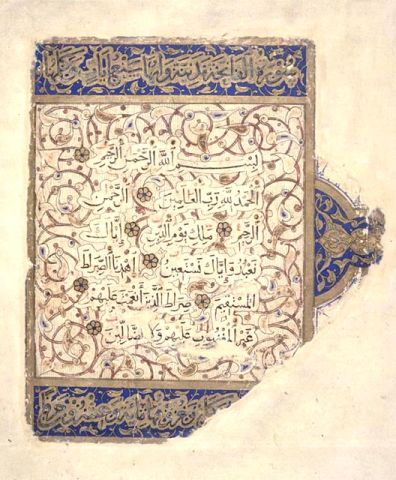
Image: 14th C. Qur'an, Mamluk origin, Library of Congress; Rights obtained.

A BREAKTHROUGH project which helps understand the Qur'an AS REVEALED -not just 'as explained.'

---------------------------------------------------------------------------

Friday, January 8, 2010

Welcome Friends! Day 8; HQ 2: 94-105; pages 15+16.

Welcome Friends: Ahlan wa sahlan!


Our reading has been an eye-opener, showing us where WE were going wrong. Perhaps we now understand better why so many Qur’anic verses discuss Bani Isra’eel. It wasn’t solely for the benefit of early listeners that these verses were revealed. Listeners of later times have derived great benefit from knowing the symptoms of spiritual ailments, making correct diagnoses, and finding treatment in the Qur’an. But through all the verses that discuss human failings, one flaw stands out above all others: Arrogance.
Arrogance was behind the first disobedience ever committed; remember verse 2:34- when Satan refused to show respect to someone he perceived as ‘lesser’ than himself? That was the first time arrogance (kibr) was mentioned in the Qur’an. The second time it was mentioned was in yesterday’s reading, Verse 87.
Arrogance is a FATAL FLAW that, besides despising other people and belittling their efforts, causes a person to ignore guidance. Such shall 'enter the gates of hell' in an evil state indeed (16:29; 39:72; 40:76).


COMMENTS:


1. A challenge is presented in verses 94, 95, 96, with regard to people who say that the Hereafter is theirs alone. Asad writes in footnote 79 that this alludes to the Jewish belief that paradise is reserved for the children of Israel alone. We can name many other groups even today who say the same thing: “Paradise is ours alone!” Perhaps a symptom of arrogance?

2. And then the portrayal of those who commit sins and actually send them ‘ahead of’ themselves. Beautifully explained by both M. Asad and Y. Ali, this concept shows that we are in this life temporarily, and that our deeds precede us to the Hereafter, waiting for us when we get there. What a thought!

3. In Verse 97 we find mention of the word ‘Qalb’ which is usually translated as heart according to common usage, but is in reality much more than that. ‘Qalb’ in the earliest usage of the Arabic word is ‘the purest and most esteemed part of a human,’ (see footnote) which could only be the faculty of reasoning and understanding as shown in the following verses: 22:46; 7:179; 47:24.

4. The Qur’an absolves previous Prophets of the many vices reported against them in the Old Testament. In today’s reading, Prophet Solomon is absolved of sorcery. It is important to read Asad’s footnotes 82, 83, 84, especially where he say that activities of an occult nature cause ‘serious damage to the author’s spiritual status’- ie, 'author' meaning the perpetrator of magic.
‘Magic’ is called ‘sihr’ in the Qur’an, and the verses which do mention magic, also state that it is a deception to one’s perception: It’s a combination of ‘Rahba’ to shock or terrify, and ‘sihr’ to deceive (see footnote). You could also read verse 7:116, but note that Yusuf Ali’s translation is clearer than Muhammad Asad’s.

5. In today’s reading, Verse 104, we hear the Qur’an calling us for the first time, “O you who have attained to Faith!” According to narrated tradition, Ibn Mas’ood (a companion of the Prophet peace upon him) said that when we hear this call we should listen carefully; it is either virtue we are commanded to, or vice we are forbidden from.
Of the 89 such calls in the Qur’an, 11 are in this chapter (The Heifer). We shall listen carefully. The final call is in 66:8, and is absolutely beautiful!

 Enough said!


Tomorrow we shall have ONE DAY to rest -or to catch up.
Our reading for the day-after-tomorrow is from verse 106-119.

Our working friends said they needed one day every weekend, and this author happily agrees.
If we took 52 days off this year, we can still finish 12 pages every week and complete our mission before the end of the year, with God’s help!

Happy Weekend
         &
Peace unto all!

---------------------------------------------


*من معجم المقاييس في اللغة لابن فارس المتوفى 395 للهجرة:
قلب: يدلّ على خالِص شَيءٍ وشَريفِه، قلب الإنسان وغيره، سمِّي لأنَّه أخْلصُ شيء فيه وأرفَعُه.
سحر: خَدْعٌ وشِبههُ، قال قوم: هو إخراج الباطل في صورة الحقِّ، ويقال هو الخديعة. واحتجُّوا بقول القائل:
فإِنْ تسألِينا فيمَ نحنُ فإننا *** عصافيرُ من هذا الأنام المسحَّرِ-كأنَّه أراد المخدوع، الذي خدعَتْه الدُّنيا وغرَّتْه.

Thursday, January 7, 2010

Welcome Friends! Day 7; HQ 2: 84-93; pages 13+14.


Welcome Friends: Ahlan wa sahlan!


Your comments show that the central issue of yesterday’s posting is a real concern. We must look upon the Qur’anic verses as living lessons for us all, and benefit from them, especially when we see around us the very actions that the Qur’an denounces, leading us to the exact consequences it warns of.

As Muslims, we cannot say that God did not warn us of the real life consequences. As Arabs, we cannot say we did not understand.

And now, back to our text:

COMMENTS:


1. “….Do you then believe in some parts of the Divine writ and deny the truth of others..?

Humiliation and contempt IN LIFE are the consequences to such action and inaction, while on the Day of Resurrection comes the suffering most grievous. In applying this to ourselves we might understand that our present state is simply a consequence.

2. “And yet it is you who slay one another and drive some of your own people from their homeland…” History tells us that there were 2 opposing idol-worshipping Arab tribes and 3 Jewish tribes living in Yathrib (Medina) prior to Prophet Muhammad’s emigration there, peace upon him. These verses are addressed to the 3 Jewish tribes who had taken opposite sides in battle (allying themselves to opposing Arab tribes), and were therefore flagrantly inconsistent in upholding their religious Laws, unlawfully killing each other at one point, then paying each other the blood-money due according to their Law.
To see several side by side translations (Asad’s included, as well as Arabic text; Commentary is by Yusuf Ali) go to: http://www.islamitexts.org/?noar=&t=9&k=2%3A84

3. Verse 86 gives us a perspective many of us may have never thought of:
Isn’t it a sorry exchange indeed, to buy the ‘life in proximity’ (literal translation of ‘al hayat aldunya - الحياة الدنيا’* the life closest to you at this point) at the price of The Ultimate? The Ultimate Life is our final, everlasting existence, while this life is paltry in comparison (also see HQ: 6:32, 9:38).

4. Jesus, son of Mary, is mentioned in verse 87, peace upon him. He was strengthened with ‘Roohul Quds’ translated as ‘Holy Inspiration (M. Asad), or ‘the Holy Spirit’ (Y. Ali). Most scholars believe this refers to Angel Gabriel.

5. We find these verses discussing transgressions such as worshipping the calf, arrogance, not following God’s Messengers due to pride in their own learning on one hand, while killing these Messengers- which is what their Holy Book forbids- on the other. Asad explains how they do that, “all their beliefs are centered on themselves and their alleged ‘exceptional status’ in the sight of God” (footnote 74).

6. Verse 93 is similar to verse 63, in that it is about the solemn pledge (‘meethaaq,’ which Yusuf Ali translates as Covenant), given to God as they were threatened with the mountain above their heads. The mountain is not specified here, but is mentioned simply as ‘the mountain.’ Ali keeps the word (Sinai) between brackets, while Asad puts it in the body of his translation. The word Sinai appears only once in HQ: 23:20, while a similar word (Seeneen) appearing in HQ: 95:2. To keep the translation as close to the original as possible, I would prefer not to mention ‘Sinai’ in this instance.


Enough said!

Our reading for tomorrow is from verse 94-105.

Peace unto all!

----------------------------------------------

دني: المقارَبَة. ومن ذلك الدّنِيُّ، وهو القَريب، مِن دنا يدنُو. وسُمِّيت الدُّنيا لدنوّها.*

Let's TWEET this!

Tweet me!