CLICK IMAGE: Tanzil Website


OUR MISSION:
UNCOVERING the original message of the Arabic Qur'an by using Lexicons compiled more than 1,000 years ago.

ISOLATING Fact from Fiction.


RECOVERING Hope and regaining the perspective where Humanity is one, God's Message is one, and our Future CAN become one we all look forward to!


© 2010 IQRATHECHALLENGE: INTELLECTUAL PROPERTY PROTECTED BY D.M.C.A. ALL RIGHTS RESERVED.

© 2010 IQRATHECHALLENGE: INTELLECTUAL PROPERTY PROTECTED BY D.M.C.A. ALL RIGHTS RESERVED.
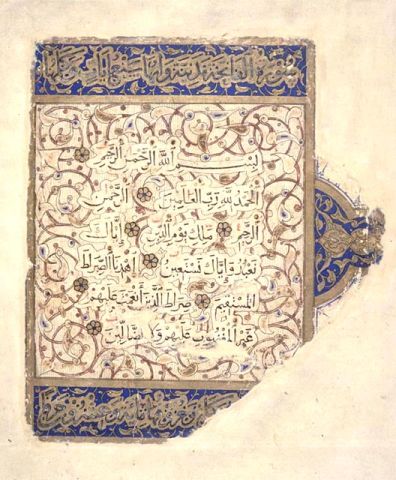
Image: 14th C. Qur'an, Mamluk origin, Library of Congress; Rights obtained.

A BREAKTHROUGH project which helps understand the Qur'an AS REVEALED -not just 'as explained.'

---------------------------------------------------------------------------

Monday, March 29, 2010

Day 72; HQ6:108-116 page 142

Welcome Friends:  Ahlan wa sahlan!

COMMENTS:

1.  Verse 108 makes us pay attention to what we say. 
We should not be abusive to people nor disrespectful of their freedom to ‘call unto’ other than God.  By watching our tongues we are respecting God, by not giving them any reason to speak ugly words against Him out of spite or ignorance.  Although we do not agree with their choices, as long as they do not force anything upon us, we must respect the fact that everyone is, indeed, free to choose!

2.  In the center of this verse is the statement, “..thus we have made alluring to each people its own doings…” which, as Yusuf Ali tells us in note 936, refers to the reason behind people’s choices, psychological background, tendencies, history.  Asad says, in note 93, that it implies man’s nature to believe what was implanted in childhood, “with the result that a polemic against those beliefs often tend to provoke a hostile psychological reaction.”  
Perhaps this will help us understand the reaction people get when presenting differing beliefs or practices, even between members of their own community.  One example of that, is certain persons’ belief in the power of ‘jinns/ghosts/evil spirits/magic.’ In their view, these ‘forces can overpower humans’ whenever the conditions allow them to do so, and no matter what proof we give such persons (whether Qur’anic, psychological, scientific, or historical), it will not help them change their minds. 
But we must help them see that human freedom is the very reason for human accountability, and they cannot have it both ways:  The problem is, when they think that each human by nature, by default, is vulnerable to a hostile takeover by other forces, they are in fact granting all humans diminished capacity, after which there would be little or no accountability.  It is that simple.  And it is NOT SO. 
We will grasp more of this issue as we progress through the Qur’an.

3.  Verses 109-111 discuss the idol-worshippers’ vows, made without true intent, and describe the inner turmoil of their ‘af’idah, plural of fou’aad’–[i]فؤاد-أفئدة-

RESEARCH: This word is mentioned here for the first time, and both Ali and Asad translate it as ‘heart,’ but had it meant ‘heart/mind,’ then the word ‘qalb’ would have been used.  It is an important word which will recur in future, so what is فؤاد the ‘fou’aad?’

TANZIL SEARCH: A search in ‘Tanzil’ shows us other instances of its use, and we realize that fou’aad’ is NOT an organ, being mentioned several times after ‘hearing and sight’ (not ears and eyes) (HQ67:23; 32:9; 23:78; 17:36; 16:78 in this last verse Ali translates it as ‘intelligence and affections,’ while Asad says ‘mind’).  So it is a faculty.. but which?
 
CROSS-REFERENCE and Qur’anic CONTEXT: We discover three verses which give us an important clue.  Two of them they say that the Qur’an was delivered to the Messenger in a certain way so as to ‘stabilize/make firm’ his ‘fou’aad’ (HQ11:120; 25:32), and the third (HQ28:10) says that “…the fou’aad of the mother of Moses became ‘empty/void/blank,’ and she almost disclosed him (her infant Moses, floating away) had We not strengthened her qalb- heart/mind so that she’d be of Those with Inner Certainty من الموقنين-.” So the word is not heart/mind, as we can see from the use of qalb in the last part of the same verse.

LINGUISTICS: Our 1000 year-old Lexicon tells us that the three-letter root-verb ‘Fa-a-da’ فأد- “indicates fever and high temperature,” and its verb is used as in, to ‘roast meat,’ the adjective ‘f’aeed’ meaning ‘roasted.’  Our second reference (Ragheb al Asfahaani, mentioned above) says ‘Fou-aad’ is the ‘qalb’ in a condition of being aflame/ignited.”

For now, I can think of no better English translation for this, than the concept of ‘in the heat of the moment’ mental response or reaction. 
So, to return to our verse 110 in today’s Reading, the idol-worshippers’ turmoil was related to hearing the Message again (probably feeling its truth) but, in the heat of the moment, not knowing how to respond/react having already announced their disbelief the first time around.  
So, for now, we’ll refer to ‘fou-aad’ as ‘mental-response.’

4.  Verse 111 states clearly that no matter what Signs they would have received, they would not have believed unless God had willed it upon them (enforced it).  Yusuf Ali is off the mark here, referring their disbelief to what might be understood as a fatalistic attitude, ‘God’s Plan,’ unlike Asad’s translation, and his note 95 which makes it even better.
Verse 112 provides solace that all Prophets before him had Deviants (Sheyateen) as enemies, some were of mankind, and others of the Unseen-kind (jinn), some supplying information to others يوحي in the form of ‘flowery discourse/ glittering half-truths’ (Ali/Asad).  But here, Yusuf Ali mistakenly translates ‘nabi’ as ‘Messenger’ instead of Prophet- big difference!

5.     Verse 113 seems more coherent in Ali’s translation.  Here we find the word ‘af’idah’ أفئدة again, plural of ‘fou’aad.’  The verb before it ‘saghaa’ [ii]صغى means to incline, and describes the first of a three-step process mentioned here, about those who do not believe in the Hereafter inclining to the deceit mentioned in verse 112:  First, they go through mental inclination, then comes acceptance رضى, and finally committing the deed and earning its consequences.  I think Asad’s translation was incoherent because he referred the pronoun إليه to God, rather than to deceit.    

6.  Verse 114 starts with a question, then presents a statement, and ends with a command: “Am I to seek other than God as Judge, and it is He who sent down to you (pl.) the Compilation ‘explained in detail/ step by step’? (Ali/Asad)  And those to whom we had bestowed the (earlier) Compilation know that it is being sent down in Truth, so be not among the Doubters.”    

7.  According to Muhammad Asad, Verse 115 which begins, “Truly and Justly has your Lord’s promise been fulfilled…” “obviously refers to the Biblical Promise in Deuteronomy XVIII 15 and 18 that God would raise up a prophet ‘like unto Moses’ among the Arabs…” 

8.  Verse 116 is a statement showing that most people on earth do not have proof for what they believe in; all they can follow is Conjecture, and all they can do is guess. 

Dear Reader: 
If not for the Arabic Qur’an, this might have been an assessment of us today!  But through our knowledge of Arabic and our research we keep uncovering Qur’anic truths that are such well-structured proofs, that we find ourselves constantly growing in confidence and faith.  The Arabic Qur’an, unlike any other Compilation, will not only withstand scrutiny, it will correct commonly-held misconceptions and will thoroughly convince its scrutinizer IF s/he studies it with a truly open mind.

Enough said!
Our next Reading is from HQ6:117-132
Peace unto all!


[i] (فأد) يدلُّ على حُمَّى وشِدّةِ حرارة. من ذلك: فأَدْتُ اللَّحمَ: شويته. وهذا فَئِيدٌ، أي مشويّ. والمِفْأد: السَّفُود. والمُفتأَد: الموضِع يُشوَى فيه.
الراغب الأصفهاني: فأد- الفؤاد كالقلب لكن يقال له فؤاد إذا اعتبر فيه معنى التفؤد، أي: التوقد.

[ii] (صغو/ي) يدلُّ على المَيْل، من ذلك قولُهم: صِغْو فلانٍ معك، أي ميلُه. وصَغتِ النجوم: مالت للغُيوب. وأصغى إليه، إِذا مال بسمعِهِ نحوَه. وأَصْغَيت الإِناءَ أَمَلْتُهُ. ومنه قولهم للذين يَميلون مع الرَّجُل من أصحابِهِ وذوي قُرْباه: صاغِيةٌ

Sunday, March 28, 2010

Day 71; HQ6:100- 107 page 141

Welcome Friends:  Ahlan wa sahlan!

Today's Reading is about 'Shirk,' quite a topic!
COMMENTS:
1.  Verse 100 tells us about what people tend to revere besides/instead of God (‘partners’ شركاء), in this instance, the ‘Jinn’ الجن--. 
From Yusuf Ali’s note 929:

“The root meaning of junna, yujannu, is "to be covered or hidden", and janna yajunnu, in the active voice, "to cover or hide", as in Surah 6:76. Some people say that Jinn therefore means the hidden qualities or capacities in man; others that it means wild or jungle folk hidden in the hills or forests. I do not wish to be dogmatic, but I think, from a collation and study of the Quranic passages, that the meaning is simply "a spirit," or an invisible or hidden force.”

Muhammad Asad also relates the word to its origin and refers us to two pages he wrote on the subject (Appendix III) in which he says:
“In the usage of the Quran, which is certainly different from the usage of primitive folklore, the term jinn has several distinct meanings. The most commonly encountered is that of spiritual forces or beings which, precisely because they have no corporeal existence, are beyond the perception of our corporeal senses a connotation 'which includes "satans" and "satanic forces" (shayateen - see note 16 on 15:17) as well as "angels" and "angelic forces," since all of them are "concealed from our senses" (Jawhari, Raghib).

We have already discussed ‘jinn,’ the hidden, or imperceptible, (see Feb 21st), and know that a lush garden enclosed -or hidden by its own foliage- is a ‘jannah,’ an unborn child is a ‘janeen,’ the heart is the ‘janaan,’ and we also know that germs, bacteria, micro-organisms, etc.. are ‘jinn’ because they are unseen.  As for the spiritual, these matters are ‘gheyb,’ so we can never prove them one way or the other, although the damage which superstition wreaks upon our lives is unfortunately quite real.

I have attached in the footnote[i] what Asad referred to in Appendix III, from the lexicon ‘Mufradaat alfaathul Qur’aan’ by Al-Raghib Al-Asfhaani, who died in 503 A.H./1109 A.D.  I have translated here the most interesting part of this lengthy explanation:

“Jinns, they say, are two kinds; the spiritual entities which are completely hidden from all human senses and perception, in which case this will include the Angels and the Deviants.  Therefore all Angels are Jinn, but not all Jinns are Angels…” 

This alternative definition is more than 900 years old.  It seems supported by the fact that, although the Qur’an often mentions the creation of humans (from earth matter plus ‘spirit’) and of jinns (from energy/fire), nowhere does the Qur’an specifically mention the creation of Angels.
This also helps answer certain questions and explain certain Qur’anic verses, such as today’s Reading, HQ 6:100, where the Qur’an criticizes those who have ‘associated’ Jinns with God, making out of them ‘sons and daughters’ of God.  In other verses we understand that they were referring to angels (HQ17:40; 37:150; 43:19.), as Asad says in his note 87:

“[Lit., "they have invented for Him (or "falsely attributed to Him") sons and daughters without having any knowledge": a reference to the beliefs of the pre-Islamic Arabs who regarded the angels as "God's daughters" (a designation which they also applied to certain of their goddesses), as well as to the Christian view of Jesus as "the son of God."

2.  Verse 101-103 gives us a few of God’s beautiful attributes, ‘Originator of the heavens and the earth بديع السموات والأرض’ (Asad), ‘Above all Comprehension yet Acquainted with all things اللطيف الخبير- ’ (Ali).  Both translations are beautiful to read, but the Arabic even more so!

3.   Verse 104 is general, an address to people from their Lord; Ali translates ‘basa’er- بصائر’ as ‘proofs,’ while Asad as ‘means of insight.’

4.  Verses 105-107 are addressed to the Messenger Muhammad, peace upon him, and they begin by telling him that thus, in different ways, does God convey His Signs. Read from either Ali or Asad.  There is a command to follow what was revealed to him from His Lord, and to turn away from the ‘Associat-ers’ the ‘Mushriks,’ who ascribe divinity to other than God.  In verse 107 is the reminder that, had God willed, they would not have associated.  The verse ends by limiting the Messenger’s responsibility to the delivery of the Message.

5.     But what is ‘Association’ or ‘Shirk’?

‘Associating partners with God,’ or Shirk, as scholars agree, is the opposite of ‘Tawheed,’ which is worshipping God Alone (copy + paste شرك in Tanzil).
Shirk is of two kinds: the Greater Shirk which is ‘association in God-hood- شرك الألوهية’ when someone takes another to worship or supplicate to rather than, or besides, God.  The Lesser Shirk, which is ‘association in Lord-ship-شرك الربوبية,’ when one obeys, seeks to please, or follows another, such as peers, society, and one’s own desire/weakness..etc instead of God.

Obedience to Desire/Weakness (from 'hawa' which literally means 'to plummet down-to fall rapidly') is perhaps the most subtle ‘Shirk’ of all.

6.   Desire/Weakness covers the entire spectrum of choices in Life that might cause us to plummet down, to degrade ourselves as Cognizant Humans, all of which deserve Awareness.  When unaware, anyone can fall to desire or weakness, becoming a ‘Follower,’ and later perhaps attracting others, becoming ‘Followed’ (HQ2:166-167).
Desire/Weakness is a strong Deity (copy + paste هواه in Tanzil-topmost image).  Desire/Weakness has the power to close one’s mind despite (the person's) knowledge ‘ilm’ على علم, which is one way of understanding the verse, by referring knowledge to the persons themselves.  (Some commentators refer the knowledge to God- 'as explained by both Ali and Asad.  Copy + paste "على علم"; you'll find the term refers to God at times, and to people at others.)
This is considered the worst kind of waywardness ضلال (by commentators mentioned in footnote-2-): 
Straying, and getting irretrievably lost DESPITE KNOWING BETTER! 
We can all relate to that.

“Have you (sing.) observed the person who took his Desire as his Deity, and whom God [thereupon] let stray despite (his) knowledge, and sealed-over his hearing and heart/mind and rendered upon his sight a veil?  Who then can guide him, (of all who are) lesser than God? Will you not (pl.) then, think back and bring to mind? (HQ 45:23)

Enough said-for now!
Our next Reading is from HQ6:108-116
Peace unto all!


[i]من معجم مفردات ألفاظ القرآن للراغب الأصفهاني:

جن

- أصل الجن: ستر الشيء عن الحاسة يقال: جنة الليل وأجنة وجن عليه، فجنه: ستره، وأجنه جعل له ما يجنه، …والجنان: القلب، لكونه مستورا عن الحاسة، والمجن والمجنة: ….
والجنة: كل بستان ذي شجر يستر بأشجاره الأرض، قال عز وجل: }لقد كان لسبإ في مسكنهم آية جنتان عن يمين وشمال{ [سبأ/15]، }وبدلناهم بجنتيهم جنتين{ [سبأ/16]، }ولولا إذ دخلت جنتك{ [الكهف/39]، قيل: وقد تسمى الأشجار الساترة جنة، وسميت الجنة إما تشبيها بالجنة في الأرض - وإن كان بينهما بون - ؛ وإما لستره نعمها عنا المشار إليها بقوله تعالى: }فلا تعلم نفس ما أخفي لهم من قرة أعين{ [السجدة/17]. ….
والجنين: الولد ما دام في بطن أمه، وجمعه: أجنة. قال تعالى: }وإذ أنتم أجنة في بطون أمهاتكم{ [النجم/32]، وذلك فعيل في معنى مفعول….
والجن يقال على وجهين: أحدهما للروحانيين المستترة عن الحواس كلها بإزاء الإنس، فعلى هذا تدخل فيه الملائكة والشياطين، فكل ملائكة جن، وليس كل جن ملائكة.....

(2) هكذا قال ابن كثير. ومن صفوة التفاسير للصابوني:
"أي وأضلَّ الله ذلك الشقي في حال كونه عالماً بالحق غير جاهل به، فهو أشدُّ قبحاً وشناعةً ممن يضل عن جهل."

Let's TWEET this!

Tweet me!