.jpg)
Welcome Friends: Ahlan wa sahlan!
In today’s Reading we come across the reason for the title of this chapter, al A’raaf.
Yusuf Ali’s Explanation.
Muhammad Asad’s Explanation.
COMMENTS:
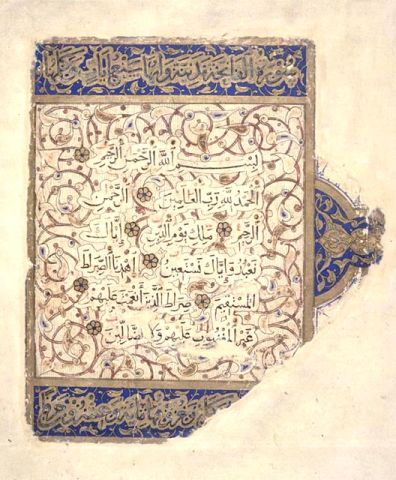
PAGE 155: Click for Arabic Qur’an
1. Yesterday’s reading ended with the Angels of Death (who are also God’s Messengers!) taking into full deliverance the spirits of wrong-doers (‘wafaat’ indicates the end of this life for human consciousness/spirits; its root-verb وفّى’ denoting the completion, or rendering of a complete sum of something; see Posting March 19th).
Today’s Reading begins with these wrong-doers entering the Fire (verses 38-39), as did before them other groups of ‘Ins’ humans and ‘Jinn’ unseen beings.
The argument made by the late-comers into the Fire, against those who went before them, is quite telling, as is the response!
2. Verse 40:
“Indeed, those who belied our Signs and were self-arrogantly dismissive of them, the gates of heaven will not be opening for them nor will they enter the garden until the (thick twisted) rope[i] enters through the eye of a needle, and so do we reward the Evil-earners/Mujrims!”
For definition of ‘Mujrim,’ see Posting of March 30th.
As for my interpretation of ‘jamal’ as rope (I agree with Muhammmad Asad- see his note 32) the Arabic definition of ‘jamala’ has shown that the word does NOT mean camel (other references have specified that the word referred to the thick, twisted rope used in shipyards and on ships). Self-challengers can put the word جمل in Tanzil and discover that the Qur’an never refers to a camel by that name (check out ‘naaqah’- ناقة and الإبل).

So, dear Reader, where did THIS interpretation come from? You guessed it: Biblical explanation. That was how early Biblical scholars had translated a similar concept in the New Testament, from its original quote in Aramaic, then in Greek:
Mark 10:25: "It is easier for a camel to go through the eye of a needle than for a rich man to enter the kingdom of God." (Also in Mathew 19:24; Luke 18:25.)
“The Aramaic word gamla means rope and camel."
Also, the Greek words for rope (ka' mi los) and camel (ka' me los) are very similar, and it has been suggested that there was a confusion of the Greek words..”
Also, the Greek words for rope (ka' mi los) and camel (ka' me los) are very similar, and it has been suggested that there was a confusion of the Greek words..”
As for us, we DO know how close Arabic is to Aramaic; our Lexicon (footnote) shows that the definitions of ‘thick rope; twisted cable’ in both languages are almost identical.
Nevertheless, despite the fact that the Arabic language had PRESERVED the original connotation, MUSLIM SCOLARS BUILT THEIR EXPLANATION OF THIS VERSE ON A MISTRANSLATION. It is time to put things right.
3. Verses 41-42 hold two opposing scenes, one to dissuade (which scholars have dubbed ترهيب) and the other to persuade (dubbed (ترغيب. The Qur’an is full of such comparisons to dissuade and persuade.
4. Verse 43 onwards is a scene from the Hereafter, well-explained by both Yusuf Ali and Muhammad Asad. Verse 43 holds a beautiful statement to be made by the dwellers of Paradise- standing in stark comparison to what follows.
PAGE 156: Click for Arabic Qur’an
5. Verses 44-51 introduce us to two other ‘stations’ in the Hereafter, and we are taken back and forth between the dwellers of Paradise and the other two groups, all exchanging questions, receiving comments… and the pleas for water and other provision, sending shivers down our spines.. to be told that “…God has forbidden the Deniers such (comforts)!”
6. In verse 46 we encounter the word ‘hijaabحجاب- [ii]’ which Ali translates as ‘veil,’ and Asad as ‘barrier.’ Asad is correct (see note 36)!
We have mistakenly applied this word to ‘head-scarves/veils’ although there is no Qur’anic or linguistic support for this whatsoever (the Qur’an calls the ‘coverings’ worn by women: ‘khumur - خُمُر’ HQ 24:31).
As readers can see in our 1,000 year old Lexicon, the word ‘hijaab’ is related to a literal obstruction or barrier, such as what protects our eyes and our soft organs; our eye-brow is ‘haajeb,’ and our diaphragm is ‘hijaab haajez’!!
7. The word al A’raaf الأعراف appears only twice in the Qur’an, both in this section. It is quite interesting to see why Asad translated it as ‘the Faculty of Discernment’ in his note 37 (remember that 'rijaal' means 'persons on foot,' so Ali's translation, 'men,' is wrong). A’raaf is plural of ‘urf’ عُرف [iii] a word used to refer either to something ‘proceeding, one after the other’ (as in the hair on a horse’s mane, or fertile high ground with sprouting growth), or to the feeling of calmness and ease, which usually relates to familiarity, which is why it also means ‘to recognize- عرف’.
These are also the origins of the name for Mount ‘Arafaat.’
Enough said!
Our next Reading is from HQ 7:52- 67
Peace unto all!
[i] (جمل) أصلان: أحدهما تجمُّع وعِظَم الخَلْق، والآخر حُسْنٌ.
· فالأوّل قولك أجْمَلْتُ الشّيءَ، وهذه جُمْلة الشّيء. وأجمَلْتُه حصّلته. وقال الله تعالى: {وقَالَ الَّذِينَ كَفَرُوا لَوْلاَ نُزِّلَ عَلَيْهِ القُرْآنُ جُمْلَةً وَاحِدَةً [الفرقان 32].
والجُمَّل: حَبْل غَليظ، وهو من هذا أيضاً. ويقال أجْمَلَ القومُ كثُرت جمالُهم. والجُمَاليّ: الرّجُل العظيم الخَلْق، كأنه شُبِّه بالجمل؛ وكذلك ناقةٌ جُمَالِيَّة. قال الفراء: (جِمَالاَتٌ) جمع جَمَل. والجِمَالات: ما جمع من الحِبال والقُلُوس.
· والأصل الآخر الجَمَال، وهو ضدُّ القبح. ورجلٌ جميل وجُمال. قال ابن قتيبة: أصله من الجَمِيل وهو وَدَك الشَّحمِ المُذابِ. يراد أنَّ ماءَ السِّمَنِ يجري في وجهه. ويقال جَمَالَكَ أن تفَعَلَ كذا، أي اجْمُل ولا تَفْعَلْه.
[ii] (حجب) هو المنع. يقال حجبته عن كذا، أي منَعتُه. وحِجابُ الجَوْف: ما يَحْجُبُ بين الفُؤاد وسائر الجَوْف. والحاجبان العظمان فوق العينين بالشّعَر واللّحم. *وهذا على التشبيه، كأنهما تحجبان شيئاً يصل إلى العينين. وكذلك حاجبُ الشّمس، إنما هو مشبَّهٌ بحاجب الإنسان.
[iii] (عرف) أصلان، يدلُّ أحدُهما على تتابُع الشيء متَّصلاً بعضُه ببعض، والآخر على السكون والطُّمَأنينة.
· فالأوّل العُرْف: عُرْف الفَرَس. وسمِّي بذلك لتتابُع الشَّعر عليه. ومن الباب: العُرْفة وجمعها عُرَف، وهي أرضٌ منقادة مرتفِعة بين سَهْلتين تنبت، كأنّها عُرف فَرَس.
· والأصل الآخر المعَرِفة والعِرفان. تقول: عَرَف فلانٌ فلاناً عِرفاناً ومَعرِفة. وهذا أمر معروف. وهذا يدلُّ على ما قلناه من سُكونه إليه، لأنَّ مَن أنكر شيئاً توحَّشَ منه ونَبَا عنْه. وأمَّا عرفات فقال قومٌ: سمِّيت بذلك لأنَّ آدمَ وحواءَ عليهما السلام تعارَفَا بها. وقال آخرون. بل سمِّيت بذلك لأنَّ جبريل عليه السلام لما علّم إبراهيم عليه السلام مَناسِكَ الحجّ قال له: أعَرفت؟ وقال قومٌ: بل سمِّيت بذلك لأنَّه مكانٌ مقدَّس معظَّم، كأنَّه قد عُرِّف، كما ذكرنا في قوله تعالى: {وَيُدْخِلُهُمُ الجَنَّةَ عَرَّفَهَا لَهُمْ} [محمد 6]. والوقوف بعَرَفاتٍ تعريف. والتعريف: تعريف الضَّالة واللّقْطَة، أن يقول: مَن يَعرِف هذا؟ ويقال: اعتَرَف بالشَّيء، إذا أقرَّ، كأنّه عَرفَه فأقرَّ به.

