.jpg)
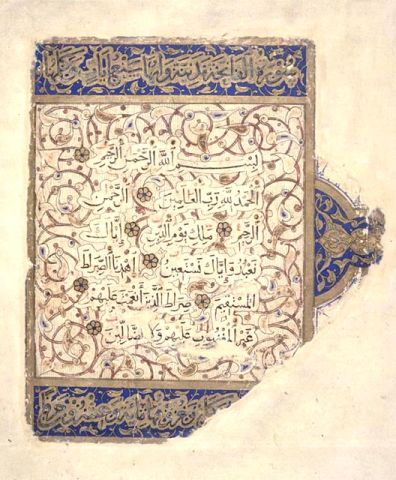
Day 83; Qur’an 7: 95-116, pages 163+164
Welcome Friends: Ahlan wa sahlan!
In today’s Reading begins the narrative of Prophet Moses, peace upon him, with his people. We will notice its length, in comparison to the preceding summaries of the narratives of Prophets Noah, Hud, Saleh, Lot and Shu’ayb, peace upon them all.
We noticed earlier that each of these Prophets was dealing with a group of people who were –all together- committing one or more of the Inviolables المحرّمات which pave the ‘Straight Path.’ Each prophet’s mission was to introduce/reinstate the particular commandment/s. Moses, on the other hand, was reinstating them all (see April 5th for ‘Straight Path,’ and April 6th for deviation from it).
The Straight Path (HQ 6:151-153), holds as ‘Inviolable’ certain issues which, together, form THE blueprint to Humanity’s wholesome existence on this earth, and THE springboard which allows each of us to grow in fulfillment of our physical/mental/spiritual potential.
Each of the Prophets, in his time, dealt with one or more of these ‘Inviolables,’ attempting to raise people to a higher level of accountability relative to humanity’s advancement.
In earlier Readings, Readers would have noticed the skill with which Prophet Abraham, peace upon him, took his people from worshipping the concrete to the abstract (as seen in Posting of March 25th and attached footnote[i]). By Prophet Moses’ time, peace upon him, humanity was ready for higher accountability, therefore his mission was to entrust them with so much more; many of the Straight Path’s paving stones are still found in the Commandments of today’s Old Testament, as we saw in above Posting of April 5th.
Yusuf Ali’s Translation of this Chapter.
Muhammad Asad’s Translation of this Chapter.
Their commentaries can only be read in verse by verse view.
COMMENTS:
1. Verses 94-100 are general; they tell us of the cycle of good and bad ‘fortune’ that God releases upon populations as reminders, so that they would put their efforts into fulfilling their best Selves on this earth. Verse 96 specifies Faith/Belief AND Awareness as the two requirements by which a community acquires -and holds onto- God’s abiding bounty.
2. Verses 101-102 begin by addressing Prophet Muhammad, peace upon him, in particular, before they become general. We understand something about human nature, as indelibly imprinted in us by God (طبع [ii]) that once persons belie –or consider as ‘untrue’ –what the Messengers give them of evident messages بينات they will never turn around one day and believe in them. This statement was to console prophet Muhammad with regard to his people, in that it is not his effort which would make the difference; the important thing is that the Message itself is clear.
When we remember that this Chapter was revealed in Mecca, we better understand the reason why these narratives appear so early on, in the Qur’anic Revelation; the Meccans were quite familiar with these Prophets, themselves being descendents of Abraham, from his son Ishmael. The Qur’an was showing them (and Prophet Muhammad, peace upon him) their part in the full circle of Revelation!
3. Verses 103-104 begin the narrative of Prophet Moses, peace upon him, with Pharaoh and his people. Moses starts by introducing himself as the Messenger of the Lord of the Worlds.
4. In Verse 105 Prophet Moses affirms his truthfulness and integrity, stating that he has ‘evidence’- بيِّنة -and informs Pharaoh of his request: “.. so send with me Bani Isra’eel!”
In the following verses (106-108) Pharaoh challenges him to show what Sign ‘Aayah- آية ’ he might have, so Moses flings his staff which becomes an evident serpent, and puts out his hand, which is observed to be shining white and luminous.
5. In Verses 109-112 we hear the discussion that took place between Pharaoh and his court, who immediately judged Moses in terms they could relate to: his motive they said, was the desire to rule instead of Pharaoh, and his deeds were magic. They called him a Sorcerer. Then they set forth their own ‘combat’ strategy, being famous themselves for having the best sorcerers.
Verses 113-114 tell us of the discussion that took place between Pharaoh and the most ‘knowledgeable,’ most learned, most accomplished of sorcerers; those he had summoned to face Moses.
6. Verses 115-116 begin to tell us of the all-important scene which took place between these skilled sorcerers and Moses (other Qur’anic verses such as HQ 20:59 give us further detail related to the occasion -a festival- and the time of day -morning).
They threw their staffs, literally ‘deceiving - سحروا [iii]’ people’s eyes and striking them with ‘terror/awe,’ (Ali/Asad) and produced mighty sorcery (since the Qur’an is calling their sorcery ‘mighty,’ it must have been mighty indeed!).
7. MAGIC; SIHR سحر:
Let us compare 3 definitions of this word: the English, the Arabic, and the Qur’anic definitions:
· ENGLISH: The Merriam-Webster Dictionary mostly relates ‘magic’ to an extraordinary power or influence which is believed to overpower natural forces, and seems to come from a supernatural source.
· ARABIC: Our 1,000 year old Lexicon gives us only a few words about this connotation:
“It is to produce falsehood in the guise of reality or truth; it is said to be deception” هو إخراج الباطل في صورة الحقِّ، ويقال هو الخديعة
· QUR’AN: The Qur’an says it best: magic is ‘visual deception’ PLUS awe رهبة- .
Other Qur’anic verses such as HQ 20:66 clearly show that what ‘seemed to be happening,’ was NOT happening at all (the Magicians’ ‘sihr’سحر made people IMAGINE خيّل إليهم- that the ropes and sticks were slithering on the ground).
The Qur’an is truly amazing! Magic is ‘striking people with AWE and tricking them into believing that they are looking at something which does not exist in reality; what they see is but an illusion…!’
Dear Reader:
If this subject interests you, do more research, but stick to the Arabic Qur’an. No source is higher nor any evidence more authentic than this.
Everything else has been processed through human narration or interpretation, and will naturally be colored by perception (even what is written in these pages; despite authors’ attempts at neutrality, they can only write what they understand and perceive).
But we might all agree on one thing:
It is time to shed the yokes of superstition in this, the second Age of Ignorance.
Enough said!
Our next Reading is from HQ 7:115-137
Peace unto all!
[i] Abraham's observations formed part of his QUEST, and as you can see, the word quest is about quest-ioning- something which the Qur'an VALUES as a way to uncover knowledge.
His observations regarding 'who or what is truly worthy of worship' were made so that everyone would ask themselves the same, and arrive at the same answers. At a time when people were accustomed to worshipping A PHYSICAL ENTITY; a body they had MANUFACTURED, COULD TOUCH, AND COULD SEE, Abraham took them to entities beyond their doing, to celestial bodies they had always revered but could only see, and then from these to the CREATOR of those celestial entities: God Himself.
His observations regarding 'who or what is truly worthy of worship' were made so that everyone would ask themselves the same, and arrive at the same answers. At a time when people were accustomed to worshipping A PHYSICAL ENTITY; a body they had MANUFACTURED, COULD TOUCH, AND COULD SEE, Abraham took them to entities beyond their doing, to celestial bodies they had always revered but could only see, and then from these to the CREATOR of those celestial entities: God Himself.
If they were the creators of the idols they worshipped... WHO is the Creator of all existence?
Check out Ali's note 898, which tells us of Abraham's 'spiritual enlightenment,' and Asad's note 69 which tells us of 'Abraham's gradual grasp of the truth, symbolized by his intuitive progress' from the adoration of celestial bodies to a full realization of God's transcendental existence.
[ii] (طبع) هو مثلٌ على نهايةٍ ينتهي إليها الشيء حتى يختم عندها يقال طبَعت على الشيء طابَعاً. ثم يقال على هذا طَبْعُ الإنسان وسجيَّتُه. والطَّابع: الخاتم يُختَمُ به.
[iii] (سحر) خَدْعٌ وشِبههُ، ووقتٌ من الأوقات. السِّحْر، قال قوم: هو إخراج الباطل في صورة الحقِّ، ويقال هو الخديعة. وأمَّا الوقت فالسَّحَر، والسُّحْرة، وهو قَبْل الصُّبْح. وجمع السَّحَر أسحار.
(It is interesting to note that the second connotation of the root verb ‘sahara’ relates to the early hours of morning, the ‘sahar’ (a common name for Arab girls), the plural of which is ‘as-haar’ أسحار which Arabic Readers encountered in HQ 3:17)

