.jpg)
Welcome Friends: Ahlan wa sahlan!
Their commentaries can only be read in verse by verse view.
COMMENTS:
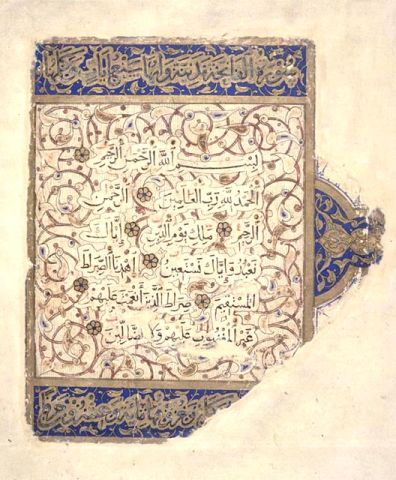
PAGE 237 Arabic Qur’an.
1. As the brothers put their plot to action and cast Joseph into the darkness of the well (Verse 15), God consoles the young lad, conveying to him that there will come a time when he will confront his brothers with their deed.
2. In Verses 16- 17- 18 the brothers do their best to convince their father of their sincerity, but Jacob, peace upon him, does not believe them. Trusting in God, he resigns himself to ‘exemplary forbearance’ (صبر جميل), so named in relation to the beautiful nature of his patience in adversity, a mental/spiritual/physical state he undertakes as he relies on Him.
It is important for us, as Believers, to train ourselves in the great virtue of Forbearance, or ‘sabr,’ which would help us interact with fellow humans in an exemplary manner. We have already encountered this word 11 times since we began our Qur’anic studies, and we still remember the beautiful verses HQ 2:155 and 3: 142! (Copy + paste صابر in Tanzil.)
A HUGE incentive for us, to try harder to be among the Forbearing and Aware, is that these are the ONLY people whom the Qur’an actually says that ‘God IS WITH!’
When we put "إن الله مع" (with quotations) in Tanzil, we find mention of God being WITH the Aware 4 times, and WITH the Forbearing, twice. And when we remember that ‘Taqwa’ or ‘Awareness’ IS, after all, the opposite of 'Udwaan' العدوان, or Aggression (Jan 1st) , we realize THAT AWARENESS AND FORBEARANCE ARE INSEPERABLE, and one cannot exist without the other, just as in the story of the two sons of Adam (March 10th).
Dear Reader: Let us take it upon ourselves, as a self-challenge, to raise our level of Awareness and Forbearance, biting our tongues before we speak against people, or strike back at them. Believers are people of virtue, and as such, we should attempt to behave in an exemplary manner! Reread the story of the two sons of Adam mentioned above; remember how much we learnt from both the brother who was Aware, as well as the Aggressor. It always helps to repeat the beautiful words of Prophet Jacob, peace upon him:
".......فصبر جميل والله المستعان على ما تصفون"
In Arberry’s explanation:
“…….But come, sweet patience!
And God’s succour is ever there to seek, against that you describe.”
3. Verses 19- 20 tell us how travelers who were passing by, found Joseph in the well…captured him, and sold him for a paltry price.
Verse 21 tells us of the nobleman who purchased Joseph, saying: “…..he may well benefit us, or we may take him as son….” which is similar to what the wife of Pharaoh had said when she found baby Moses in the river, as we can see in HQ 28:9!
This nobleman treated Joseph well, helping him lead a life of stability. In the meantime, Joseph learnt how to draw correct reference, foretelling upcoming events from the occurrences presented to him.
The word ‘Ta’weel –تأويل as defined on April 9th, is from the root verb ‘awala’ which denotes both the first and the last; the beginning and end. It is related to the culmination of things, in reference to their beginnings (the verb ‘aala, ya’oolu - آل- يؤول’ denotes returning to the first point of reference).
Verse 22 describes Joseph, peace upon him, as he grew into full manhood.
PAGE 238 Arabic Qur’an.
Also, read Verse 24 in Yusuf Ali’s explanation.
The woman’s primary designation being simply ‘she in whose house he was’ -as well as his reciprocal attraction towards her, and his resolve to be faithful to her husband and not to her, and the impersonal reference to her simply as ‘she’ in verse 26- ALL seem to imply that she was NOT the woman who had raised him as a child, but perhaps, a later wife of the man who, in fact, had raised him.
5. Verses 25- 26- 27 are self-explanatory, and clearly illustrate her fierce advances versus his retreat, so that his shirt (qamees- قميص- ) was ripped from behind. See footnote for Arabic Etymology. (Interestingly, cut in Arabic is 'qad قد' which denotes a tall, vertical cut. What a rich language!)
6. In Verse 28 her husband makes the comment that indeed women’s ‘guile is great.’
In our next Reading we’ll see this comment corroborated by Prophet Joseph himself, after other women in his community ALSO use their guile and wile to entice him!
7. In Verse 29 her husband advises both Joseph and his own wife, and seems to let the matter go at that, but things begin to get complicated (Verse 30) when the towns-women hear of the failed seduction!
Enough said!
Our next Reading is from HQ 12: 31-43.
Peace unto all!
------------------
------------------
‘Qameesقميص- ’ is the origin for the Spanish ‘camisa,’ and French ‘chemise,’ although there are those who say that this is not so, postulating that Arabs ‘did not wear shirts in Spain.’ But the word, which referred to an upper-body tunic IS in the Qur’an, which they would have to admit, IS a historic ‘document’ which dates back almost 1500 years!
Notice what it says on the Online Etymology Dictionary:
“late O.E., cemes "shirt," from O.Fr. chemise "shirt, undertunic, shift," from L.L. camisia "shirt, tunic" (c.400 C.E.; cf. It. camicia, Sp. camisa); originally a soldier's word, probably via Gaulish, from P.Gmc. *khamithjan (cf. Ger. hemd "shirt"), from PIE base *kem- "to cover, cloak" (cf. heaven). The French form took over after c.1200. Related: Chemisette.”
Notice what it says on Wiktionary:
Originally from Late Latin camisa, later reinforced or reborrowed from Anglo-Norman chemés, Middle French chemise, from the Latin.
Isn’t this incredulous? Someone should get on this topic at once, and bring proper research (AND honesty) to the Etymology of European Languages- these people are losing integrity!
Our Pakistani and Indian friends will be even more surprised to note that Wikepedia, after returning the word to Greek origins, incredulously states that the Urdu and Hindustani word ‘kameez’ was borrowed from Portuguese…! What happened to the well-known FACT that both these languages are full of Arabic words, due to shared Islamic history!??
“For an alternative etymology from Persian via Arabic and ultimately Greek, rather than Latin roots, refer entry under Kameez.”
There can only be ONE reason for ‘scholars’ erasing all Arabic influence from world history- and that reason is NOT ignorance!
Now read the following, which IS scholarly, and even includes photographs:
"The shirt, kameez or qamiz, takes its name from the Arabic qamis. There are two main hypotheses regarding the origin of the Arabic word, namely:
1.that Arabic qamis is derived from the Latin camisia (shirt), which in its turn comes from the Proto-Indo-European kem (‘cloak’). [2]
2.that Mediaeval Latin camisia is a borrowing through Hellenistic Greek kamision from the Central Semitic root “qmṣ”, represented by Ugaritic qmṣ (‘garment’) and Arabic qamīṣ (‘shirt’).”
P.S: I will not get into the Etymology of 'cut' from 'qad' at this point!

