CLICK IMAGE: Tanzil Website


OUR MISSION:
UNCOVERING the original message of the Arabic Qur'an by using Lexicons compiled more than 1,000 years ago.

ISOLATING Fact from Fiction.


RECOVERING Hope and regaining the perspective where Humanity is one, God's Message is one, and our Future CAN become one we all look forward to!


© 2010 IQRATHECHALLENGE: INTELLECTUAL PROPERTY PROTECTED BY D.M.C.A. ALL RIGHTS RESERVED.

© 2010 IQRATHECHALLENGE: INTELLECTUAL PROPERTY PROTECTED BY D.M.C.A. ALL RIGHTS RESERVED.
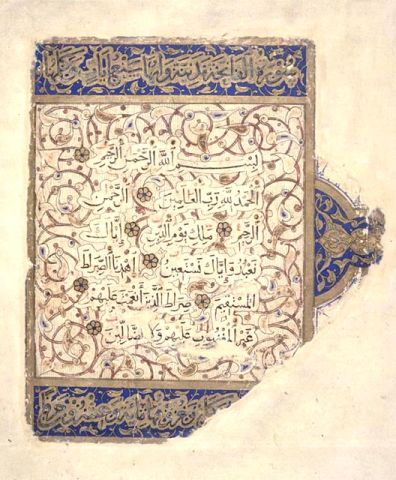
Image: 14th C. Qur'an, Mamluk origin, Library of Congress; Rights obtained.

A BREAKTHROUGH project which helps understand the Qur'an AS REVEALED -not just 'as explained.'

---------------------------------------------------------------------------

Saturday, November 20, 2010

Day 250; Qur’an 46: 21-35; page 505-506


Welcome Friends:  Ahlan wa sahlan
Well, we are in ‘November’ in real time, although it is 2011!

Yusuf Ali’s Translation of this Chapter.
Muhammad Asad’s Translation of this Chapter. 
Their commentaries can only be read in verse by verse view.

COMMENTS:
PAGE 505 Arabic Qur’an.

1.   The first five verses in today’s Reading (Verses 21-25) transport listeners back to the story of Prophet Hud, peace upon him, reminding them of this early Messenger’s experience with his people and the result of their refusal to worship none but God (please see previous posts, here and here).
As Regular Readers know, not only were the Messages delivered by various Messengers based on a singular Truth, but there also has been much similarity in these Messengers’ experiences with their people.  And now, as these verses were being revealed, it should have been obvious to Quraish that they were treating Prophet Muhammad no differently, and that his warning too shall eventually befall them…. but the reminder fell on many deaf ears.
‘The Penalty of a Mighty Day/ the Suffering of an Awesome Day’ (Ali/Asad) عذاب يوم عظيم is a warning mentioned eight times in the Qur’an.  

Note that Hud’s people challenged him to ‘bring it on,’ to which he responded that they were behaving ignorantly. 
It is interesting to note that Prophet Noah had also accused his people of behaving ignorantly, and Prophet Moses too when, after having been delivered from Pharaoh, his people asked him to provide them with idols to worship (see these verses).  Shouldn’t the similarity have dissuaded Quraish, who already believed in God and knew all about these previous Messengers, peace upon them?  Perhaps they couldn’t understand that ascribing ‘partners’ to God was, in fact, a denial of Who God Is.

2. Then, Verses 26-28 actually address Quraish directly in the second person plural ‘you,’ speaking to their intellect and sense of observation,  reminding them of the townships in their vicinity which had all expired, and of the powerlessness of the deities which they worship as a means of ‘closeness’ to God.

This, dear Reader, is the COMPASS for those of us who seek closeness to God: There is no means of closeness to God other than seeking Him Alone, as in HQ 28:88:

“And do not call upon another deity besides God, there is no God but He, everything expires except his Direction…” 

وَلَا تَدْعُ مَعَ اللَّـهِ إِلَـٰهًا آخَرَ‌ لَا إِلَـٰهَ إِلَّا هُوَ كُلُّ شَيْءٍ هَالِكٌ إِلَّا وَجْهَهُ لَهُ الْحُكْمُ وَإِلَيْهِ تُرْ‌جَعُونَ ﴿القصص: ٨٨﴾

(New Readers:  Put ‘expire direction’ in ‘Search this Site.’)

PAGE 506 Arabic Qur’an.

3.   Dear Readers:
We now arrive at verses which should be carefully looked at and explained.  We shall do so by following the definitions of Arabic words and thinking ‘out of the box,’ so as to hopefully regain original Qur’anic intent.  The results are surprising, to say the least!

New Readers:  Put ‘jinn’ in ‘Search this Site’ for the Arabic definition of this crucial word and so as to understand its full spectrum and not narrow it down to its limited, traditional explanation.

Below we have the definitions of نفر ‘nafara)[i](’ Ssarafa  [ii]صرفand naSsaTta نصت [iii].

Ready?
Let us read Verses 29- 32:

“And when We brought back to you a forth-going group of Those in concealment/ Incognito, listening to the Qur’an, and as they attended it, they said: ‘Be quiet (and listen)!’ And after it had ended, they returned to their people, warning.

They said:  O our People!  We have indeed heard a Compilation sent down after Moses, confirming that which came before it, guiding to the Truth and to the Straightened Path.

O our People!  Respond to the Caller to God, and have faith in him/Him; He (God) will absolve you of a part of your misdeeds and deliver you from painful suffering.

And whoever does not respond to the Caller to God, shall find no escape through the earth, and shall have no Protector other than Him; these are in manifest Loss!”

So, about whom are these verses?
These were obviously cognizant beings who had made their way to the Messenger, whose community did not live nearby, who knew well the Compilation of Moses, and who did not interact with anyone while listening attentively to the Qur’an.  They returned thereafter to their own people with eloquent warning.  Their entire meeting with the Messenger seems to have been a ‘covert’ operation on their part (they were ‘jinn’: unseen/incognito). 

Q. Could they have been the imperceptible ‘non-human’ creatures ‘jinn’?

A. I don’t think so because these particular verses provide the word ‘qawm-قوم ’[iv] -which means ‘People’ - repeated three times, twice in their own address to their people. 
I see them simply as persons who were believers in the Compilation of Moses and had come covertly to see the Messenger.  This is to be expected, seeing how many verses in the Qur’an speak to those who believed in previous Messages.  Also, since Quraish was ostracizing and persecuting anyone who followed Muhammad, only God knows if that was one reason for their covert encounter in Mecca.

(I did my research BEFORE reading Asad’s ‘tentative’ opinion on this, but he seems to have arrived at a similar conclusion.... see footnote [v].  I find his interpretation of ‘jinn’ as ‘strangers’ quite interesting … )

4. Verse 33 questions those who deny Resurrection, showing God’s power at creation and at re-creation.
5.  In Verse 34, Deniers are given a glimpse of themselves, displayed to the Fire, acknowledging (too late) the Truth which they had been denying in life.

6.     Verse 35 addresses the Messenger directly, beginning by telling him to persevere as did certain Messengers of God who achieved the status of ‘Those of the ‘Azm’-“ulul ‘azm-أولوا العزم ”. 

As we said earlier, we should all aspire to embody this characteristic most praised by God:
“When we see this word’s occurrences in Qur’an, and then realize its direct connection to Patient Forbearance (‘Ssabr’- صبر), we understand why the Qur’an announced that it was ‘found to be lacking’ in Adam  ....ولم نجد له عزما- who was still at the initial stages of behavioral awareness and development.
‘Azm (from ‘azama – عزم is about Decisiveness and will-power, crucial in exercising self-control.  Indeed, gaining self-control and self-discipline is a key developmental task, related to our development, regardless of age.
No wonder Decisiveness and Patient Forbearance (عزم+صبر) go hand-in-hand!”


Here there is Dissuasion for ‘deserters’ who have ‘extracted themselves’ from Faith.
The chapter ends by showing us the relativity of Time, and that the ‘when’ does not matter at all.  All that matters is our faith, our deeds, and the consequence.

Enough said!
 
Our next Reading is from HQ 47: 1-19; a new Chapter!

Peace unto all!


[i] نفر:  يدلُّ على تجافٍ وتباعد. منه نَفَر الدّابّةُ وغيرُه نِفاراً، وذلك تَجافِيهِ وتباعُدُه عن مكانِه ومَقرِّه. ونَفَر جلدُه: وَرِمَ. قال أبو عبيد: وإنَّما هو من نِفَار الشَّيءِ عن الشَّيءِ وتَجافِيهِ عنه؛ لأنَّ الجلد يَنفِر عن اللَّحم للدَّاء الحادثِ بينهما. والمنافرة: المحاكمة إلى القاضي بين اثنَين، قالوا: معناه أنَّ المُبتغَى تفضيلُ نَفَر على نفر. وأنفرت أحدَهما على الآخر. والنَّفَر أيضاً من قياس الباب لأنَّهم يَنفِرون للنُّصْرة. والنَّفير: النَّفَر، وكذا النَّفْر والنَّفْرة: كلُّ ذلك قياسُه واحد.

[ii] صرف: يدلُّ على رَجْع الشيء. من ذلك صَرفْتُ القومَ صَرْفاً وانصرفوا، إذا رَجَعْتَهم فرَجَعوا.
قال الخليل: الصَّرْف فَضْل الدِّرهم على الدِّرهم في القِيمة. ومعنى الصَّرف عندنا أنَّه شيءٌ صُرِف إلى شيء، كأنَّ الدِّينارَ صُرِف إلى الدراهم، أي رُجِع إليها، إِذا أخذتَ بدلَه. قال الخليل: ومنه اشتُقَّ اسمُ الصَّيرفيّ، لتصريفه أحدَهما إلى الآخَر. قال أبو عُبيدٍ: صَرْف الكلام: تزيينهُ والزِّيادةُ فيه، وإِنَّما سُمِّيَ بذلك لأنَّه إِذا زيِّن صرف الأسماعَ إلى استماعه.
ومما شذَّ أيضاً الصِّرْف: شيء من الصِّبْغ يُصبَغ به الأديم. وعلى هذا يُحمَلُ قولهم: شرِب الشَّرابَ صِرْفَاً، إذا لم يمزُجْه؛ كأنَّهُ تُرِكَ على لونِهِ وحُمْرَتِه.

[iii] نصت:  كلمةٌ واحدة تدلُّ على السُّكوت. وأنصَتَ لاستماعِ الحديث، ونَصَتَ يَنْصِت. وفي كتاب الله تعالى:{وَأَنْصِتُوا} [الأعراف 204].

[iv] قوم:  أصلانِ صحيحان، يدلُّ أحدهما على جماعةِ ناسٍ، وربِّما استعير في غيرهمْ. والآخَر على انتصابٍ أو عَزْم.
فالأوّل: القوم، يقولون: جمع امرئٍ…
وأمّا الآخر فقولُهم: قامَ قياماً، والقَوْمة المَرَّةُ الواحدة، إذا انتصب.

[v]
“As regards the various meanings attributable to the plural noun jinn (rendered by me here as “unseen beings”), see Appendix III. As pointed out there, the jinn are referred to in the Qur’ān in many connotations. In a few cases – e.g., in the present instance and in 46:29-32 – this expression may possibly signify “hitherto unseen beings,” namely, strangers who had never before been seen by the people among and to whom the Qur’ān was then being revealed. From 46:30 (which evidently relates to the same occurrence as the present one) it transpires that the jinn in question were followers of the Mosaic faith, inasmuch as they refer to the Qur’ān as “a revelation bestowed from on high after [that of] Moses,” thus pointedly omitting any mention of the intervening prophet, Jesus, and equally pointedly (in verse 3 of the present sūrah) stressing their rejection of the Christian concept of the Trinity. All this leads one to the assumption that they may have been Jews from distant parts of what is now the Arab world, perhaps from Syria or even Mesopotamia. (Tabarī mentions in several places that the jinn referred to in this sūrah as well as in 46:29 ff. hailed from Nasībīn, a town on the upper reaches of the Euphrates.) I should, however, like to stress that my explanation of this occurrence is purely tentative.”

Friday, November 19, 2010

Day 249; Qur’an 46:1-20; page 502-504

Welcome Friends:  Ahlan wa sahlan
Thank you, thank you dear Readers for bearing with me.  
My life has taken a few unforeseen curves, but such is Life.
May God give us all the health and the forbearance to fulfill our mission on earth to the best of our ability.  Amen.
Yusuf Ali’s Translation of our new Chapter.
Muhammad Asad’s Translation of our new Chapter. 
Their commentaries can only be read in verse by verse view.

سورة الأحقاف
‘The Wind-Curved hills’/ ‘The Sand-Dunes’ ([i])
From Yusuf Ali’s Introduction:
“This is the seventh and last Surah of the Ha Mim series.
The Ahqaf (mentioned in verse 21) are the long and winding crooked tracts of sandhills, characteristic of the country of the 'Ad people …
The lesson of this Surah is that if the Truth is challenged, the challenge will be duly answered, and Truth vindicated.”

From Muhammad Asad’s Introduction:
MECCA PERIOD
THE KEY-WORD of this surah (the last of the Ha-Mim series) is found in verse 21.  It was most probably revealed at approximately the same time as surah 72, that is, about two years, or even less, before the Prophet’s hijrah to Medina.

COMMENTS:
PAGE 502 Arabic Qur’an.

1. This Chapter is the LAST of seven which begin with a ‘set’ of disjointed sounds/ letters: Hhaa-meem…حم… as we can see here in Tanzil.
After the first verse of ‘disjointed’ letters/sounds ([ii]), Verse 2 asserts that the transmittal of the Compilation is from God, the Invulnerable, the Wise.
Verse 3 tells us that the Exalted Expanses, the Earth, and all in between were not created other than in Truth/Justice, and in a Term defined, and that those who Denied, are turning away from that of which they were warned.
If we asked ourselves, why are ‘Those who Denied’ turning away from the Messenger’s warning?  Indeed, why would anyone ignore such a warning?  The answer is simple- see  HQ 30:8… they turn away because they have initially DENIED the fact that they shall MEET THEIR LORD.  This is very important, and helps us understand what goes on around us every day.
When a person does NOT anticipate to ever be judged, that person would easily deny accountability for their deeds and would be more likely to do anything which suits their own ends.  Look at those who are committing the worst crimes around us today, and note that they do not anticipate ever being judged or having to pay for their deeds!

But, they SHALL meet their Lord in a ‘Term Defined,’ a stage in their existence with definite attributes; the word ‘mussammaa' is from 'simah.'   See 21 occurrences of أجل مسمى

2.  Verse 4 is similar to HQ 35:40, except that here, there is a direct challenge to those who denied, asking them whether those whom they call upon other than God have created anything on earth, or do they own a share in the exalted expanses?  The challenge also is for them to deliver a Compilation which may have preceded this, or any trace of knowledge if they are indeed Truthful.

Verse 5 asks a rhetorical question:

“And who is more lost/ astray than one who calls upon, other than God, someone who will never respond to him, be it until the Time of Resurrection, and who will be unaware of their call?

See 3 instances where the question is asked, “Who is more lost/ astray than he who…?” and note the characteristics of the persons who are farthest astray!

PAGE 503 Arabic Qur’an.

Verse 6 continues, showing the absurdity of worshipping other than God:

“And when all Cognizant Humans are gathered, they will be enemies unto them, and will be deniers of their worship.”


Dear Reader: 
As many of you know, the Meccan Chapters share certain traits, such as the arguments presented by Quraish against the message and its Messenger:  In Verse 7 God’s ‘Evident Signs’ are called ‘sorcery,’ while in Verse 8 we hear the argument that he (Muhammad, peace upon him) forged/invented the Qur’an, with the response that God is Witness between him and them. 

Verse 9 is one of those BEAUTIFUL verses where ‘the voice’ of God is clearly identifiable as he commands His Messenger to state to the world his own limitations and vulnerability.  Put ‘voice of God’ in ‘Search this Site’ for other such verses.

In this verse (as in HQ 6:50; 10:15), we hear the humble admission that “I only follow the exclusive information (waHhi) given to me..”


3.  Important Note about ‘Elaboration’:

Let us read Verse 10 carefully and note how a commentator’s ‘historic’ background could influence explanation of Qur’an:
Here, we find mention of someone from Bani Isra-eel who bore witness to the same -that the Message which they were denying was indeed from God, and while this person had Faith in it, ‘you’ (Quraish) refrained in arrogance.

Who was this person? 

Most commentators have said that this faithful person was ‘Abdul-Lah ibn Salaam’ who was a Jewish Rabbi from Yathrib (Medina), YET this is a ‘Meccan Chapter, and this particular person was known to have embraced the Faith two years before the Prophet’s death in Medina.  That is probably why Muhammad Asad jumped to yet another conclusion, saying that the person mentioned is Prophet Moses himself!

So, what should we make of this?

Firstly, based on Qur’anic understanding (putting aside historic account): 
This verse cannot refer to that particular Yathribian Rabbi UNLESS he had been in Mecca during the early days of Revelation because Qureysh is mentioned as having been too arrogant to believe the testimony of this particular ‘witness from Bani Isra-eel,’ which clearly dates the entire incident to the earliest days of Prophethood… which ALSO brings us to conclude that this CANNOT in any way be referring to Prophet Moses, peace upon him.

Secondly, who this person was is of no significance whatsoever. 
What IS significant is the fact that individuals from Bani Isra-eel who knew about divine revelation (having themselves received a Compilation earlier) WERE TESTIFYING in front of Quraish to the authenticity of the Qur’an, and that their testimony did not convince Quraish!  THAT is highly significant. 

Q. So why the far-fetched explanations?
                                                      
A. Both the Traditional commentators and Muhammad Asad have attempted to reconcile the Qur’anic verses with what they understood of the Prophet’s Biography: 
On one hand, this is a ‘Meccan’ Chapter revealed BEFORE the Prophet emigrated to Yathrib, while on the other hand (as traditionally understood) Yathrib was home to three Jewish tribes while Mecca was home to none… hence Muhammad Asad said it was Moses, while traditional commentators said it was ‘Abdul-Lah ibn Salaam.’ 
Because it is natural for people to be biased towards what they are comfortable with, and to steer clear of what they doubt… I hold Yusuf Ali in greater esteem here: He neither fell for such narratives nor attempted to name this person!  Suffice it that this unnamed person from Bani Isra-eel stood up a witness to truth and announced his faith in defiance of Quraish’s arrogant denial.

4. Verse 11 gives us an argument used by Quraish, and often used by Deniers, to explain their holding back from following Messengers.  Their voiced reason is that there is ‘no good in it,’ and it is a ‘lie,’ while  the unspoken reason is that they do not want to join the ‘riffraff’!  This seems less absurd the more we think about it:  How often do arrogant people NOT do the right thing just because they see it done by others -whom they perceive to be ‘lower’ than them?  Quite often indeed, and this has been going on since time immemorial, since the time of God’s first Messenger, Noah, peace upon him (see HQ 11:27).  And how often is it that people with less power and wealth become the first to follow Messengers?  Most often.  Power and wealth, coupled by arrogance, are the WEIGHTS which hold people back.

Verse 12 seems to continue along the subject of the ‘witness’ from Bani Isra-eel (these verses should be read together for context), and tells listeners that before this, there was the ‘Compilation of Moses’ "كتاب موسى" a Fore-runner and a Mercy, and that this Compilation confirms it in a self-expressive (Arabi) tongue so as to warn the Wrong-doers and deliver glad tidings to the Doers of Good.

Note: 
Readers who clicked on the above hyperlink may have noticed that HQ 11:17 ALSO mentions a ‘witness’ (with knowledge of previous ‘Scripture’)!  Here he is ‘following in succession/ reciting in sequence’ (yatlu) something BEFORE WHICH WAS THE COMPILATION OF MOSES.  His actions seem to be in response to HQ 11:13, where Muhammad is accused of ‘forging/inventing’ the Qur’an, which indicates his defense of this Message, in his capacity as a ‘man of learning’ who KNOWS the Compilation of Moses. 
Again, traditional commentators say that it was ‘Abdul-Lah ibn Salaam,’ the Rabbi from Yathrib….;(
As we said earlier, identity is not important.  What is important is that a learned person- or perhaps two learned persons - who knew the Compilation of Moses… bore witness in front of Quraish to the authenticity of the Qur’an.  Such an event should come as no surprise, especially since we know that Muhammad, peace upon him, while still in Mecca, was told to question readers of Compilation prior to him (HQ 10:94) and to question Bani Isra-eel in particular (HQ 17:101).

5.  Verses 13-14 tell us about persons who have acknowledged that their Rightful Lord is God and have re-straightened their course قالوا ربنا الله ثم استقاموا informing us as to the recompense for such accomplishments in this life and the next. Although this refers to all people  of faith –perhaps here it refers even more so to those of earlier Compilation who have re-straightened their course after receiving this Message.

We spoke earlier of such persons whose announcement accompanies their strategy in life, where we also learnt about  ‘Awliyaa’ul-Lah- أولياء الله-’- ‘Those with a close relationship to God,’ upon whom shall be no fear, nor shall they grieve.

PAGE 504 Arabic Qur’an.

6.  Verses 15-18 are mainly about the two most important points in a Cognizant Human’s life-journey:
 
·     The starting point.
·      The ending point.  

The first is constantly built upon as the second is kept in sight and pursued!

In 15-16, we find that our starting point is family, and our ending point is when God accepts the best of our deeds and overlooks the bad, guaranteeing us the promise of the Garden.

Family begins with the benevolent and kind treatment we show PARENTS والدين)- mentioned 15 times in the Qur’an), after which comes the manner in which we raise our children and grandchildren.
Here we remember our earlier posting regarding the Chapter of Luqmaan, where we understood the word ‘waSsaaوصّى- - to be God’s instruction to ‘to be carried forth, generation after generation’ (please read that posting). 
NOTE THAT GOD HAS ‘WASSA’ COGNIZANT HUMANS 3 TIMES… وصينا إنسان  …. AND ONLY WITH REGARD TO PARENTS!  This is instruction which Cognizant Humans should carry forth, generation after generation, regardless of their own or their parents’ faith/ beliefs.
In these verses, we noted the special consideration given to mothers, who have no choice but to bear the burden of pregnancy and childbirth. 
And today, in these verses, we also note an elusive scientific fact:
The full term given for pregnancy plus weaning is 30 months, while in HQ 46:15 the full term given for suckling is 2 years (or 24 months).  Subtract 24 months from 30, and you get 6 months, which happens to be the MINIMUM gestational age of viability.  
At the time of Revelation, few would have known that at exactly 24 weeks in the womb… a newborn begins to have a chance at survival.
We also note in these verses the important threshold reached by Cognizant Humans at 40 years of life, at the age of Realization, when we become able to connect the dots of our past to our future, acknowledging God's Bounty upon us and upon our parents, announcing our Pure Reverence to Him as we make the most of what we are given 'shukr شكر,' perform Good deeds, عمل صالح,' and return to God in Repentance توبة'.... even as we raise the next generation. 
P.S.
Parents, please note:
We should leave 'mending' certain things regarding our offspring....to God Himself!
In 17-18 we see a dire contrast, of someone insulting his parents as they beseech him to have faith and warn him of Resurrection.  Here we are given the ending of such persons, who together with others like them whether discernible or indiscernible, shall all earn the title of Losers (put ‘jinn’ in ‘Search this Site’).

7.   Verses 19-20 conclude with dire Dissuasion:

Verse 19 states that each category of persons shall move or step (up, down, forward, backward…) according to their deeds which shall be delivered to them fully, and none shall be wronged.
New Readers:  Put ‘Daraja’ in ‘Search this Site.’

Verse 20 gives us a glimpse of suffering, when Deniers are reminded -in the fire (!)- that they had in fact wasted the wholesomeness/goodness of their lesser, immediate life…and misused it, as a temporary convenience.  At this time –in the fire- they shall be recompensed for reason of the Arrogance by which they had unjustly coursed the earth, and for reason of their Desertion ('Breach of Faith' to the point of no return- put ‘faasiq’ in ‘Search this Site’).  They shall be treated to humiliating suffering.


Enough said!
 
Our next Reading is from HQ 46: 21-35.

Peace unto all!


[i] حقف: يدلُّ على مَيَل الشيء وعِوَجه: يقال احقوقَف الشيءُ، إذا مال، فهو مُحْقَوْقِفٌ وحَاقِفٌ. ومن ذلك الحديث: "أنه مرَّ بظبيٍ حاقِفٍ في ظلِّ شجرة" فهو الذي قد انحنى وتثنَّى في نَوْمِه. ولهذا قيل للرَّمل المنحني حِقْف، والجمع أحقاف.

[ii] When we look at context, we note that all these ‘sounds/ letters’ precede (5 times) the mention of ‘al Kitaab/ the Compilation,’ and (once) of ‘Tanzeel/ a ‘Transmission’ sent by God to Cognizant Humans,’ and (once) of ‘wahi / exclusive information’ conveyed to Prophet Muhammad, peace upon him, in chapters which are all thought to be late Meccan.”
Today, we note that these sounds/ letters precede mention of ‘tanzeel al Kitaab / ‘transmission of the Compilation.’  There are 5 instances in the Qur’an where ‘tanzeel’ and ‘kitaab’ come together.

Let's TWEET this!

Tweet me!