CLICK IMAGE: Tanzil Website


OUR MISSION:
UNCOVERING the original message of the Arabic Qur'an by using Lexicons compiled more than 1,000 years ago.

ISOLATING Fact from Fiction.


RECOVERING Hope and regaining the perspective where Humanity is one, God's Message is one, and our Future CAN become one we all look forward to!


© 2010 IQRATHECHALLENGE: INTELLECTUAL PROPERTY PROTECTED BY D.M.C.A. ALL RIGHTS RESERVED.

© 2010 IQRATHECHALLENGE: INTELLECTUAL PROPERTY PROTECTED BY D.M.C.A. ALL RIGHTS RESERVED.
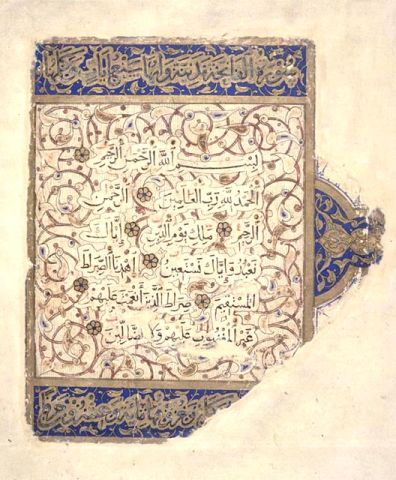
Image: 14th C. Qur'an, Mamluk origin, Library of Congress; Rights obtained.

A BREAKTHROUGH project which helps understand the Qur'an AS REVEALED -not just 'as explained.'

---------------------------------------------------------------------------

Sunday, November 21, 2010

Day 251; Qur’an 47:1-19; page 507-508

Welcome Friends:  Ahlan wa sahlan
This Chapter is so beautiful!  Its verses are clear and direct, with Persuasion and Dissuasion taking turns at pulling our heartstrings… in a breathtaking cadence.

Yusuf Ali’s Translation of our new Chapter.
Muhammad Asad’s Translation of our new Chapter
Their commentaries can only be read in verse by verse view.

سورة محمد
Muhammad
From the Introduction of Yusuf Ali:
“We have now finished more than five-sixth of the Quran. The remaining sixth consists of short Surahs, but these are again grouped according to subject matter.
We begin the first of such groups with a group of three Surahs (47 to 49), which deal with the organisation of the Muslim Ummah or community both for external defence and in internal relations. The present Surah deals with the necessity of defence against external foes by courage and strenuous fighting, and dates from about the first year of the Hijrah, when the Muslims were under threat of extinction by invasion from Makkah.”

From the Introduction of Muhammad Asad::
“MEDINA PERIOD
THIS IS undoubtedly one of the earliest revelations - perhaps the earliest - of the Medina period; as pointed out in the note on verse 13 below, may have been revealed during the Prophet’s hijrah. The view of Ad-Dahhak and Said ibn Jubayr (cited by Zamakhshari) that it is a Meccan surah lacks both internal and external evidence, and cannot be accepted. The title is based on the mention of the name of the Prophet Muhammad in verse 2; but since the surah deals prominently with various aspects of fighting (qital) in God’s cause, it was often designated by the Prophet’s Companions and their immediate successors as Surat al-Qital.

COMMENTS:
Before we begin, I’d like to make 3 comments for the benefit of New Readers:
Firstly, that this chapter is named ‘Muhammad,’ after the Messenger, peace upon him.  As we may have noted, five other Qur’anic chapters are named after Messengers: Noah, Hud, Jonah, Abraham, Joseph.

We discussed something similar earlier and said:

The Qur’an mentions ‘Muhammad’ by name 4 times only, and once as ‘Ahmad.’ 
As for Moses and Jesus, peace upon them, the Qur’an discusses their lives and beautiful teachings in many, many verses, PLUS it:

·     Mentions Moses by name - with reverence- no less than 136 times.
·     Mentions Jesus by name - with reverence- 25 times.

The second comment I’d like to make, is about the first part of Verse 4, which led this Chapter to be dubbed by some ‘the Chapter of Qitaal,’ or ‘Battle/ Mutual fighting.’  I don’t think that this Chapter deserves to be so dubbed; the rest of its 38 verses are not about ‘combat’ at all! 

Anyway, Verse 4 seems to have been among the first to give the ‘green-light’ to the Faithful, allowing them to put up a fight when assaulted by Those Who Denied, especially in battle.


Thirdly,  many of these verses seem to have been revealed at a time of great difficulty with calls for steadfastness as some contemplated desertion, which leads to the conclusion that they were probably revealed very early-on, in Yathrib/ Medina.  But it is also true that the subject-matter of certain verses might be expected of something revealed during the three years of ‘the Ban,’ when the Believers were put virtually under siege and not allowed to buy provision or interact with anyone, so much so that their state was one of famine (see the verses that speak of the life of this lowly/immediate world, contrasting it with Heaven and its bountiful ‘rivers of water, milk, and honey).  This uncertainty stems from the fact that only one generation would know for sure what was revealed where and when, while subsequent generations are NOT supposed to think of Qur’an as ‘Meccan versus Medenite’ verses, but as one unit -contemporary for all time- revealed for its own benefit.


PAGE 507 Arabic Qur’an.

1.  The verses begin by contrasting Those who had Denied and barred people from the path of God, on one hand, with Those who Attained Faith, performed good deeds, and had faith in what was sent down upon Muhammad, on the other. 
‘Those who had Denied’ eventually end up with ‘lost’ works, while ‘Those Who had attained Faith’ end up with their  misdeeds ‘covered’ by their Lord, and their   concerns بال[i] put aright. 

Verse 3 informs us what each category had been doing, telling us that this is how God ‘strikes,’ for Cognizant Humans, their examples. 

Note:
Actually, ‘Those who had Denied and barred people from the path of God’ are mentioned 5 times in the Qur’an, three times here,  in this chapter alone,  الذين كفروا وصدوا ةعن سبيل الله  see Verses 32 and 34.

2.  Verse 4 begins by stating that (in a war scenario -as it says later), when ‘you do encounter Those who Denied, then 'the striking/restraining/falling upon the necks' until when you have DISARMED them, tighten the bond, after which there is either generosity or ransom (for captives) until the war has released its burden…’ Isn’t it interesting that the connotation of ‘disarming’ has never been mentioned by any commentator, although this is one important meaning of the word 'thakhana'?  See  [ii] ثخن  below…. this falls in with other connotations of the word 'Ddaraba' (see entire page about this word), where we realize that 'Ddarb al riqaab' is a NOUN, indicating a measure or an action to be taken whereby one gains the upper hand and has the enemy 'by the neck.'  What commentators have overlooked is that there is NO VERB (as in 'strike') and no SUBJECT (as in 'you') and NO OBJECT (as in 'them').  This gives us an entirely different perspective on the issue, where it is left up to the defenders/fighters themselves, to decide how best to enact that measure, and how best to overpower their enemy!  THIS IS SO MUCH DIFFERENT than both Ali and Asad's explanation, where they make it into a direct command: 'Smite (at) their necks!'  Readers who know Arabic would translate such words as: اضربوا رقابهم -iDdribu riqaabahum- which the Qur'an does NOT say, but rather leaves the 'the striking/restraining/falling upon the necks' as a term which includes the full spectrum of actions taken in one-to-one combat, with the intention of overpowering and disarming the enemy, and NOT annihilating them.

3.    The last part of Verse 4, together with Verses 5-6, show us the recompense of Those who are killed in the path of God.  I find it interesting that when the Qur’an says that God will ‘yahdeehim' commentators have explained this as ‘God will guide them…’  which seems strange for someone who has already departed this life!  But the definition of the word, as we stated earlier, is not just about 'guiding’ but about 'gifting, and granting' us… as in a ‘hediyyahهدية-  .’

 Then the verses challenge Those Who Denied, to travel the earth and see the consequence which befell their predecessors, upon whom was destruction and loss because they spurned/disliked what God had sent down.

4. Then come the verses which always strike at my heart-strings, Verses 7-11, which call upon Those who had Attained Faith, asking them/us to succor/ make successful the cause of God, promising them/us success if they/we did that. … asking Those Who Denied to travel the earth and see the consequence which befell their predecessors.  These beautiful verses end with:

ذَٰلِكَ بِأَنَّ اللَّـهَ مَوْلَى الَّذِينَ آمَنُوا وَأَنَّ الْكَافِرِ‌ينَ لَا مَوْلَىٰ لَهُمْ ﴿١١

“That is because God is Protector of Those who have attained Faith, 
and The Deniers have no Protector.”  

PAGE 508 Arabic Qur’an.

5. Verse 12, on its own, has beautiful Persuasion and dismaying Dissuasion, comparing Those Who Denied to ‘cattle grazing!’

Verses 13-14 draw yet further comparison, and mention ‘your town which evicted you.’  Speaking to prophet Muhammad, this township was ‘Mecca.’

6.   Verse 15 is beautifully Persuasive, telling us about ‘Jannah’ the Garden, letting us know that this information is only a ‘likeness’ (mathal مثل-), and then it get Dissuasive, telling us about the lot of those snug in the Fire, those who are drinking a fiery liquid which cuts, again and again, at their bowels!

7.   Verses 16 and 18 inform the Messenger about those who come to listen to him, then leave him, wondering at what they had heard… (and they actually don’t seem to get the Message) because they continue to ‘follow their plummeting desires.’  They are asked whether they are ‘awaiting the Hour which comes suddenly upon them’…?

Verse 17 gives us a wonderful statement regarding Those who are Guided; God shall increase their guidance/ gift and bring them their Awareness.  This is VERY important as it shows us how guidance can only evolve into further guidance, begetting us the most precious gift of all:  ‘Awareness!’
But this cannot happen unless we start out upon the right path. 
New Readers:  Put ‘taqwa awareness’ in ‘Search this Site,’ and note how ‘awareness’ is the opposite of ‘aggression.’  This is quite fitting, in a Chapter which gives the Faithful ‘the green light’ to take up arms:  Fight those who fight you, but without being the Aggressors!

In the final verse to today’s Reading, we clearly hear the ‘voice of God’ as He speaks to the Messenger, telling him to ‘know’ that there is no God but God.  He tells him to ask God to forgive his misdeed, as well as the misdeeds of the Believers, men and women…. but then God addresses us all in the first person plural as He says”…for God Alone knows ‘your’ movement, and your’ repose.

Put the ‘voice of God’ in ‘Search this Site.’

Finally, dear Readers, do try to listen to this Chapter.  Although its full impact can only be felt by those who understand Arabic, listening to it while reading the interpretation is also powerful.

How to do that:
Click Tanzil here, go down to ‘Recitation’ and highlight Al-Afasy, go down to ‘Translation’ and choose Muhammad Asad, then go back to ‘Recitation’ and click to begin listening, hovering your mouse over the Arabic highlighted verses to get the English interpretation. 
Fantastic. 
P.S.
Yusuf Ali’s interpretation is also good, but I am upset by the fact that certain governments, when reprinting his work, have taken the liberty of supplanting Ali’s choice of wording - ‘God’ -with their choice of wording- ‘Allah.’  This single act is the main reason for the wedge driven between the Qur’an and non-Arabic speakers! 

Enough said!
 
Our next Reading is from HQ 47: 20-28.

Peace unto all!


[i] وأما الأصل الثاني فالبَال: بالُ النفس. ويقال ما خَطَر بِبالي، أي ما أُلْقِيَ في رُوعي. فإنْ قال قائل: فإنَّ الخليلَ ذكَرَ أنّ بال النَّفْس هو الاكتراث، ومنه اشتقَّ ما باليتُ، ولم يخْطِر ببالي. قيل له: هو المعنى الذي ذكرناه، ومعنى الاكتراث أن يَكْرُثَه ما وقعَ في نفسه، فهو راجعٌ إلى ما قلناه. والمصدر البَاَلةُ والمبالاةُ. ويقولون: لم أُبَال ولم أُبَلْ، على القصر.
وممّا حُمِل على هذا: البال، وهو رَخَاء العَيْش؛ يقال إنه لَرَاخي البال وناعِمُ البال. 

[1] [ii] ثخن: يدلُّ على رَزَانة الشيءِ في ثِقَل. تقول ثَخُنَ الشيءُ ثَخَانَةً. والرّجُل الحليمُ الرّزِين ثَخِين. وقد أثْخَنْته أي أثْقَلْته، قال الله تعالى: {حَتَّى يُثْخِنَ في الأَرْضِ} [الأنفال 67] وذلك أنّ القتيلَ قد أُثْقِل حتى لا حَرَاكَ به. وتركتُه مُثْخَناً، أي وَقِيذاً. وقال قومٌ: يقال للأعزل الذي لا سِلاحَ معه: ثخين؛ وهو قياسُ الباب، لأنّ حركتَه تَقِلُّ، خوفاً على نَفْسه

Saturday, November 20, 2010

Day 250; Qur’an 46: 21-35; page 505-506


Welcome Friends:  Ahlan wa sahlan
Well, we are in ‘November’ in real time, although it is 2011!

Yusuf Ali’s Translation of this Chapter.
Muhammad Asad’s Translation of this Chapter. 
Their commentaries can only be read in verse by verse view.

COMMENTS:
PAGE 505 Arabic Qur’an.

1.   The first five verses in today’s Reading (Verses 21-25) transport listeners back to the story of Prophet Hud, peace upon him, reminding them of this early Messenger’s experience with his people and the result of their refusal to worship none but God (please see previous posts, here and here).
As Regular Readers know, not only were the Messages delivered by various Messengers based on a singular Truth, but there also has been much similarity in these Messengers’ experiences with their people.  And now, as these verses were being revealed, it should have been obvious to Quraish that they were treating Prophet Muhammad no differently, and that his warning too shall eventually befall them…. but the reminder fell on many deaf ears.
‘The Penalty of a Mighty Day/ the Suffering of an Awesome Day’ (Ali/Asad) عذاب يوم عظيم is a warning mentioned eight times in the Qur’an.  

Note that Hud’s people challenged him to ‘bring it on,’ to which he responded that they were behaving ignorantly. 
It is interesting to note that Prophet Noah had also accused his people of behaving ignorantly, and Prophet Moses too when, after having been delivered from Pharaoh, his people asked him to provide them with idols to worship (see these verses).  Shouldn’t the similarity have dissuaded Quraish, who already believed in God and knew all about these previous Messengers, peace upon them?  Perhaps they couldn’t understand that ascribing ‘partners’ to God was, in fact, a denial of Who God Is.

2. Then, Verses 26-28 actually address Quraish directly in the second person plural ‘you,’ speaking to their intellect and sense of observation,  reminding them of the townships in their vicinity which had all expired, and of the powerlessness of the deities which they worship as a means of ‘closeness’ to God.

This, dear Reader, is the COMPASS for those of us who seek closeness to God: There is no means of closeness to God other than seeking Him Alone, as in HQ 28:88:

“And do not call upon another deity besides God, there is no God but He, everything expires except his Direction…” 

وَلَا تَدْعُ مَعَ اللَّـهِ إِلَـٰهًا آخَرَ‌ لَا إِلَـٰهَ إِلَّا هُوَ كُلُّ شَيْءٍ هَالِكٌ إِلَّا وَجْهَهُ لَهُ الْحُكْمُ وَإِلَيْهِ تُرْ‌جَعُونَ ﴿القصص: ٨٨﴾

(New Readers:  Put ‘expire direction’ in ‘Search this Site.’)

PAGE 506 Arabic Qur’an.

3.   Dear Readers:
We now arrive at verses which should be carefully looked at and explained.  We shall do so by following the definitions of Arabic words and thinking ‘out of the box,’ so as to hopefully regain original Qur’anic intent.  The results are surprising, to say the least!

New Readers:  Put ‘jinn’ in ‘Search this Site’ for the Arabic definition of this crucial word and so as to understand its full spectrum and not narrow it down to its limited, traditional explanation.

Below we have the definitions of نفر ‘nafara)[i](’ Ssarafa  [ii]صرفand naSsaTta نصت [iii].

Ready?
Let us read Verses 29- 32:

“And when We brought back to you a forth-going group of Those in concealment/ Incognito, listening to the Qur’an, and as they attended it, they said: ‘Be quiet (and listen)!’ And after it had ended, they returned to their people, warning.

They said:  O our People!  We have indeed heard a Compilation sent down after Moses, confirming that which came before it, guiding to the Truth and to the Straightened Path.

O our People!  Respond to the Caller to God, and have faith in him/Him; He (God) will absolve you of a part of your misdeeds and deliver you from painful suffering.

And whoever does not respond to the Caller to God, shall find no escape through the earth, and shall have no Protector other than Him; these are in manifest Loss!”

So, about whom are these verses?
These were obviously cognizant beings who had made their way to the Messenger, whose community did not live nearby, who knew well the Compilation of Moses, and who did not interact with anyone while listening attentively to the Qur’an.  They returned thereafter to their own people with eloquent warning.  Their entire meeting with the Messenger seems to have been a ‘covert’ operation on their part (they were ‘jinn’: unseen/incognito). 

Q. Could they have been the imperceptible ‘non-human’ creatures ‘jinn’?

A. I don’t think so because these particular verses provide the word ‘qawm-قوم [iv] -which means ‘People’ - repeated three times, twice in their own address to their people. 
I see them simply as persons who were believers in the Compilation of Moses and had come covertly to see the Messenger.  This is to be expected, seeing how many verses in the Qur’an speak to those who believed in previous Messages.  Also, since Quraish was ostracizing and persecuting anyone who followed Muhammad, only God knows if that was one reason for their covert encounter in Mecca.

(I did my research BEFORE reading Asad’s ‘tentative’ opinion on this, but he seems to have arrived at a similar conclusion.... see footnote [v].  I find his interpretation of ‘jinn’ as ‘strangers’ quite interesting … )

4. Verse 33 questions those who deny Resurrection, showing God’s power at creation and at re-creation.
5.  In Verse 34, Deniers are given a glimpse of themselves, displayed to the Fire, acknowledging (too late) the Truth which they had been denying in life.

6.     Verse 35 addresses the Messenger directly, beginning by telling him to persevere as did certain Messengers of God who achieved the status of ‘Those of the ‘Azm’-“ulul ‘azm-أولوا العزم ”. 

As we said earlier, we should all aspire to embody this characteristic most praised by God:
“When we see this word’s occurrences in Qur’an, and then realize its direct connection to Patient Forbearance (‘Ssabr’- صبر), we understand why the Qur’an announced that it was ‘found to be lacking’ in Adam  ....ولم نجد له عزما- who was still at the initial stages of behavioral awareness and development.
‘Azm (from ‘azama – عزم is about Decisiveness and will-power, crucial in exercising self-control.  Indeed, gaining self-control and self-discipline is a key developmental task, related to our development, regardless of age.
No wonder Decisiveness and Patient Forbearance (عزم+صبر) go hand-in-hand!”


Here there is Dissuasion for ‘deserters’ who have ‘extracted themselves’ from Faith.
The chapter ends by showing us the relativity of Time, and that the ‘when’ does not matter at all.  All that matters is our faith, our deeds, and the consequence.

Enough said!
 
Our next Reading is from HQ 47: 1-19; a new Chapter!

Peace unto all!


[i] نفر:  يدلُّ على تجافٍ وتباعد. منه نَفَر الدّابّةُ وغيرُه نِفاراً، وذلك تَجافِيهِ وتباعُدُه عن مكانِه ومَقرِّه. ونَفَر جلدُه: وَرِمَ. قال أبو عبيد: وإنَّما هو من نِفَار الشَّيءِ عن الشَّيءِ وتَجافِيهِ عنه؛ لأنَّ الجلد يَنفِر عن اللَّحم للدَّاء الحادثِ بينهما. والمنافرة: المحاكمة إلى القاضي بين اثنَين، قالوا: معناه أنَّ المُبتغَى تفضيلُ نَفَر على نفر. وأنفرت أحدَهما على الآخر. والنَّفَر أيضاً من قياس الباب لأنَّهم يَنفِرون للنُّصْرة. والنَّفير: النَّفَر، وكذا النَّفْر والنَّفْرة: كلُّ ذلك قياسُه واحد.

[ii] صرف: يدلُّ على رَجْع الشيء. من ذلك صَرفْتُ القومَ صَرْفاً وانصرفوا، إذا رَجَعْتَهم فرَجَعوا.
قال الخليل: الصَّرْف فَضْل الدِّرهم على الدِّرهم في القِيمة. ومعنى الصَّرف عندنا أنَّه شيءٌ صُرِف إلى شيء، كأنَّ الدِّينارَ صُرِف إلى الدراهم، أي رُجِع إليها، إِذا أخذتَ بدلَه. قال الخليل: ومنه اشتُقَّ اسمُ الصَّيرفيّ، لتصريفه أحدَهما إلى الآخَر. قال أبو عُبيدٍ: صَرْف الكلام: تزيينهُ والزِّيادةُ فيه، وإِنَّما سُمِّيَ بذلك لأنَّه إِذا زيِّن صرف الأسماعَ إلى استماعه.
ومما شذَّ أيضاً الصِّرْف: شيء من الصِّبْغ يُصبَغ به الأديم. وعلى هذا يُحمَلُ قولهم: شرِب الشَّرابَ صِرْفَاً، إذا لم يمزُجْه؛ كأنَّهُ تُرِكَ على لونِهِ وحُمْرَتِه.

[iii] نصت:  كلمةٌ واحدة تدلُّ على السُّكوت. وأنصَتَ لاستماعِ الحديث، ونَصَتَ يَنْصِت. وفي كتاب الله تعالى:{وَأَنْصِتُوا} [الأعراف 204].

[iv] قوم:  أصلانِ صحيحان، يدلُّ أحدهما على جماعةِ ناسٍ، وربِّما استعير في غيرهمْ. والآخَر على انتصابٍ أو عَزْم.
فالأوّل: القوم، يقولون: جمع امرئٍ
وأمّا الآخر فقولُهم: قامَ قياماً، والقَوْمة المَرَّةُ الواحدة، إذا انتصب.

[v]
“As regards the various meanings attributable to the plural noun jinn (rendered by me here as “unseen beings”), see Appendix III. As pointed out there, the jinn are referred to in the Qur’ān in many connotations. In a few cases – e.g., in the present instance and in 46:29-32 – this expression may possibly signify “hitherto unseen beings,” namely, strangers who had never before been seen by the people among and to whom the Qur’ān was then being revealed. From 46:30 (which evidently relates to the same occurrence as the present one) it transpires that the jinn in question were followers of the Mosaic faith, inasmuch as they refer to the Qur’ān as “a revelation bestowed from on high after [that of] Moses,” thus pointedly omitting any mention of the intervening prophet, Jesus, and equally pointedly (in verse 3 of the present sūrah) stressing their rejection of the Christian concept of the Trinity. All this leads one to the assumption that they may have been Jews from distant parts of what is now the Arab world, perhaps from Syria or even Mesopotamia. (Tabarī mentions in several places that the jinn referred to in this sūrah as well as in 46:29 ff. hailed from Nasībīn, a town on the upper reaches of the Euphrates.) I should, however, like to stress that my explanation of this occurrence is purely tentative.”

Let's TWEET this!

Tweet me!