CLICK IMAGE: Tanzil Website


OUR MISSION:
UNCOVERING the original message of the Arabic Qur'an by using Lexicons compiled more than 1,000 years ago.

ISOLATING Fact from Fiction.


RECOVERING Hope and regaining the perspective where Humanity is one, God's Message is one, and our Future CAN become one we all look forward to!


© 2010 IQRATHECHALLENGE: INTELLECTUAL PROPERTY PROTECTED BY D.M.C.A. ALL RIGHTS RESERVED.

© 2010 IQRATHECHALLENGE: INTELLECTUAL PROPERTY PROTECTED BY D.M.C.A. ALL RIGHTS RESERVED.
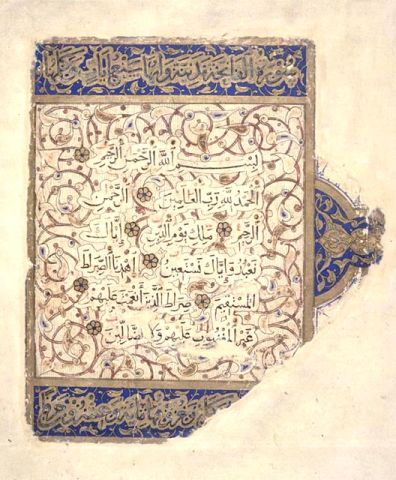
Image: 14th C. Qur'an, Mamluk origin, Library of Congress; Rights obtained.

A BREAKTHROUGH project which helps understand the Qur'an AS REVEALED -not just 'as explained.'

---------------------------------------------------------------------------

Friday, December 17, 2010

Day 277; Qur’an 70: 1-44, pages 568-570


Welcome Friends:  Ahlan wa sahlan!

Yusuf Ali’s explanation of this Chapter.
Muhammad Asad’s explanation of this Chapter.
NEW: Laleh Bakhtiar’s explanation of this Chapter.

سورة المعارج
‘The Ascensions/ The Paths of Ascent’

From Introduction of Yusuf Ali:
“This is another eschatological Surah closely connected in subject matter with the last one. Patience and the mystery of Time will show the ways that climb the Heaven. Sin and Goodness must each eventually come to its own.
Chronologically it belongs to the late early middle Makkan period, possibly soon after Surah 49.”

From Introduction of Muhammad Asad:

THUS CALLED after the word al-ma'arij appearing in verse 3, this surah belongs to the middle of the Mecca period. It is mainly devoted to the challenge which unbelief - or, rather, unwillingness to believe - offers to faith, both of them being conditioned by the restlessness inherent in human nature.”

COMMENTS:

The subject-matter of this Chapter is mostly in response to the first verse, a QUERY as to the inevitable suffering to befall the Deniers.  Presenting the answer with dire Dissuasion, we are then given a statement of fact about human nature, after which comes beautiful Persuasion, as the verses describe characteristics we should all aspire to fulfill. 

The title ‘The Ascensions/ The Paths of Ascent’ is derived from the third verse.


PAGE 568 Arabic Qur’an

1.    The first verse directly addresses an important issue, informing us that an ‘inquirer’ had inquired as to Impending Suffering.  Context helps us understand that this inquirer was a ‘skeptic’ who did NOT believe in what the Qur’an was warning of, which is that Suffering shall indeed befall. Actually, it seems that there were many skeptics who did not accept the concept of Final Justice being meted out to everyone, as we shall see when we arrive at Chapter 78 which begins with:

‘What are they inquiring about? About the tremendous News, regarding which they are in dispute.’

(Laleh Bakhtiar explains ‘athaab’ as ‘punishment,’ while most people think that ‘iqaab’ means ‘punishment’.  Please put ‘ugly connotation’ in ‘Search’ to see why the Qur’an does NOT use the word ‘punishment’ at all).  
Therefore, although these verses are timeless and speak to all skeptics, we understand that Qureish did in fact dispute the Messenger’s warning of resurrection for final judgment, and his assurances that it shall indeed befall. 
The next verses then tell us that it (the Suffering) shall be unstoppable as it befalls Deniers, its being from God ‘Of the Paths of Ascent,’ to Whom the Custodians/ Angels and the Spirit ascend within a projected period/ term of 50 thousand years (we already spoke of the word ‘alf’ earlier, which is about something ‘composed/ put together,’ here referring to large numbers).

2.    Verse 5 addresses the Messenger, telling him to show ‘Exemplary Forbearance.’  Here we think back to the story of Prophet Jacob, and his exemplary forbearance!  Knowing that his sons had done something to his young child, he became blind with grief, yet he was patient, pouring out his sorrow only to God (HQ 12:86). 
What a responsibility this must have been to Prophet Muhammad!  Imagine being told -by God Himself- to show the highest ever level of human forbearance in face of everything which Qureish was putting him through…  may God’s peace and blessings be upon all His Messengers!
Verses 6-7 show the difference between what the Deniers believed on one hand, and what was actually going to happen, as known by God.  They see what is indeed ‘Impending’ as a ‘far off’ event, unlikely to ever take place!
Verses 8- 18 describe the Suffering which was mentioned in the first verse; in 8-10 we see the transformation which takes place then, when the Exalted Expanse /sky becomes like molten metal, and the mountains like tufts of wool… and people who once were intimates, now do not even ‘inquire after/ ask of’ each other!

PAGE 569 Arabic Qur’an

3.    Verse 11 continues, beginning by saying: ‘They are made to see them…’ which appears in Arabic as one word: ‘yubaSSaroonahum,’ which helps us understand that nothing and no one is hidden from view that day.  After that, we are shown how alone the ‘Mujrim/ the evil-Earner/ one who had Extracted Himself from faith ([i])’ feels, and indeed is.  No one on earth matters to him anymore, and he is ready to ‘ransom’ himself, by exchanging his place with people who were dearest to him in life, beginning with his children, to his love-companion, his brother, his family (sheltering clan), and to EVERYONE else on earth, all put together… to save his own skin (put ‘Mujrim’ in ‘Search’).
When we read the next verses we realize why: 
What awaits him is WORSE than the worst nightmare!
Verses 15- 18 tell us about it… it’s the Blaze, which rips-out peoples’ scalps, beckoning to any who (in life), was giving his back (to God’s Message), turning away (from it), and amassing and stashing (his fortune).
Verses 19- 21 tell us WHY a person would do that:  It is inborn nature.
The Human (in his individual, base self) was created panicky -:([ii]-هلع)
He is naturally fearful when touched by misfortune, and tight-fisted when touched by good-fortune unless….. !  Unless ‘what?’  What is the exception?
The verses continue:… EXCEPT FOR ‘Those who Maintain CONSISTENT Relationship/ Prayer….!’
(Notice here how the singular reference to–insaan- became a plural reference to –muSalleen- so as to indicate the beautiful togetherness of this Relationship!)

Dear Reader: 
When parents fail to raise children to become better individuals, and when adults fail to rise through a relationship with God and with each other, people end up remaining at the level of their base selves, and earning eternal regret.
Let us look at that list of persons who were able to rise above their base nature and earn to be in the Gardens, having been granted eminence in bounty and forgiveness (put ‘karam’ in ‘Search’).  Verses 23- 35 tell us that:  
-They were persons who had maintained CONSISTENT ‘Relationship/ Prayer/ Salaat’ (remember that the past tense verb ‘salla’ is the opposite of ‘tawalla.’  Put words in ‘Search’).
-And they were persons who had handed a portion of ‘their’ wealth as a defined Right (which indeed ‘belonged’) to the soliciting person (who asks for it) and to the deprived person (who does not ask).
-And they were persons who had believed in the ‘Day/Time’ of Accountability.
-And they were persons who had been so wary of the Suffering which their Lord metes out, that they’d become tender, gentle, mellow (put ‘shafaq’ in ‘Search’), seeing that no one is immune from it.
-And they were persons who had been protecting their ‘vulnerable parts’ - except from their spouses OR WHAT ‘their rightful pledges hold/ is held in their tenure,’ for which they shall not be faulted (‘maloom’-[iii]).  But any exposure beyond that earns them the title of ‘Transgressors/ Aadoon.’
Their ‘vulnerability’ was explained earlier, where we found it NOT to be necessarily about the ‘sexual act.’ 
‘What is in their tenure’ was also explained earlier when we said that in Arabic, ‘maa’ما- -unlike ‘mannمن-’- is related to INcognizant Beings, so it is about ‘objects’ in our tenure (such as agreements/ contracts), and not about ‘persons.’ 
Although this verse may have been understood at one time to be a ‘ruling’ allowing men to have sexual relations with females in bondage to them/ ‘slaves’, it doesn’t seem to be about that (remember, bondage is odious and everyone is encouraged to eradicate it one way or the other).  Rather, it does seem to be about the agreement itself (which could have been one of bondage at the time).  This agreement binds people to take care of each other –males AND females- intimately enough that they become privy to each other’s ‘privates.’   This would include our relationships with all caretakers such as nurses, doctors, therapists, instructors, family members, etc.  Neither society nor God would fault us for that kind of vital care and self-exposure.
Such an understanding also makes perfect sense when we reflect on the verse which tells women that they can ‘display their adornment to those in their tenure’ (HQ 24:31)- a ‘troublesome’ verse which has traditionally been explained by literally beating around the bush and then saying that this must refer to women’s FEMALE slaves/ servants!
The list of persons who were able to rise above their base nature and earn to be in the Gardens, being granted eminence in bounty and forgiveness continues:
-And they were persons who had Tended to their Trusts and their Commitment.
-And they were persons who were Upright in their Testimony.
-And they were persons who had SAFEGUARDED their ‘Relationship/ Prayer/ Salaat’ (Verse 23 spoke of the ‘when’ for ‘Salaat,’ while Verse 34 speaks of the ‘how.’  See ‘Hafithoon,’ for other instances of this word.  Notice Chapter 23: 1-9.) 
Verse 35 concludes, by mentioning their eminent abode in the Gardens.

4. Verses 36- 38 ask Prophet Muhammad:
‘Then, what is the matter with Those who have Denied, that they rush to and fro in front of you (defiantly), banding-up to your right and to your left?
Does each one of them hope to enter the Garden of Bliss?
5. The answer to that question appears in Verses 39- 44, beginning with a resounding: ‘No!..’ Then going on to state: ‘Indeed We have created them from what ‘they know…’ only to show in the next verses, that He Who created them in the first place, can easily replace them with others far better than they!

PAGE 570 Arabic Qur’an
6.     In Verses 40- 41 God vows ‘By the Lord of all positions/ phases of Rising and Setting,’ that He is capable of replacing the Deniers with others better than they, and that none can thwart Him.
Oath= ‘qassam;’ see all.
The final three verses, 42- 44 begin by telling Prophet Muhammad to ‘leave them/ let them be,’ a command given to him eight times in the Qur’an (chronologically, this may be one of the earliest times he was so told, but for us, it is the last time we encounter it.)  Here it is the same as HQ 43:83, leaving Those Who Deny to frolic their lives away, until they meet the day they’ve been promised of. 
This awe-inspiring Chapter, which began by addressing the subject of the inevitable Suffering, now ends with two verses which should cause Deniers to shudder and quake as they listen to their own description on that inevitable ‘day/ time!’ 
On that day, they shall all emerge from their graves, rushing as if towards a goal, with eyes downcast, overwhelmed by humiliation, THAT IS THE DAY WHICH THEY HAVE BEEN PROMISED!
May our Deeds and God’s Mercy save us from that day!
Peace unto all!


[i]
Interestingly, this is the only time that the word ‘Mujrim’ (in a LONE singular), appears in the Qur’an.  See it here and here in plural.


هلع: يدلُّ على سُرعةٍ وحِدَّة. وناقة هِلْوَاعٌ: حديدة سريعة. ونعامةٌ هالِعٌ كذلك. ومنه الهَلَعُ في الإنسان: شِبْه الحِرْص. ورجلٌ هَلِعٌ وهَلُوع.

[ii]
لوم:  كلمتانِ تدلُّ إحداهما على العَتْب والعَذْل، والأخرى على الإبطاء.
فالأوَّل اللَّوْم، وهو العَذْل. تقول: لُمْتُه لَوْماً، والرّجلُ مَلوم. والمُلِيم: الذي يستحقُّ اللَّوْم. واللَّوْماء: الملامة، ورجل لُوَمة: يلُوم الناس. ولُومة يُلام.
والكلمة الأخرى التلوُّم، وهو التمكُّث. ويقال: إنَّ اللاَّمَةَ: الأمرُ يُلاَم عليه الإنسان.

Thursday, December 16, 2010

Day 276; Qur’an 69: 1-52, pages 566-568


Welcome Friends:  Ahlan wa sahlan!

Yusuf Ali’s explanation of this Chapter.
Muhammad Asad’s explanation of this Chapter.
NEW: Laleh Bakhtiar’s explanation of this Chapter.

سورة الحاقّة
‘The Implementer of Truth & Justice’

From Introduction of Yusuf Ali:

This Surah belongs to the early middle period of Makkan Revelation. The eschatological argument is pressed home; 'the absolute Truth cannot fail; it must prevail; therefore be not lured by false appearances in this life; it is Revelation that points to the sure and certain Reality.’

From Introduction of Muhammad Asad:

‘REVEALED shortly after surah 67 (Al-Mulk), i.e., about three or four years before the Prophet's exodus to Medina.’


COMMENTS:

In the first 5 words of this Chapter, the word ‘Al Haaqqah’ is mentioned three times. Yusuf Ali explains this word as the ‘Sure Reality’ while Muhammad Asad calls it the ‘Laying-bare of the Truth.’
‘Al Haq’ may be explained as Truth/ Justice/ What is Due, while the root-verb ‘Haqaqa’ is about its implementation.  The stressed form of the noun ‘Al Haaqqah’ is strongly assertive ([i]).

PAGE 566 Arabic Qur’an

1.    Verses 1-3 ‘hit’ us twice with the powerful world ‘Al Haaqqa/ The Implementer of Truth and Justice,’ asking the listener about it, then telling him –in two words: ‘maa adraaka,’ that he would not be able to pursue it to determine what it is.  (Put ‘daraa’ in ‘Search.)
What is this Implementer of Truth/Justice?  
It is what we call ‘Final Judgment,’ when Truth is bared, and everyone knows what their deeds have been and what they have caused, and each person agrees to what s/he deserves of recompense.  It is when (as promised by God, HQ 7:44; 10:4; 16:38), Justice is served to one and all (HQ 39:69-70), and no one is wronged. 
It certainly IS a most powerful, agitating experience!
‘Yawm al Qiyaamah’ (the ‘Event/ Day of Resurrection’) has several names, one of which is the ‘Event /Day of The Coming Out يوم الخروج .  That is when the ordeal begins, after which comes ‘Yawm al Deen’ or the ‘Event/ Day of Accountability.’
Verse 4 reminds listeners how both the People of Thamood and ‘Aad had belied the (arrival of) ‘The Striker/ Al Qaari’ah ‘القارعة….. a name which indicates the combined power of a physical blow (being ‘struck’) PLUS the tumultuous sound of striking (think of being struck by lightening and thunder, multiplied to infinity… see Arabic-[ii] قرع-).
It is about the end of this world as we know it, and the beginning of another existence, visually described in a short Chapter by its name (HQ 101).

2.    Verses 5-8 describe how two Peoples (who had belied their Messengers Saleh/ Salih and Hud/ Hood) met their end, and how their ruin came to appear to onlookers after that.  
The question is then asked:
‘Do you then see, of theirs, anything Everlasting/ Enduring?’
The root-verb ‘baqaa’ is more about being ‘everlasting and prevalent,’ than about being a ‘remnant’ ([iii]).
Q. How serious is this?
A. Well, just think of this:
·     NOTHING is more ‘enduring/ abqaa’ from this life to the next, than our deeds.
·    NOTHING is more ‘prevalent/ abqaa’ in the Afterlife, than the recompense we get for our Deeds!

PAGE 567 Arabic Qur’an
  
3.   Verses 9- 12 continue, alluding to previous peoples who had belied their Messengers, reminding listeners what had happened to Pharaoh and those before him who had ‘come out with The Trespass’ (acts of grave wrongdoing; put ‘khaTa’ in ‘Search’) and how their Lord then ‘took them by intense Taking.’  These townships are dubbed here the ‘Mu’tafikaat,’ perhaps because of their having ‘overturned’ their innate moral code, replacing what is right with wrong- see -(أفك [iv]Then, the ark of Noah is mentioned indirectly as a Reminder to those who lend a mindful ear.
(Similar content to HQ 53: 50 –54)
4.     Verses 13- 16 mention the ‘Quickening of Events’ (put ‘Soor’ in ‘Search’) which shall occur all at once, when the earth and the mountains are pounded together -all at once- and ‘The Befalling befalls,’ and the Exalted expanse ‘on that day/ at that time’ is weak, and rent asunder.
Verse 17 speaks of the ‘Custodians/ Angels’ who shall be ‘all upon its sides,’ above whom shall be eight (forces) upholding your Lord’s Arch/ Structure (of this existence.  ‘Arch’ is NOT a ‘throne!’  Put any word in ‘Search’).
After Verse 18 has informed listeners that everyone shall be ‘displayed’ that day, with nothing at all left concealed, Verses 19-24 describe someone whose ‘Compilation’ was is brought to him ‘in his Right,’ indicating a favorable assessment of his life’s work. Such a person shall be well-pleased in a lofty Garden, with low-hanging fruits for the picking.  He acknowledges the fact that he had been expecting his reckoning/ score, and happily asks others to peruse/study (iqra’) his ‘compilation/ kitaab’ (compiled record of Deeds).  The statement then said to such persons is to eat, drink and enjoy what they had done before, in the days bygone (enjoy the fruits of their past deeds). 
After beautiful Persuasion, comes dreadful Dissuasion, with Verses 25- 37 showing us the dire consequence for someone whose compilation was presented to him in his ‘left’ (put ‘shimaal’ in ‘Search’ for related information). 
In Verses 25-29 we hear this person’s cries: 
He wishes he had NOT received his compilation and had NOT been informed of his reckoning/ score!  He wishes that this (experience) had been the ‘QaaDiyah/ the End/ the Enforcer of QaDaa ([v])!’
Each verse is a statement of agonized regret, ending with the lament that the wealth and power (which had kept him ahead in life) have both come to nothing: 
‘Not self-sufficient, has my wealth made me!
Perished/ expired from me, is my power!’ 
Then, verses 30- 32 turn away from this person, speaking OF him in the third person singular ‘he,’ giving the terrifying command that he be:
Taken and shackled, then immersed in the Blaze ([vi]), then stringed in a chain 70-arm-spans (ذراع-cubits) long!
But what has this person done in life, to earn such a consequence?
Verses 32-37 tell us that he did not have faith in God Almighty, and did not encourage/ urge feeding the ‘miskeen’ (the needy who have no way to make money).  Therefore, at this time and place, he has no close friend (to help in any way) and no food except for ‘foul wash-waste/ ghisleen,’ which is eaten only by the wrong-doers!  
Note, dear Reader, that by NOT having any faith in God he had severed all relationship with Him.  He had coveted power, probably thinking (as so many people do) that there is ultimate power in wealth.  His denying God and deciding not to help others has resulted in him not being helped.  His reluctance to feed the destitute (perhaps resulting in some of them foraging for food) has resulted in him having to eat the waste-matter of ‘Hell’! (Deeds and their matching consequence are often seen in the Qur’an, as in HQ 20: 124-127.)
Note, dear Reader, that in Chapters such as these -which discuss past communities and their Messengers, or give us details on certain incidents of the Hereafter- in verses such as these, we hear the ‘voice’ of God loud and clear.  It may seem incredible to us that after all this, there are people who would still allege that this is Muhammad speaking, and these are his words. 

PAGE 568 Arabic Qur’an
5.    Verses 38-39 hold two consecutive vows, as God calls to witness ‘what you (all) see/ envision, and what you (all) do not see/ envision.’  As we’ve mentioned before, ‘vows’ are serious, and they precede a momentous statement in the Qur’an. 
The momentous statement here (as in our previous Chapter of Al Qalam) is the assertion that what is being communicated (the Qur’an itself) is delivered by an eminent, magnanimous Messenger.  It is neither the communication of a poet nor of a ‘clairvoyant/ sooth-sayer.  
Each verse ends with a statement regarding listeners:  ‘…how little do you have Faith!’ and ‘…. how little do you remember!’ ’
Then, after asserting to listeners what the Qur’an is NOT, it defines for them what it indeed IS: 
A Transmission from the Lord-Sustainer of the Worlds/ Peoples.’

6.  After elaborating on the dire recompense awaiting the Faithless, and on the backdrop of assertions regarding the truth of both Messenger and Message, we read a few severe verses:
Verses 44- 47 present listeners -who were trying to brand Muhammad with lying- with a supposition (explained here loosely): 
IF, as you allege, IF he had indeed been communicating to you anything of his own, claiming that it is from Us (God), then:
‘We would certainly have seized him by the right (arm), then we would have cut off the coronary artery of him.  And not one of you could have protected him from this!’
Dear Reader:
Unless one is a total idiot, how can one NOT hear the ‘voice’ of God here?  Prejudice could blind us to the truth, but can prejudice truly prevent a person from hearing God’s voice speaking here?  It seems that it can.  Tell me what you think.

7.    After having argued that this is NOT the communication of Muhammad, Verses 48-52 assert that:
·    It is a Reminder to the Aware.
·    We know that there are among you (listeners) those who (still) belie (this Message).
·    It shall be a ‘Regret’ (a source of Remorse) upon the Deniers.
·  And it is indeed True Certitude!
· Therefore perform ‘Tasbeeh/ motion in devotion’ glorifying the attribute of your Lord/ Sustainer, The ‘Atheem/ Almighty.’

And so ends this Chapter, by urging listeners to perform ‘Tasbeeh’ to their Lord the Almighty, by word and by deed (New Readers: Put ‘Tasbeeh’ in ‘Search;’ it is a VERY important word!
It may be interesting to Readers to know that all ‘practicing Muslims’ do indeed recount this exact ‘verbal’ Tasbeeh- in Arabic سبحان ربي العظيم   51 times every day, throughout our five daily prayers!

Peace unto all!


[i]
  حق: يدل على إحكام الشيء وصحّته. فالحقُّ نقيضُ الباطل ... ويقال حَقَّ الشيءُ وجَبَ.
  ويقال حاقَّ فلانٌ فلاناً، إذا ادّعى كلُّ واحدٍ منهما، فإذا غَلَبَه على الحقِّ قيل حَقَّه وأحَقَّه. واحتَقَّ الناس من الدَّيْنِ، إذا ادَّعى كلُّ واحدٍ الحقَّ.
والحاقَّة: القيامة؛ لأنها تحقّ بكل شيء. قال الله تعالى: {وَلكِنْ حَقَّتْ كلِمَةُ العَذَابِ عَلَى الكافِرِينَ} [الزمر 71].

قرع: ضربُ الشيء. يقال قَرَعْتُ الشيءَ أقرَعُه: ضربتُه. ومُقارَعة الأبطال: قَرعُ بعضِهم. والإقراع والمُقارَعة: هي المساهمَة. وسمِّيت بذلك لأنَّها شيءٌ كأنَّه يُضرَب. وقارعتُ فلاناً فقرعتُه، أي أصابتني القُرعةُ دونَه. والقارعة: الشَّديدة من شدائد الدهر؛ وسمِّيت بذلك لأنَّها تقرع الناس، أي تضربُهم بشدَّتها. والقارعة: القِيامةُ، لأنَّها تَضرِبُ وتُصيب النَّاسَ بإقراعها.

لبث:  يدلُّ على تمكُّث. يقال: لَبِثَ بالمكان: أقام. قال الله تعالى: {لَمْ يَلْبَثُوا إلاَّ سَاعَةً مِنْ نَهَارٍ}
مكث: كلمةٌ تدلُّ على توقف وانتظار. ومَكَثَ مَكْثاً ومُكْثاً ورجل مَكِيث: رزينٌ غير عجول.

[iii]
بقي: هو الدّوام. قال الخليل: يقال بقِيَ الشيءُ يبقى بَقاءً، وهو ضدّ الفناء.

أفك: يدلُّ على قلب الشيء وصرْفِه عن جِهَته. يقال أُفِكَ الشَّيءُ. وأَفِكَ الرّجُلُ، إذا كذَب. والإفك الكذِب. وأفكتُ الرّجُلَ عن الشيء، إذا صرفتَه عنه. قال الله تعالى: {قالُوا أَجِئْتَنا لِتأْفِكَنَا عَنْ آلِهَتِنَا} [الأحقاف 22].
والمؤتفكات: الرياح التي تختلف مَهابُّها. يقولون:"إذا كثُرت المؤتفكات زَكَتِ الأرض([21])".

[v]
Perhaps wishing that ‘Death’ could have been a ‘QaDaa’ without ‘Qadar,’ as he must have believed during life.  He was definitely not anticipating this reckoning (like the person mentioned earlier).  If death had no ‘projected end,’ then it would BE the end.  New Reader: Please put these two word in ‘Search.’

صلي: أصلان أحدهما النار وما أشبهها من الحُمَّى، والآخر جنسٌ من العبادة.
فأمَّا الأوّل فقولهم: صَلَيْتُ العُودَ بالنار. والصَّلَى صَلَى النّار. واصطّليتُ بالنَّار. والصِّلاَء: ما يُصْطَلَى بِهِ وما يُذكَى به النَّار ويُوقَد.
وأمَّا الثاني : فالصَّلاَةُ وهي الدُّعاء. فأمَّا الصَّلاة من الله تعالى فالرَّحمة.


Let's TWEET this!

Tweet me!