CLICK IMAGE: Tanzil Website


OUR MISSION:
UNCOVERING the original message of the Arabic Qur'an by using Lexicons compiled more than 1,000 years ago.

ISOLATING Fact from Fiction.


RECOVERING Hope and regaining the perspective where Humanity is one, God's Message is one, and our Future CAN become one we all look forward to!


© 2010 IQRATHECHALLENGE: INTELLECTUAL PROPERTY PROTECTED BY D.M.C.A. ALL RIGHTS RESERVED.

© 2010 IQRATHECHALLENGE: INTELLECTUAL PROPERTY PROTECTED BY D.M.C.A. ALL RIGHTS RESERVED.
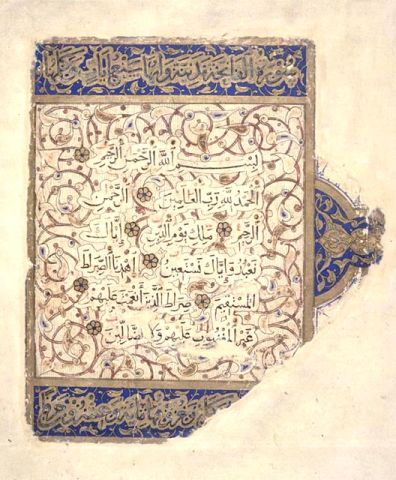
Image: 14th C. Qur'an, Mamluk origin, Library of Congress; Rights obtained.

A BREAKTHROUGH project which helps understand the Qur'an AS REVEALED -not just 'as explained.'

---------------------------------------------------------------------------

Friday, April 9, 2010

Day 80; Qur’an 7: 52-64, pages 157+158

Welcome Friends:  Ahlan wa sahlan!

We ended yesterday’s Reading with mention of those who ‘forgot’ or ignored the eternal Life of the Hereafter; having allowed themselves to be seduced by the ‘immediate’ Life, they made light of their Accountability and held it in jest.

Yusuf Ali’s Explanation.
Muhammad Asad’s Explanation.

COMMENTS:
 PAGE 157: Click for Arabic Qur’an
1.  The first thing we notice today in Verse 52 is that, after the preceding verses had described everyone in the Hereafter, and verse 51 had specified the ‘forgotten/ignored’ group, the Qur’an mentions that they all had received ONE COMPILATION ‘kitaab,’ a Guidance and Mercy for a People who Believe.  
The fact that there is only one Compilation, and that all Believers in the Compilation are considered one people shows as the unifying factor of faith: 

In the final analysis, not only the Messengers of God who delivered one Message, but all those who followed them while truly seeking God, are one brotherhood.  If only we could all realize that.

2.  Verse 53 asks whether they await the Compilation’s ‘ta’weelahu – تأويله’ translated by Ali as ‘the final fulfillment of the event,’ and by Asad as ‘the final meaning to unfold.’  Both are correct: 
‘Ta’weel –تأويل [i]’ from the root verb ‘awala’ denotes both the first and the last; the beginning and end.  It is the culmination of things in reference to their beginnings, which is why the verb ‘aala, ya’oolu - آل- يؤول’ denotes something or someone returning to the first point of reference, which could be one’s head-of-family (as in Aali Imraan- آل عمران - ‘the Family of Imraan), see footnote.

3.  Verse 54 describes the creation of our universe in six distinct EPOCHS. The word ‘yawm-يوم [ii]’ in Arabic originally meant ‘a period, an epoch, an event.’ The plural is ‘ayyaam,’ from which the English word ‘aeon’ seems to have originated (words which cross-over, often interchange the letters 'm' and 'n').  The origin of 'ayyaam' was 'أيوام-aewom' before it changed to ease its pronunciation. 
Etymology: 1640s, from L. aeon, from Gk. aion "age, eternity" (see eon). 

Some might ask,  "What has Greek got to do with Arabic?" 
The answer is: Wait,  and you'll find out! 
For now, dear Readers, let's just say that Muhammad Asad got it right.
Self-challengers:  ‘Day’ as opposed to ‘night’ in Arabic is نهار ‘nahaar.’  Copy + paste ليل نهار in Tanzil.

4.  In verse 54 we encounter the word ‘Arch – عرش[iii] ’ for the first time.  Yusuf Ali in note 1032 says it is ‘metaphorical; symbol of authority and power..’ and Muhammad Asad agrees in note 43, connecting the expression to God’s creation of the universe.
We should bear in mind that the word in Arabic (see below) expresses BUILDING, complete with raising and fortifying what is built.  The 'arch' which the Qur'an ALWAYS mentions with regard to God's Creation, is directly related to the form and function of this universe, as the receptacle of LIFE.  Verse HQ 2:255 tells us about God, that "..no slumber nor sleep overcomes Him..."  The concept of the 'Arch' seems to have been well-understood by early Muslims who manifested it into their architecture; see 'The Arch Which Never Sleeps' in sidebar.  
5.  Verses 55-56 give us both the form and intent of the best supplication:  The form is with ‘humility/humbly’ and in ‘private/secrecy’ (Ali/Asad) while the intent is fear and longing!

  PAGE 158: Click for Arabic Qur’an

6.  Verse 58 gives a parable, comparing people to land; wholesome land versus unwholesome land.  The fruits of each are PRODUCTS of the land in which they grew!
With that eloquent introduction we are taken to the story of the first of God’s Messengers Noah, peace upon him.
Prophet Noah’s Message was simply:  “…Worship God; you have no other god….!”

7.  When (in verse 64) they ‘rejected him/gave him the lie’ (Ali/Asad), God saved Noah and those who were with him in the ‘fulk’ while those who belied him were drowned.
‘Fulk’ فُلك[iv]- is a sphere, or ‘curved, rounded’ vessel, “..similar to the ‘felkeh’ of a spinning-wheel or the roundness of a woman’s breast..or so sea-vessels are called because they turn around in the water..” (see Lexicon below).  Both Ali and Asad called it the Ark.
Despite similarities, we should NOT be influenced by the Biblical story when we read the Qur’anic narrative; the Qur’an does not tell us that the entire earth was flooded (see Asad’s note 47)! 

As for ‘Ark,’ etymologically the word is said to be from Old English “O.E. earc, mainly meaning Noah's, from L. arca "large box, chest." 
In Arabic however, as we saw, ‘fulk’ seems to be a circular or rounded vessel without sharp corners.  Perhaps the word should be rewritten in English with a ‘c’ rather than a ‘k’!  ‘Arc’ is “..late 14c., from O.Fr. arc, from L. arcus "a bow, arch," from PIE base *arqu- "bowed, curved."

What do YOU think dear Readers? 

Enough said!

Our next Reading is from HQ 7:65-79

Peace unto all!

[i] (أول) ابتداء الأمر وانتهاؤه. فالأوّل، وهو مبتدأُ الشيء، والمؤنَّثة الأولى. وآلَ يَؤُول أَي رجع. قال يعقوب: يقال "أَوَّلَ الحُكْمَ إلى أَهْلِه" أي أرجَعه ورَدّه إليهم. وآلَ جِسمُ الرّجل إذا نَحُفَ. وهو من الباب، لأنّه يَحُورُ ويَحْرِي، أي يرجعُ إلى تلك الحال. والإيالة السِّياسةُ من هذا الباب، لأن مرجعَ الرّعيةِ إلى راعيها. قال الأصمعي: آلَ الرَّجلُ رعِيّتَه يَؤُولُها إذا أَحْسَنَ سياستَها. ورجل آيل مالٍ، مثال خائل مال، أي سائسه.  وآلُ الرّجلِ شخصهُ من هذا أيضاً. وكذلك آلُ كلِّ شيء. وذلك أنَّهم يعبِّرون عنه بآلِه، وهم عشيرته، يقولون آل أبي بكر، وهم يريدون أبا بكر. ومن هذا الباب تأويل الكلام، وهو عاقبتُهُ وما يؤُولُ إليه، وذلك قوله تعالى: {هَلْ يَنْظُرُونَ إلاَّ تَأْوِيلَهُ} [الأعراف 53]. يقول: ما يَؤُول إليه في وقت بعثهم ونشورهم.
[ii] (يوم) هي اليَوم: الواحدُ من الأيّام، ثم يستعيرونه في الأمر العظيم ويقولون نِعْمَ فلانٌ في اليَوم إذا نَزَل. والأصل في أيَّامٍ أيْوَام، لكنَّه أُدغِم.
[iii] (عرش) يدلُّ على ارتفاعٍ في شيء مبنيّ، ثم يستعارُ في غير ذلك. من ذلك العَرْش، قال الخليل: العرش: سرير الملِك. وهذا صحيحٌ، قال الله تعالى: {وَرَفَعَ أبَوَيْهِ عَلَى الْعَرْشِ}  [يوسف 100]، ثم استُعير ذلك فقيل لأمر الرّجُل وقِوامه: عرش. وإذا زال ذلك عنه قيل: ثُلَّ عَرشُه.  ومن الباب: تعريش الكَرْم، لأنّه رفعه والتوثُّق منه. والعريش: بناءٌ من قُضبانٍ يُرفَع ويوثَّق حتَّى يظلّل. ويقال لسَقْف البَيْت عَرْش. قال الله تعالى: {فَهي خَاوِيَةٌ عَلَى عُرُوشِها} [الحج 45]، والمعنى أنَّ السَّقف يسقُط ثم يتَهافت عليه الجُدرانُ ساقطةً. ومن الباب العَرِيش، وهو شِبْه الهَوْدَجِ يُتَّخَذ للمرأة تقعُد فيه على بعيرها. ومن الباب: عَرَشْتُ الكرم وعَرَّشْتُه. يقال: اعتَرش العنبُ، إذا علا على العَرش. ومن الباب: عَرْش البِئر: طيُّها بالخشَب. قال بعضهم: تكون البئرُ رِخوةَ الأسفل والأعلَى فلا تُمسِكُ الطَّيَّ لأنَّها رَملة، فيعرَّش أعلاها بالخشَب، يُوضَع بعضُه على بعض، ثمَّ يَقُوم السُّقاة عليه فيستقون.
[iv] (فلك) الفاء واللام والكاف أصلٌ صحيح يدلُّ على استدارةٍ في شيء. من ذلك فَلْكة المِغزل بفتح الفاء، سمِّيت لاستدارتها؛ ولذلك قيل: فَلَّك ثَدْيُ المرأة، إذا استدار. ومن هذا القياس فَلَك السماء. والفَلَك: قِطَعٌ من الأرض مستديرةٌ مرتفِعة عمَّا حولها. وأمَّا السفينة فتسمَّى فُلْكا. ويقال إنَّ الواحد والجمعَ في هذا الاسم سواء، ولعلَّها تسمَّى فُلْكاً لأنَّها تدار في الماء.

Thursday, April 8, 2010

Day 79; Qur’an 7: 38-51, pages 155+156

Welcome Friends:  Ahlan wa sahlan!

In today’s Reading we come across the reason for the title of this chapter, al A’raaf.

Yusuf Ali’s Explanation.
Muhammad Asad’s Explanation.

COMMENTS:
 PAGE 155: Click for Arabic Qur’an
1.  Yesterday’s reading ended with the Angels of Death (who are also God’s Messengers!) taking into full deliverance the spirits of wrong-doers (‘wafaat’ indicates the end of this life for human consciousness/spirits; its root-verb وفّى’ denoting the completion, or rendering of a complete sum of something; see Posting March 19th).
Today’s Reading begins with these wrong-doers entering the Fire (verses 38-39), as did before them other groups of ‘Ins’ humans and ‘Jinn’ unseen beings.
The argument made by the late-comers into the Fire, against those who went before them, is quite telling, as is the response!

2.     Verse 40:
“Indeed, those who belied our Signs and were self-arrogantly dismissive of them, the gates of heaven will not be opening for them nor will they enter the garden until the (thick twisted) rope[i] enters through the eye of a needle, and so do we reward the Evil-earners/Mujrims!”

For definition of ‘Mujrim,’ see Posting of March 30th.

As for my interpretation of ‘jamal’ as rope (I agree with Muhammmad Asad- see his note 32) the Arabic definition of ‘jamala’ has shown that the word does NOT mean camel (other references have specified that the word referred to the thick, twisted rope used in shipyards and on ships).  Self-challengers can put the word جمل in Tanzil and discover that the Qur’an never refers to a camel by that name (check out ‘naaqah’- ناقة and الإبل).

So, dear Reader, where did THIS interpretation come from?  You guessed it:   Biblical explanation.  That was how early Biblical scholars had translated a similar concept in the New Testament, from its original quote in Aramaic, then in Greek:
Mark 10:25: "It is easier for a camel to go through the eye of a needle than for a rich man to enter the kingdom of God." (Also in Mathew 19:24; Luke 18:25.)
The Aramaic word gamla means rope and camel."
Also, the Greek words for rope (ka' mi los) and camel (ka' me los) are very similar, and it has been suggested that there was a confusion of the Greek words..”


 As for us, we DO know how close Arabic is to Aramaic;  our Lexicon (footnote) shows that the definitions of ‘thick rope; twisted cable’ in both languages are almost identical. 
Nevertheless, despite the fact that the Arabic language had PRESERVED the original connotation, MUSLIM SCOLARS BUILT THEIR EXPLANATION OF THIS VERSE ON A MISTRANSLATION.  It is time to put things right.

3.  Verses 41-42 hold two opposing scenes, one to dissuade (which scholars have dubbed ترهيب) and the other to persuade (dubbed (ترغيب.  The Qur’an is full of such comparisons to dissuade and persuade.

4.  Verse 43 onwards is a scene from the Hereafter, well-explained by both Yusuf Ali and Muhammad Asad.  Verse 43 holds a beautiful statement to be made by the dwellers of Paradise- standing in stark comparison to what follows.

PAGE 156: Click for Arabic Qur’an

5.  Verses 44-51 introduce us to two other ‘stations’ in the Hereafter, and we are taken back and forth between the dwellers of Paradise and the other two groups, all exchanging questions, receiving comments… and the pleas for water and other provision, sending shivers down our spines.. to be told that “…God has forbidden the Deniers such (comforts)!” 

6.  In verse 46 we encounter the word ‘hijaabحجاب- [ii]’ which Ali translates as ‘veil,’ and Asad  as ‘barrier.’  Asad is correct (see note 36)!  
We have mistakenly applied this word to ‘head-scarves/veils’ although there is no Qur’anic or linguistic support for this whatsoever (the Qur’an calls the ‘coverings’ worn by women: ‘khumur - خُمُر’ HQ 24:31). 
As readers can see in our 1,000 year old Lexicon, the word ‘hijaab’ is related to a literal obstruction or barrier, such as what protects our eyes and our soft organs; our eye-brow is ‘haajeb,’  and our diaphragm is ‘hijaab haajez’!! 

7.  The word al A’raaf الأعراف appears only twice in the Qur’an, both in this section.  It is quite interesting to see why Asad translated it as ‘the Faculty of Discernment’ in his note 37 (remember that 'rijaal' means 'persons on foot,' so Ali's translation, 'men,' is wrong).  A’raaf is plural of ‘urf’ عُرف [iii] a word used to refer either to something ‘proceeding, one after the other’ (as in the hair on a horse’s mane, or fertile high ground with sprouting growth), or to the feeling of calmness and ease, which usually relates to familiarity, which is why it also means ‘to recognize- عرف’.  
These are also the origins of the name for Mount ‘Arafaat.’

Enough said!

Our next Reading is from HQ 7:52- 67

Peace unto all!

[i] (جمل) أصلان: أحدهما تجمُّع وعِظَم الخَلْق، والآخر حُسْنٌ.
·          فالأوّل قولك أجْمَلْتُ الشّيءَ، وهذه جُمْلة الشّيء. وأجمَلْتُه حصّلته. وقال الله تعالى: {وقَالَ الَّذِينَ كَفَرُوا لَوْلاَ نُزِّلَ عَلَيْهِ القُرْآنُ جُمْلَةً وَاحِدَةً [الفرقان 32].
والجُمَّل: حَبْل غَليظ، وهو من هذا أيضاً. ويقال أجْمَلَ القومُ كثُرت جمالُهم. والجُمَاليّ: الرّجُل العظيم الخَلْق، كأنه شُبِّه بالجمل؛ وكذلك ناقةٌ جُمَالِيَّة. قال الفراء: (جِمَالاَتٌ) جمع جَمَل. والجِمَالات: ما جمع من الحِبال والقُلُوس.
·          والأصل الآخر الجَمَال، وهو ضدُّ القبح. ورجلٌ جميل وجُمال. قال ابن قتيبة: أصله من الجَمِيل وهو وَدَك الشَّحمِ المُذابِ. يراد أنَّ ماءَ السِّمَنِ يجري في وجهه. ويقال جَمَالَكَ أن تفَعَلَ كذا، أي اجْمُل ولا تَفْعَلْه.

[ii]   (حجب) هو المنع. يقال حجبته عن كذا، أي منَعتُه. وحِجابُ الجَوْف: ما يَحْجُبُ بين الفُؤاد وسائر الجَوْف. والحاجبان العظمان فوق العينين بالشّعَر واللّحم. *وهذا على التشبيه، كأنهما تحجبان شيئاً يصل إلى العينين. وكذلك حاجبُ  الشّمس، إنما هو مشبَّهٌ بحاجب الإنسان.

[iii] (عرف) أصلان، يدلُّ أحدُهما على تتابُع الشيء متَّصلاً بعضُه ببعض، والآخر على السكون والطُّمَأنينة.
·          فالأوّل العُرْف: عُرْف الفَرَس. وسمِّي بذلك لتتابُع الشَّعر عليه. ومن الباب: العُرْفة وجمعها عُرَف، وهي أرضٌ منقادة مرتفِعة بين سَهْلتين تنبت، كأنّها عُرف فَرَس.

·          والأصل الآخر المعَرِفة والعِرفان. تقول: عَرَف فلانٌ فلاناً عِرفاناً ومَعرِفة. وهذا أمر معروف. وهذا يدلُّ على ما قلناه من سُكونه إليه، لأنَّ مَن أنكر شيئاً توحَّشَ منه ونَبَا عنْه. وأمَّا عرفات فقال قومٌ: سمِّيت بذلك لأنَّ آدمَ وحواءَ عليهما السلام تعارَفَا بها. وقال آخرون. بل سمِّيت بذلك لأنَّ جبريل عليه السلام لما علّم إبراهيم عليه السلام مَناسِكَ الحجّ قال له: أعَرفت؟ وقال قومٌ: بل سمِّيت بذلك لأنَّه مكانٌ مقدَّس معظَّم، كأنَّه قد عُرِّف، كما ذكرنا في قوله تعالى: {وَيُدْخِلُهُمُ الجَنَّةَ عَرَّفَهَا لَهُمْ} [محمد 6]. والوقوف بعَرَفاتٍ تعريف. والتعريف: تعريف الضَّالة واللّقْطَة، أن يقول: مَن يَعرِف هذا؟ ويقال: اعتَرَف بالشَّيء، إذا أقرَّ، كأنّه عَرفَه فأقرَّ به.

Let's TWEET this!

Tweet me!