.jpg)
Welcome Friends: Ahlan wa sahlan!
Yusuf Ali’s Translation of this Chapter.
Muhammad Asad’s Translation of this Chapter.
Their commentaries can only be read in verse by verse view.
COMMENTS:
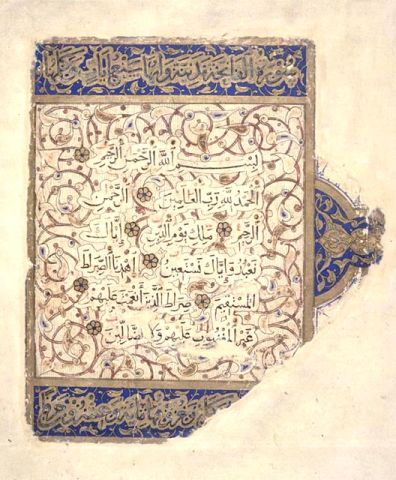
PAGE 169: Click for Arabic Qur’an.
1. Verses 150-151 continue with the story of Prophets Moses and Aaron, peace upon them both, showing us Moses’ anger and disappointment upon returning to find his people worshipping the calf, and his verbal and physical exchange with his brother, whom he had left in charge. He asked God to forgive them both.
2. In Verses 152-153, God promises those who took the calf for worship dire consequence, as indeed will be the reward of any who invent falsehood (see Asad), while there will be forgiveness for any who repent AND return to faith after committing wrongs.
3. Verses 154-155 continue the narrative; at the end of verse 154 is a description of what the tablets contain: Guidance and Mercy FOR THOSE who are in رهب[i] awe/fear (Asad/Ali) of their Lord, while at the end of verse 155 we find Moses’ beautiful supplication to his Lord.
PAGE 170: Click for Arabic Qur’an.
4. Verse 156 continues Moses’ supplication.
[7:156]
And ‘compile/put together’ for us, in this immediate world, what is good, and in the Hereafter. Verily, we have turned in repentance unto You!"
And ‘compile/put together’ for us, in this immediate world, what is good, and in the Hereafter. Verily, we have turned in repentance unto You!"
At the center of the verse we get God’s response, as explained:
He [God] said: "With My chastisement I afflict whom I will – and My Mercy encompasses everything, so I shall ‘compile it/put it together’ to the benefit of those who are Aware and spend in charity, and those who in Our messages do believe.
5. Then, after the supplication in this verse and God’s immediate response, the next verse seamlessly delivers a MAJOR STATEMENT, going to (what would be considered) ‘the future’ in the eyes of Prophet Moses and his generation, peace upon him.
Take a look:
Delivered in the present continuous, it is Timeless:
[7:157]
Those who follow the Messenger, the Uninstructed [ii] Prophet whom they find (reports of) compiled in the Torah and the Evangel: who commands them to what is mutually acceptable and forbids them of what is objectionable, and makes lawful to them all that is Wholesome and forbids them of the Unwholesome, and relieves them of them their burden and the shackles that were upon them. Those, therefore, who believe in him, and honor him, and support him, and follow the Light that was sent down with him– they are indeed the Successful!"
Those who follow the Messenger, the Uninstructed [ii] Prophet whom they find (reports of) compiled in the Torah and the Evangel: who commands them to what is mutually acceptable and forbids them of what is objectionable, and makes lawful to them all that is Wholesome and forbids them of the Unwholesome, and relieves them of them their burden and the shackles that were upon them. Those, therefore, who believe in him, and honor him, and support him, and follow the Light that was sent down with him– they are indeed the Successful!"
Dear Reader:
Anyone who believes purely in God, without bias to the teachings of a certain creed, would realize that this verse illustrates the continuation of God’s single Message, which achieves its finality in Prophet Muhammad, peace upon him, as the Light sent down with him.
This verse shows us that the timeless enlightenment contained in this Qur’an, although sent to all Humanity, is most appreciable when recognized by followers of Moses’ Torah and Jesus’ Evangel. Doesn't God introduce to them His Messenger as someone sent to relieve their burden and free their shackles? He IS a Mercy to Mankind (HQ21: 107).
Many were those wonderful Seekers of God, followers of the Torah and Evangel, who upon opening to God’s Light, seamlessly continued their journey towards Him through the Qur’an. One such Seeker was our Muhammad Asad, born Leopold Weiss!
6. Then, after that beautiful introduction comes the announcement:
[7:158]
Say: "O Cognizant Humans! I am the Messenger of God (sent) to you all, He to Whom belongs the dominion of the heavens and the earth: there is no god but He: He gives both life and death. So believe in God and His Messenger, the Non-indoctrinated Prophet, who believes in God and His words: and follow him so that you might be guided."
Say: "O Cognizant Humans! I am the Messenger of God (sent) to you all, He to Whom belongs the dominion of the heavens and the earth: there is no god but He: He gives both life and death. So believe in God and His Messenger, the Non-indoctrinated Prophet, who believes in God and His words: and follow him so that you might be guided."
The word ALL is highly indicative!(see our authority on the Old Testament, Muhammad Asad), who also says:
“For when I ask myself, 'What is the sum total of my life?' something in me seems to answer, 'You have set out to exchange one world for another-to gain a new world for yourself in exchange for an old one which you never really possessed.' And I know with startling clarity that such an undertaking might indeed take an entire lifetime."
(The Road to Mecca)
Enough said!
Our next Reading is from HQ 7:159-170.
Peace unto all!
[i] (رهب) أصلان: أحدهما يدلُّ على خوفٍ، والآخَر على دِقّة وخِفَّة.
فالأوَّل الرَّهْبة: تقول رهِبْت الشيءَ رُهْباً ورَهَباً ورَهْبَة. والترهُّب: التعبُّد. ومن الباب الإِرهاب، وهو قَدْع الإِبل من الحوض وذِيادُها.
والأصل الآخر: الرَّهْب: الناقة المهزولة. والرِّهاب: الرِّقاق من النِّصال؛ واحدها رَهْبٌ.
Interestingly, besides ‘awe/fear,’ a second connotation to the root-verb ‘rahab’-which we hadn’t known about- is delicateness (دقة) and agility (خفة) as you can see in the Arabic footnote from our 1,000 year old Lexicon!! This completes the Qur’anic description of ‘magic’ in the narrative of Pharaoh’s Sorcerer’s: Remember we had looked up the meaning of ‘sihr,’ and said that the Qur'anic definition was 'terror/awe AND visual deception..? It seems that we can now add to that definition the SKILLS which would be necessary to perform a successful ‘magical’ act, and those are: delicate handling and agility! Just think how true this is, when Arabs today call card-games and other tricks: ‘Games of agility –ألعاب خفّة.
Qur’anic precision is awesome!
[ii] (أمّ) ، وهي الأصل، والمرجِع، والجماعة، والدِّين وفلانةُ تؤمُّ فلاناً أي تغذوه، أي تكون لـهُ أمّاً* تغذوه وتربيّه ومن ذلك أُمُّ الرأس وهو الدّماغ. وأُمُّ القرى: مكّة؛ وكلُّ مدينةٍ هي أمُّ ما حولها من القُرى. قال الخليل: الأمَّة: الدِّين .قال أبو عُبيد: الأمّيّ في اللغة المنسوبُ إلى ما عليه جبلة الناس لا يكتُب… والإمام: كلُّ من اقتُدِي به وقُدِّم في الأمور. قال الخليل: الأمَم: القصد. قال يونس: هذا أمْرٌ مأمُومٌ يأخذ* به الناس.قال الخليل: التيمُّم يجري مجرى التوخّي، يقال له تيمّمْ أمراً حسَناً وتيمّموا أطيب ما عندكم تَصدّقُوا به([82]). والتيمُّم بالصَّعيد من هذا المعنى، أي توخَّوْا أَطيبَه وأَنظَفَه وتعمّدوه. فصار التيمُّم في أفواه العامة فعلاً للتمسُّح بالصعيد، حتى يقولوا قد تَيمَّم فلان بالتُّراب. وقال الله تعالى: {فَتيَمَّمُوا صَعِيداً طَيِّباً والأمّ: الرئيس، يقال هو أُمُّهم.Umm, Ummi, Ummah, tayammum (!)… yes, all these words are related to the root-verb ‘amma,’ which denotes foundation, origin, as well as multitude and direction (‘tayammam’ comes from the verse which says ‘seek direction of’ pure earth- as in HQ4:43).
Because the Arabs of the time were said to be ’ummiyyeen’(as in HQ3: 20), in contrast to the ‘People of the Book, commentators explained ‘Ummi’ as illiterate (perhaps relating literacy to a newborn’s state). English commentators said ‘unlettered;’ I think it has nothing to do with ‘reading and writing,’ as the Qur’an is precise and would not have called a whole community ‘illiterate’ unless every one of them indeed was. Since the term stands in contrast to the People of the earlier Compilation, its meaning here seems to relate to NOT HAVING RECEIVED ANY DOCTRINE, hence my translation as ‘non-indoctrinated.’
In posting of March 26, we did not explain the word ‘Umm-أم’ – when Mecca was called ‘Umm el Quraa’- the term simply denotes any central town, as compared to those surrounding it: وكلُّ مدينةٍ هي أمُّ ما حولها من القُرى- although in that part of the world at the time, Mecca was indeed the origin-the foundation- the ‘mother’ of all towns.

