.jpg)
Welcome Friends: Ahlan wa sahlan!
We ended our last Reading with the Qur’an commanding the Prophet, peace upon him, to incline to peace when the enemy so inclines. Our Reading today shows us beautiful characteristics of the early Believers, and delivers further details regarding their first battle, the Battle of Badr.
Yusuf Ali’s Translation of this Chapter
Muhammad Asad’s Translation of this Chapter
Their commentaries can only be read in verse by verse view.
COMMENTS:
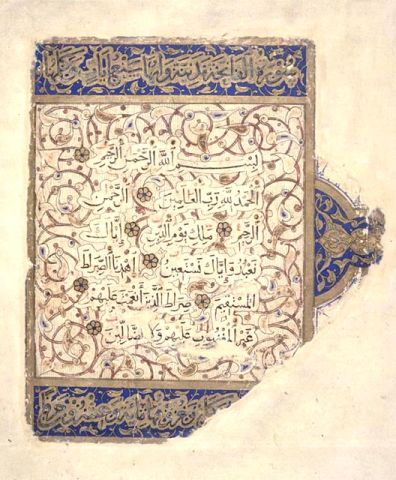
PAGE 185: Click for Arabic Qur’an.
1. We find in Verses 62-64 two statements addressed to the Prophet Muhammad, peace upon him, both beginning with: “God suffices you… حسبك الله” This reminds us of two other verses (HQ 9:129; 39:38 also addressed to Prophet Muhammad) which taught us in times of need to say:
“God suffices me; upon Him do the reliant rely!”(حسبي الله عليه يتوكل المتوكلون
Verse 63 shows us that, what faith can do, all the wealth on earth cannot do! This is very important to know at a time when materialism seems to have the capacity to conquer all: It might conquer the weak-spirited, it might garner their service or ‘loyalty,’ but it will NOT make true friends/supporters of people who are in reality competing against each other for the same material gain!
All the wealth in the world will not buy Faith, nor can it generate Trust; CONVICTION can neither be bought nor conquered. Remember Pharaoh’s Sorcerers (HQ 7: 120)? The minute in which they became convinced, is the very minute in which they switched sides and were ready to suffer the most horrible torture AND die for their beliefs.
Aside: Readers might be interested to know that the word ‘ghani- غني’ in Arabic (which we might understand as ‘wealthy’) actually means ‘satisfied, self-sufficient; requiring nothing of anyone/anything- -الكفاية’ One of God’s attributes is ‘The Ghani- الغني’ (put in Tanzil or see HQ 35:15).
Actually, the more ‘satisfied, self-sufficient and need-free’ we feel, the more ‘ghani’ we are, and it is all in our heads! How many a wealthy person do we know who keeps ‘needing’ more? Such a person is not ‘ghani.’ The ‘ghani’ is one who feels self-sufficient and needs nothing, even if s/he is materially poor!
2. Verses 65-66 are specific to this battle, but may also relate in general to the power of Conviction when (if everything else is similar) one’s strength and impetus become multiplied manifold, bringing victory to a small number over an opponent twice its size.
3. I prefer Yusuf Ali’s interpretation of Verses 67-68-69 rather than Asad’s. These verses relate to a narrative with two traditional interpretations as to whom the Qur’an assigns blame in taking captives for ransom; some Commentators have included the Prophet Muhammad peace upon him in the ‘ransom-rather-than-fight’ charges relayed in these verses, while others have said that the ‘you’ is plural, which indicates that the entire group of Believers were charged, and not the Prophet himself.
Anyway, the following statement could NOT be addressed to the Prophet, peace upon him- and must be addressed to some among the Believers who fit this description (also see HQ 4:94):
[8:67]
….You (plural) may desire the fleeting gains of this world – but God desires [for you the good of] the life to come: and God is almighty, wise.
….You (plural) may desire the fleeting gains of this world – but God desires [for you the good of] the life to come: and God is almighty, wise.
4. Verse 70 shows us how the captives were addressed, in hopes of their seeking God’s forgiveness.
6. Verse 73 shows us that those who Deny –whatever other labels they may have- will always be protectors of each other; a statement for all time to be remembered by those who have attained Faith.
7. Verse 74 defines for us those who are ‘Truly Believers.’ Below is Muhammad Asad’s explanation- also see his notes relating to the last verse which is traditionally taken to relate to inheritance, explained as such by Yusuf Ali. (When the Faithful from Qureish first emigrated to Medina with the Messenger, they were actually fleeing death and persecution, with nothing but the skins on their backs. All their belongings were left behind and confiscated, and they were left destitute. Thereupon, they were made actual ‘brethren’ of the Medinites, to the extent of living in their homes and inheriting their wealth. This verse is considered- by some commentators - to bring back the blood-ties of true kinship as grounds of inheritance.)
[8:74]
And they who have attained to faith, and who have forsaken the domain of evil and are striving hard in God’s cause, as well as those who shelter and succour [them] – it is they, they who are truly believers! Forgiveness of sins awaits them, and a most excellent sustenance.
And they who have attained to faith, and who have forsaken the domain of evil and are striving hard in God’s cause, as well as those who shelter and succour [them] – it is they, they who are truly believers! Forgiveness of sins awaits them, and a most excellent sustenance.
[8:75]
And as for those who henceforth come to believe, and who forsake the domain of evil and strive hard [in God’s cause] together with you – these [too] shall belong to you; and they who are [thus] closely related have the highest claim on one another in [accordance with] God’s decree. Verily, God has full knowledge of everything.
And as for those who henceforth come to believe, and who forsake the domain of evil and strive hard [in God’s cause] together with you – these [too] shall belong to you; and they who are [thus] closely related have the highest claim on one another in [accordance with] God’s decree. Verily, God has full knowledge of everything.
Enough said!
Our next Reading is from HQ 9: 1-13; a NEW Chapter!
Peace unto all!


