CLICK IMAGE: Tanzil Website


OUR MISSION:
UNCOVERING the original message of the Arabic Qur'an by using Lexicons compiled more than 1,000 years ago.

ISOLATING Fact from Fiction.


RECOVERING Hope and regaining the perspective where Humanity is one, God's Message is one, and our Future CAN become one we all look forward to!


© 2010 IQRATHECHALLENGE: INTELLECTUAL PROPERTY PROTECTED BY D.M.C.A. ALL RIGHTS RESERVED.

© 2010 IQRATHECHALLENGE: INTELLECTUAL PROPERTY PROTECTED BY D.M.C.A. ALL RIGHTS RESERVED.
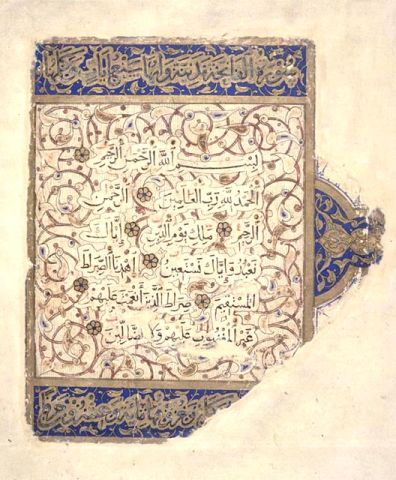
Image: 14th C. Qur'an, Mamluk origin, Library of Congress; Rights obtained.

A BREAKTHROUGH project which helps understand the Qur'an AS REVEALED -not just 'as explained.'

---------------------------------------------------------------------------

Thursday, May 13, 2010

Day 108; Qur’an 10: 34-53, page 213 + 214

Welcome Friends:  Ahlan wa sahlan!
Yusuf Ali’s Translation of this Chapter.
Muhammad Asad’s Translation of this Chapter.
Their commentaries can only be read in verse by verse view.

COMMENTS:
PAGE 213 Arabic Qur’an.
1. Today we continue the serious topic of ‘shirk,' regarding those who ‘associate partners with God,’ as the verses present people with a challenge, asking them to use their own minds to evaluate:
Who is indeed worthy of being worshipped?
This section is full of interactive questions, and the Qureish/listeners often find the arguments clinched by what Prophet Muhammad, peace upon him, is told to say.  Many of today’s verses are addressed to him. 
The first two verses ask about Creation and Guidance.
(Although Verse 34 is well-translated by both Asad and Ali -and we DO love their commentaries- Asad has added the word ‘minds’ which is not in the Arabic).

2. Verse 36 states a fact, telling us that misguided people are actually following nothing but presumption or conjecture (copy + paste تبع إلا الظن in Tanzil).  We already encountered something similar in HQ 6:116, 148.

"Thann- "ظن  is the opposite of ‘yaqeen- يقين’ which means ‘certainty.’ The word appears 8 times in the Qur’an (copy + paste all these words together يقين -صديق –فريق in Tanzil).
There is a powerful Chapter called ‘al Haaqah الحاقَّة-’ (the Implementer of Truth) where the verses start out by asking us whether we realize what the ‘Implementer of Truth is, and then pounds out of our memories the fates of bygone Deniers, until we find out that the ‘Implementer of Truth’ is Judgment Day.  On that day Truth and Reality shall be implemented for all to behold and experience.  Read the following and notice, at the end, what THE TRUE CERTAINTY is:

[69:38-52] according to Asad:

BUT NAY! I call to witness all that you can see * as well as all that you cannot see! * Behold, this [Qur’ān] is indeed the [inspired] word of a noble apostle, * and is not – however little you may [be prepared to] believe it – the word of a poet; * and neither is it – however little you may [be prepared to] take it to heart – the word of a soothsayer:* [it is] a revelation from the Sustainer of all the worlds.* Now if he [whom We have entrusted with it] had dared to attribute some [of his own] sayings unto Us, * We would indeed have seized him by his right hand, * and would indeed have cut his life-vein, * and none of you could have saved him! * And, verily, this [Qur’ān] is a reminder to all the God-conscious. * And, behold, well do We know that among you are such as will give the lie to it: * yet, behold, this [rejection] will indeed become a source of bitter regret for all who deny the truth [of God’s revelation]* for, verily, it is truth absolute! * Extol, then, the limitless glory of thy Sustainer’s mighty name!

3. Verse 37 is very important in that it helps us differentiate between the Compilation- ‘kitaab’ and the Qur’an, and brings us closer to defining ‘Qur’an’ (please take note of this, as we are beginning to build on what we already know.)   

This verse adds more information, telling us that the Qur’an is:

·  A Confirmation of what had earlier appeared.
·  A Defining Exposition تفصيل  to the Compilation.

–فصل  ‘fasala [i]’ means to distinguish one part from another.  There is more in HQ 11:1; 41:3.

As we already know, the Qur’an and the Kitaab are not synonymous; the Qur’an defines and distinguishes what the Kitaab contains.  See Posting of March 21st.

4.  Verse 38 presents a challenge, similar to HQ 2:23.
Verse 39 tells us WHY PEOPLE DENY OR BELIE the Qur’an (or any truth!).  They do so because they have not understood it, and its implication has not come across to them!
 
This highlights our responsibility, as Believers, to make the Qur’an both desirable and accessible.  Desirable, in that people would seek it because of the good they see in us.  Accessible, in that we welcome all those who approach it.
But we cannot understand it, nor get its implication, without Arabic… 
This emphasizes the responsibility of Muslim educators AND parents to whom Childhood offers a fleeting opportunity: Every Muslim child should be taught Arabic, even if parents themselves do not know it. 
As for those of us who do know Arabic: WE are entrusted to carry Qur’anic implication across to others.  I cannot imagine a bigger responsibility, placed on our shoulders in this verse and made even graver at the end: 
“..therefore observe the end-result of those who wronged themselves!”

Yet, some do believe/will believe and some don’t/won’t- it is God who knows the corrupters well (verse 40).
The Messenger, peace upon him, is told in verse 41 to openly revoke the deeds of the idol-worshippers; each is responsible for his own.   

PAGE 214 Arabic Qur’an.
5.  Verse 42 shows us the relationship between a ‘deaf’ ear and a closed mind.
Verse 43 shows us the relationship between a ‘blind’ eye and lack of perception.
After mentioning those who have ‘closed their ears and eyes’ (to the Messenger himself), verse 44 assures us that it is not God who wrongs people in the least, but it is people who wrong their own selves.  They do NOT realize this, until too late, when their entire life, in hind-sight, seems like a single hour in a day (Verse 45).

6.  Verses 46-47-48-49 are addressed to Prophet Muhammad, peace upon him, as well as his people who are asking when God’s warning shall come to pass.   Here we clearly hear God’s ‘voice’ as He mentions the possible death of His Messenger, and tells him to explain his inability at controlling his own harm or good fortune!  Verses such as these have convinced many a skeptic that the Qur’an is not of human origin.

7.  Verses 50-51-52-53 continue the dialogue, with commands such as ‘Say!’ and questions such as ‘…what do they rush?’ and ‘What....? NOW?” as well as forewarning scenes and words, which can be avoided by awareness, such as ‘..Taste everlasting suffering!”   
Our Reading today ends with Qureish’s question about the Hereafter, ‘Is it indeed True?’  to which the Messenger is told to respond: 
“Yes, indeed, by My Lord! It is true and you will not escape it!”                                                                                        

Enough said!
Our next Reading is from HQ 10: 54-70.

Peace unto all!


[i] (فصل) تمييز الشَّيء. من الشَّيء وإبانته عنه. يقال: فَصَلْتُ الشَّيءَ فَصْلاً. والفَيْصل: الحاكم. والفَصِيل: ولدُ النَّاقةِ إذا افتُصِلَ عن أُمِّه. والمِفْصَل: اللِّسان، لأنَّ به تُفصَل الأمور وتميَّز. والمفاصل: مَفاصل العِظام. والمَفْصِل: ما بين الجبلَيْن، والجمع مَفاصل. والفَصِيل: حائطٌ دونَ سُور المدينة.

Wednesday, May 12, 2010

Day 107; Qur’an 10: 21-33, page 211 + 212

Welcome Friends:  Ahlan wa sahlan!
Yusuf Ali’s Translation of this Chapter.
Muhammad Asad’s Translation of this Chapter.
Their commentaries can only be read in verse by verse view.

COMMENTS:
PAGE 211 Arabic Qur’an.
1.  Verse 21 begins by a general statement, in that people, once distress or danger has passed, tend to distort and misconstrue (‘makrمكر-) the truths they had witnessed, truths which were at the time ‘God’s signs’ to them.
The verse goes on to say that God is swifter in construing (than they could ever be in misconstruing); His (angel) messengers are compiling against them a record of everything they misconstrued.
Another word for ‘makr’ is to devise.  But “How does God construe or devise?” is not a question for us to answer.  We just try to understand what the Qur’an tells us about God in general, leaving the specifics to Him.  But as Lexicons tell us, ‘makr [i]’ is of two kinds, the positive and the negative, and is related to what people misconstrue/devise of Falsehood, versus what God construes/devises of Truths.

2.  Verse 22 offers, what Asad called, a ‘parabolic illustration’

Note that our two scholars translated the word ‘deen دين-’ as ‘duty/faith’ (Ali/Asad).  
As Regular Readers already know, as explained by old Lexicons, ‘Deen’ simply means ‘Accountability.’ 
Unfortunately however, translators have missed this point.  If we looked at the 10 explanations on this page, we’ll note that ten persons offer 5 different translations of the word ‘deen!’

·        4 times translated as ‘faith.’
·        2 times translated as ‘religion.’
·        2 times translated as ‘obedience.’
·        1 time translated as ‘submission.’
·        1 time translated as ‘duty.’

We also notice that 4 of them related ‘shukrشكر-" to ‘gratitude’ while the other 6 related it to ‘thankfulness.’  Regular Readers know from our Posting of January 13th  that ‘shukr’ does not denote simple gratitude or thanks, but rather ‘accepting what is little and making the most of it until it achieves abundance,’ in other words, productivity.  The Arabic definition is reposted in footnote[ii] and reflected in this explanation:

This verse describes the desperation when people realize that none but God can help them.  In utter helplessness, they call unto Him feeling, at that moment, accountable completely and purely to Him.  They promise God that, if He saved them, they would make the most of whatever He gives them, no matter how little, and would work hard to spread its benefit to others. 

Verse 23 informs us that, as soon as God had saved them, they did the exact opposite of what they had promised: They transgressed on this earth in violation of the rights of others (just as verse 21 had stated)!  The verse ends with a dire warning after informing them that, by violating the rights of others, they violate their own Selves.

3.  Verse 24 offers a parable, drawing comparison between this immediate life, and a fertile orchard or field.  At the peak of fruitfulness, just before harvest, when we imagine holding its yield in our hands, we suddenly realize that we have nothing.  In that is a sign for those who ‘reflect/think’ (Ali/Asad).
 
Note for whom these signs are:
Verse 5 ‘…those who discern, or know.’
Verse 6 ‘…those who are Aware.’

4.  In Verse 25 God invites us to ‘Dar al Salaam’ the Abode of Peace, and guides us to the Straight Path. 
IMPORTANT:  The Abode of Peace is mentioned only twice in the Qur’an.  Both times related to the Straight Path, and to people who take heed of God’s Signs!
See HQ 6: 126- 127:

وَهَـٰذَا صِرَاطُ رَبِّكَ مُسْتَقِيمًا قَدْ فَصَّلْنَا الْآيَاتِ لِقَوْمٍ يَذَّكَّرُونَ ﴿١٢٦﴾
لَهُمْ دَارُ السَّلَامِ عِندَ رَبِّهِمْ وَهُوَ وَلِيُّهُم بِمَا كَانُوا يَعْمَلُونَ ﴿١٢٧﴾

 
PAGE 212 Arabic Qur’an.

5. Verses 26-27 offer us ‘persuasion and dissuasion,’ as we listen to the description of those who will abide in eternal abodes which are, in fact, self-prepared.  The images in these verses are highly descriptive, as those who did good deeds got their reward and more, while those who earned bad deeds were only recompensed for what they had done. 
Verses 28-29-30 give us a glimpse into a scene which takes place when all shall be gathered before God. Those who ascribed partners to Him will be held apart, together with the ‘partners’ they had revered besides God.  But then their ‘partners’ will disown them, stating that God suffices as their Witness that they were unaware of being worshipped.  Each self shall be assessed by what it had sent forth of its deeds, and all shall return to God, their Rightful Protector… all this at a time when none can be false, as Falsehood itself, is no more.

Now is the time to testify that we worship God Alone, letting go of everything and everyone else, no matter how precious they are; they will all abandon us on Judgment Day.  

6. Verse 31 tells Prophet Muhammad, peace upon him to ask 5 questions, all beginning with ‘Who…?”  to which the answer is: “God!”  The verse ends by asking a final question: “Shouldn’t you then be Aware?”

We must bear in mind that Qureish DID believe in God, and would naturally respond as mentioned.  However, they also did worship other ‘deities’ they had set up as ‘partners’ with God, which is why all these verses steer them to rethink and re-evaluate their Accountability, persuading them at times, and also dissuading them from their false beliefs.

Verse 32 reintroduces them to God, their Rightful Lord, and asks what could be beyond Truth, or Rightfulness, except Error?  Then asks again: “So, whereto are you diverted?”

Notice the interactive questions, which will inevitably be answered, if only with silence!

7.  Verse 33 ends our Reading today:

“Thus was realized the word of your Lord against The Deserters, that they do not Believe.”

‘Fisq,’ or the Breach of Faith, as we mentioned on April 1st and March 18, denotes the point of no return, ‘Desertion.’  Ali uses ‘rebel,’ Asad says ‘bent on sinful doings,’ and Arberry says ‘ungodly.’  Technically, Ali is correct, but in today’s usage ‘rebel’ sound political, and does not fit. 

We can call a ‘faasiq’ a ‘deserter’ or someone ‘who breaches the faith.’  I have not yet found anything better. 
                                                                                                                                   
Enough said!
Our next Reading is from HQ 10: 34-53.

Peace unto all!


[i] - المكر: صرف الغير عما يقصده بحيلة، وذلك ضربان: مكر محمود، وذلك أن يتحرى بذلك فعل جميل، وعلى ذلك قال: }والله خير الماكرين{ [آل عمران/54]. ومذموم، وهو أن يتحرى به فعل قبيح، قال تعالى: }ولا يحيق المكر السيء إلا بأهله{ [فاطر/43]، }وإذ يمكر بك الذين كفروا{ [الأنفال/ 30]، }فانظر كيف كان عاقبة مكرهم{ [النمل/51]. وقال في الأمرين: }ومكروا مكرا ومكرنا مكرا{ [النمل/50] وقال بعضهم: من مكر الله إمهال العبد وتمكينه من أعراض الدنيا، ولذلك قال أمير المؤمنين رضي الله عنه: من وسع عليه دنياه ولم يعلم أنه مكر به فهو مخدوع عن عقله (انظر: البصائر 4/516؛ وتفسير الراغب ورقة 139).

[ii]شكر: الثَّناء على الإنسان بمعروف يُولِيكَهُ. ويقال إنَّ حقيقة الشُّكر الرِّضا باليسير. يقولون : فرسٌ شَكور، إذا كفاه لسِمَنِه العلفُ القليل. والأصل الثاني: الامتلاء والغُزْر في الشيء. يقال حَلُوبة شَكِرَةٌ إِذا أصابت حَظّاً من مرعىً فَغزُرت. ومن هذا الباب: شَكِرَت الشّجرةُ، إذا كَثُر فيئُها

Let's TWEET this!

Tweet me!