CLICK IMAGE: Tanzil Website


OUR MISSION:
UNCOVERING the original message of the Arabic Qur'an by using Lexicons compiled more than 1,000 years ago.

ISOLATING Fact from Fiction.


RECOVERING Hope and regaining the perspective where Humanity is one, God's Message is one, and our Future CAN become one we all look forward to!


© 2010 IQRATHECHALLENGE: INTELLECTUAL PROPERTY PROTECTED BY D.M.C.A. ALL RIGHTS RESERVED.

© 2010 IQRATHECHALLENGE: INTELLECTUAL PROPERTY PROTECTED BY D.M.C.A. ALL RIGHTS RESERVED.
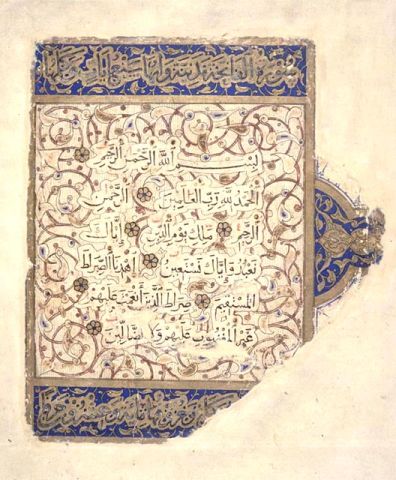
Image: 14th C. Qur'an, Mamluk origin, Library of Congress; Rights obtained.

A BREAKTHROUGH project which helps understand the Qur'an AS REVEALED -not just 'as explained.'

---------------------------------------------------------------------------

Monday, June 7, 2010

Day 128; Qur’an 13: 12-27, page 251 + 252

Welcome Friends:  Ahlan wa sahlan!
Our last Reading ended with such enlightening verses, showing us that, although we do not control the frame of existence, nor is the canvas of our own setting, but our destinies ARE painted by our choice of colors, using the brushes WE hold in our own hands!
We continue today, learning more about our place in Creation, and about our Creator.
Verse 13 mentions THUNDER, this Chapter’s Title.

Yusuf Ali’s Translation of this Chapter.
Muhammad Asad’s Translation of this Chapter.
Their commentaries can only be read in verse by verse view.

COMMENTS:
PAGE 251Arabic Qur’an.
1.  Our Reading today continues, giving us an awe-inspiring perspective of Creation and The Creator: 
Initially, Verse 12 begins to describe the Forces of Nature: We are shown the Lightning, which instills both fear and hope:  The most deadly natural phenomena known to us is also our herald of glad-tidings, a precursor to thirst-quenching rain!  The heavy laden thunder-clouds bring us either relief or distress. 
As the Thunder rolls in Verse 13, its activity is evidence to His Praise, and the Angels follow suit, constant in motion, and in awe and apprehension of what descends upon us from the stormy heavens… thunderbolts that hit some of us.. as others are arguing about God, Who is Supreme in His Design.

2. The word ‘sabaha [i]سبح-’ is very important, because our understanding of many verses depend on this one concept.  According to our 1,000 year-old Lexicon, this word is related to MOTION, most similar to ‘swimming in water.’  Arabs have traditionally used this word to describe the fluidity of camels upon the mirage of desert sands, the galloping of horses, the churning of ships through the waves, and people going about their different chores. 
The Qur’an tells us in HQ 21:33:

وَهُوَ الَّذِي خَلَقَ اللَّيْلَ وَالنَّهَارَ وَالشَّمْسَ وَالْقَمَرَ كُلٌّ فِي فَلَكٍ يَسْبَحُونَ ﴿٣٣﴾

Remember when we explained Noah’s ‘fulk’ to be a circular ‘arc?’  The word ‘falak’ is of the same root-verb, denoting a circular shape or direction, so the above verse would translate as follows:

‘It is He Who created the night and the day and the sun and the moon each moving round in its orbit.’

Indeed, as we understand from the Qur’an, ‘Tasbeeh’ is what ALL of creation is doing, at all times, and on all levels of its existence. 
It is interesting to note, that when the Qur’an mentions ‘tasbeeh’ in the context of Thunder, we find it coupled with mention of the forces of Nature, electric charges, spin and motion.  Science tells us that this ‘tasbeeh’ pertains to both the smallest, most elementary particle of matter, as well as the largest spinning motion of the planets.
Everything is in a state of ‘Tasbeeh’– in constant motion towards its end, as designed by The Creator.

3.  After discussing the ‘Tasbeeh’ of Creation, we find Verses 14- 15 showing us TO Whom Rightful Praise is due:  Everything in the heavens and on earth bow to God’s Will, functioning according to His Design.  As Humans, we might do so willingly, by conscious acts that seek to enhance our gifts and mend our wrongs, HOWEVER: Even when we refuse, the general Program will still be carried forth, as every particle in our being bows to God, in spite of us!

4.  Read Verses 16- 17- 18:

After the above verses, we find the ‘interactive’ questions in Verse 16 tugging at our heart-strings:  ‘..Who is Lord of the Heavens and Earth?..’ We notice that Prophet Muhammad, peace upon him, is told to supply the answer to the first question:  ‘..It is God..’  But then 4 questions follow, each demanding a response… until he is told to respond at the end of the verse: ‘…God is Creator of all things, and He is the One, the Supreme!’

5.  Verse 17 speaks about Truth versus Falsehood, where Falsehood is likened to the scum that accumulates on the surface of liquids, such as water or molten metal, and then disappears, leaving behind everything of benefit. 

A relevant note (especially after the latest environmental disaster):
Nature, its Ecosystem, its biological organisms… everything works at its best, according to His Design.  It is Humanity who interferes in this process, when the environment becomes unable to recover fast enough  to counter the damage we are causing!

Then, Verse 18 illustrates the FUTILITY of all our earnings… IF we fail to respond to our Lord!

PAGE 252 Arabic Qur’an.
6.   In Verse 19 a crucial QUESTION is asked of anyone who is witness to this Revelation.  After the question comes the statement: ‘…..certainly it is Those with Insight, who bring to mind (that this Revelation is the Truth!).’ 
Those with Insight are ‘ulul albaab’ (أولوا الأباب)  We discussed them earlier, when we came across the term in the BEAUTIFUL verses HQ 3:191-194. [ii] We mentioned then, that ‘Lub’ means the core of something, and that Arabs used it to mean 'mind,' as in 'labeeb,' intelligent, or witty.  But perhaps what is most important about this word is the following:
Derived from the root verb ‘labba’ it refers to being physically or emotionally settled and attached; committed.  The ‘talbiyah’ of Pilgrimage (Hajj) comes from that root verb ('Labbeyk Allaahuma Labbeyk,'  the words which announce a pilgrim's dedication and commitment to God). 

Here we have no less than FIVE beautiful verses 20- 21- 22- 23- 24 describing the characteristics of Those of Insight- ‘Ulul Albaab.’
This is what we should seek, so please read them carefully.

From fulfilling our Covenant with God, to maintaining and strengthening our bonds with each other, to being always in-awe of God while fearing the final rendering of account, to practicing Forbearance as we seek His Direction, to establishing regular Prayer, to spreading His Bounty by spending on others -both discreetly and publicly- to repelling harm with our good deeds… to Those of Insight, who do all that.. are the most beautiful Rewards:
Fulfillment in the Hereafter, as they enter Eternal Gardens together with those who qualify of their forefathers, spouses, children… and the angels entering upon them from every gate:  “Peace upon you in that you were Forbearing; how excellent is the Fulfillment of the Hereafter!”

May WE -and all those we love- be among them!    

7.  As we move from Persuasion to Dissuasion من ترغيب إلى ترهيب)), Verse 25 tells us of those whose characteristics are the opposite to those of Insight, and therefore deserve All Condemnation (al la’naاللعنة- ), as well as Banishment from God’s Favor.

Then, Verse 26 tells us how this immediate, lowly Life, delighted them, although it is nothing but fleeting pleasure compared to the Hereafter, while Verse 27 returns us to the Deniers of Qureish, who keep finding fault with Prophet Muhammad, peace upon him.

Enough said!
 
Our next Reading is from HQ 13: 28--43.

Peace unto all!

           P.S. Let's start early Environmental education with the children we love- check out this coloring book!


[i] لسان العرب:
سبح: السَّبْحُ والسِّباحة: العَوْمُ. سَبَحَ بالنهر وفيه يَسْبَحُ سَبْحاًوسِباحةً….وأَما ابن الأَعرابي فجعل السُّبَحاء جَمْعَ سابح؛ وبه فسر قول الشاعر:
وماءٍ يَغْرَقُ السُّبَحاءُ فيه،
سَفِينتُه المُواشِكةُ الخَبُوبُ
قال: السُّبَحاءُ جمع سابِحٍ. ويعني بالماء هنا السَّرابَ.جعل الناقة مثل السفينة حين جعل السَّرابَ كالماء. وأَسْبَح الرجلَ في الماء: عَوَّمَه؛ وروى الأَزهري بإِسناده أَن ابن الكَوَّا سأَل عليّاً، رضوان الله تعالى عليه، عن سبحان الله، فقال: كلمة رضيها الله لنفسه فأَوصى بها.

معجم المقاييس:
(سبح) أصلان: أحدهما جنسٌ من العبادة، والآخر جنسٌ من السَّعي. ومن الباب التَّسبيح، وهو تنْزيهُ الله جلَّ ثناؤه من كلِّ سوء. والتَّنْزيه: التبعيد. والعرب تقول: سبحان مِن كذا، أي ما أبعدَه.
والأصل الآخر السَّبْح والسِّباحة: العَوم في الماء.
والسّابح من الخيل: الحَسَنُ مدِّ اليدين في الجَرْي.

[ii] لب)  يدلُّ على لزومٍ وثبات، وعلى خلوص وجَوْدة.
فالأوَّل ألَبَّ بالمكان، إذا أقام به، يُلبُّ إلبابا. ورجلٌ لَبٌّ بهذا الأمر، إذا لازَمه وحكى الفرّاء: امرأةٌ لَبَّةٌ: مُحِبَّةٌ لزوجها، ومعناه أنَّها ثابتة على وُدِّه أبداً. ومن الباب التلبية، وهو قوله: لَبَّيْك. قالوا: معناه أنا مقيمٌ على طاعتك.

Friday, June 4, 2010

Day 127; Qur’an 13: 1-11, page 249 + 250

Welcome Friends:  Ahlan wa sahlan!
In our last Reading we noticed the Qur’an giving Prophet Muhammad, peace upon him, realistic expectations, telling him that most people will not believe in his Message.  Perhaps another important reason for telling him this, is so that he would NOT measure his success by the numbers at hand, but rather, simply do his best… and leave the matter to God.  And more importantly, perhaps the Qur’an is ultimately speaking to US, telling US to do OUR best, and leave the matter of who does, or who does not believe…. to God!

Yusuf Ali’s Translation of this Chapter.
Muhammad Asad’s Translation of this Chapter.
Their commentaries can only be read in verse by verse view.

سورة الرعد
COMMENTS:
This Chapter of ‘Thunder’ is considered to be of the late Meccan era by most, including Yusuf Ali.  Muhammad Asad tells us:

“THERE ARE considerable differences of opinion regarding the period in which this surah was revealed. According to one statement attributed to Ibn 'Abbas, it is a Meccan surah (Suyuti), while according to other authorities, mentioned by Tabarani, Ibn 'Abbas is reported to have described it as belonging to the Medina period (ibid.). .. Zamakhshari, on the other hand, confines himself to the statement that the time of its revelation is uncertain.
Like so many other surahs, this one, too, takes it's title from the incidental mention of a word which caught the imagination of the earliest generation of Muslims: in this case, the word "thunder" occurring in verse 13, which relates to the evidence of God's creative powers forthcoming from the observable manifestations of nature.”

PAGE 249 Arabic Qur’an.

1.  Verse 1 begins with ‘disjointed letters (A-L-M-R).  We had already discussed similar beginnings on April 6th, where we indicated that such letters usually introduce the ‘Compilation -كتاب’ – and we noted that they are in reality ‘sounds’ not letters. 
Notice that this verse points to the Truth of this Revelation stating that, despite this Truth, most people will not believe in it.
Also notice (in Asad’s commentary) that scholars had NOT seen the distinction we have uncovered between the two terms ‘Kitaab’ and ‘Qur’an,’ and they believed them to be synonymous.  We now know something VERY important about these two terms; they are neither synonymous nor alike:  The Kitaab is static, while the Qur’an is interactive!

2.  Verse 2 invites Humanity to look around and observe the wonders of Creation, well-explained by both Ali and Asad, except for the word ‘Archعرش -’ (see discussion of April 9th from which comes the following excerpt):
“We should bear in mind that the word in Arabic expresses BUILDING, complete with raising and fortifying what is built.  The 'arch' which the Qur'an ALWAYS mentions with regard to God's Creation, is directly related to the form and function of this universe, as the receptacle of LIFE.  Verse HQ 2:255 tells us about God, that "..no slumber nor sleep overcomes Him..."  The concept of the 'Arch' seems to have been well-understood by early Muslims who manifested it into their architecture; see 'The Arch Which Never Sleeps' in sidebar.”  

3.  After observing the skies, where sun and moon are delegated -each for its own purpose- we are invited in Verse 3 to look to the earth, with its firmaments, rivers, abundance of paired fruits... to the night as it encloses the day… all of which are Signs for قوم يتفكرون 'Those who Reflect'.. and then we are given more detail in Verse 4, where the Signs are for قوم يعقلون 'Those who use their Intellect to secure knowledge.'

Notice that the Qur’an calls the mountains ‘rawaassiرواسي- ’ firmaments or ‘anchors’ 9 times (copy and paste رواسي in Tanzil), and at other times it likens them to ‘pegs’ (HQ 78:7), or says that they ‘prevent the earth from shaking’ (HQ 16:15; 31:10), all of which is related to the FUNCTION of mountains and their geological formation- information that was not discovered until recent generations.  Read this scientific paper, which tells us about the roots that extend (5.6 times deep) into the mantle beneath mountain ranges, and note its illustrations.

Verse 5 shows us that despite the wonders of earth and skies… some will continue to deny their Lord!  The argument here, regarding being brought back to life from dust, seems to indicate that it is indeed a Meccan Chapter.

PAGE 250 Arabic Qur’an.
4.   In Verse 6 we find 'Those who Deny' challenging Muhammad, peace upon him, to deliver the consequence he is warning them of.  Here we note that they have not looked at past examples from history, and therefore do not fully comprehend the severity of what they are asking for. 
Perhaps that is one reason why they ask for a ‘classic’ miracle, in Verse 7, although even that, would not convince them.  The Messenger is reminded that he is only a Warner (and responsible for delivery of the Message, whether or not they believe), and every People have a Guide.  Muhammad Asad considers this Guide to be God, while Yusuf Ali considered the Guide to be the Qur’an/ Muhammad, peace upon him.

5.  The beginning of the verse mentions both the ‘good deed’ and the ‘bad.’  A Reader recently asked, how we might define them, since all things are relative.  I think it is safe to say that:
·     A Good deed /hassana حسنة:
‘What is Beneficial to Society AND is sought/appreciated/commended.’
·     A Bad deed /sayyi’ahسيئة :
‘What is Harmful to Society AND is avoided/disparaged/denounced.’
Some of these acts are universally condemned, mentioned in Holy Scriptures or in Legal Systems, and will never change, while others ARE indeed relative, but relative to what?  To knowledge.  The more we know, the more discerning we become as to the benefit or harm of our acts, and if we seek to uphold the well-being of our societies, or to 'mend,' we should spread the information to others!
6.  Verses 8- 9 are absolutely beautiful- please read them carefully.  Also listen to this entire section on Tanzil (I like al-Ghamadi’s voice). 
The more you know about God the more you adore Him…all Praise and Glory is His.
  
(Indeed my prayer, my service, my life, my death, are all for God, The Lord of all Existence.  No partner in Divinity has He, such have I been commanded, and I am of those Pure in Reverence to Him! From: HQ 6:162-163)
 
7.  After beginning with the Compilation, then mentioning the Creation of the skies, the earth and its bounties, and the awe-inspiring attributes of God Himself, and the fact that He Is '...Knower of the Unseen and the Witnessed..." we are told about ourselves in Verses 10- 11:

We learn that -to Him- it is of no difference, whether we declare or divulge our discourse, or whether we stir by night or by day, furthermore:  THERE ARE THOSE WHOSE SOLE FUNCTION IT IS TO FOLLOW US, protecting us, at all times, as part of God’s command.
(Any questions as to 'Who?' 'Where?' 'What?' are futile.  All we know is that they are God's agents, so designated for our benefit, fulfilling their purpose in the 'gheyb' which is beyond our perception.)

And then we are told that God will not change any state we are in, until we change what is in our own Selves.  This works both ways, whether we move towards positivity or negativity; either way God will not stop us, but will allow events to naturally unfold as results of our actions.  And if He then brings upon a certain population the consequence of its actions, none can prevent that!

See Asad’s interesting commentary on these verses.

Our next Reading is from HQ 13: 12-28.

Peace unto all!

Let's TWEET this!

Tweet me!