CLICK IMAGE: Tanzil Website


OUR MISSION:
UNCOVERING the original message of the Arabic Qur'an by using Lexicons compiled more than 1,000 years ago.

ISOLATING Fact from Fiction.


RECOVERING Hope and regaining the perspective where Humanity is one, God's Message is one, and our Future CAN become one we all look forward to!


© 2010 IQRATHECHALLENGE: INTELLECTUAL PROPERTY PROTECTED BY D.M.C.A. ALL RIGHTS RESERVED.

© 2010 IQRATHECHALLENGE: INTELLECTUAL PROPERTY PROTECTED BY D.M.C.A. ALL RIGHTS RESERVED.
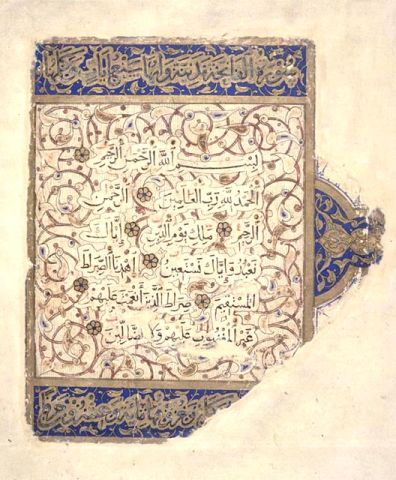
Image: 14th C. Qur'an, Mamluk origin, Library of Congress; Rights obtained.

A BREAKTHROUGH project which helps understand the Qur'an AS REVEALED -not just 'as explained.'

---------------------------------------------------------------------------

Thursday, July 29, 2010

Day 164; Qur’an 21: 48-80, page 326 + 327 + 328

Welcome Friends:  Ahlan wa sahlan!
Despite all efforts, this Blog is running a little later than scheduled[i].
Therefore, I might not comment on each verse or include Hyperlinks for each (at least until we are back on track).  We have already covered many important topics, so, God-willing, it will be easy to refer to them.
Anyway, what is ultimately gained from this Post has always depended on your personal effort, dear Reader, so do keep up your good work! 
Write and let me know how this works for you!

COMMENTS:
PAGE 326 Arabic Qur’an.

1.  Today’s Reading (Verse 48) begins by referring to God’s Messengers, peace upon them, Moses and Aaron, who received the Criterion (Furqaanفرقان-) and Illumination (Dia’(ضياء- and A Reminder (thikr ذكر-) to the Aware, who are then described in Verse 49.
Verse 50 mentions THIS Thikr, of abiding benefit (ذكر مبارك), after which Listeners are asked: “…will you then disavow it?”
‘Mubaarak’ is that in which there is abiding benefit, similar to water abiding in a lake, beneficial at all times.
ثابت الخير، ثبوت الماء في البركة.
Please notice the distinction: 
Although both Moses’ and Muhammad’s Messages are Thikr/ Reminders/ occasions for Remembrance, it is THIS Thikr alone which is of abiding and lasting benefit.  A search through the Qur’an would show us also, that only THIS Compilation (sent to Muhammad, peace upon him) is considered of ‘abiding benefit; see HQ 6:155, 38:29. 

As we explained earlier, this is NOT because one is superior to the other (how could that be, when the Source is God), but simply because what remains of other Revelations today is ‘static.’  The original Messages (words of God), were translated and explained by scholars throughout time, portraying human understanding.
This is why ANY explanation of the Arabic Qur’an should adhere strictly to its Language and Context, and even then, that understanding would retain validity for as long as it is being renewed, becoming static as soon as it is left to stand. 

This is why, here, at iqrathechallenge, our intention is to continue attempting to understand the Qur’an, God-willing, in a cycle of renewal that ends when our capability to do so comes to an end.

2. Verses 51-57 begin Prophet Abraham’s narrative with his idol-worshipping people, peace upon him, when he was still a lad.  We notice his exchange with his father and people, and his attempt at guiding them back to their Lord Who brought the skies and earth into existence.
 
PAGE 327 Arabic Qur’an.

We notice the nature of his address, and how he demonstrated to them, that idols have no power of their own.
We also listen to his arguments in Verses 66-67, and the expression ‘uph to you’ "أف لكم".
Remember that the narrative is being repeated for the benefit all.

3. In Verses 68-70 we get the impression that the Idol-worshippers attempted to burn him at the stake, and we see how God saved him as He addressed the Fire. 

Yusuf Ali sees this as the ‘supremacy of the Spiritual over the Material,’ while Muhammad Asad sees Talmudic influence in the way these verses are traditionally explained. 

Whether or not we might be more inclined towards Yusuf Ali than Muhammad Asad here, doesn’t really matter:  The incident served its purpose at the time; Abraham was saved and the Idol-worshippers were confounded.  Furthermore, narrating it to the idol-worshippers of Qureish ALSO served its purpose.  Remember that Prophet Muhammad and his companions were suffering at the hands of Qureish even as these verses were being revealed. 
As the Qur’an will show, there is more in common between Prophets Abraham and Muhammad, peace upon both, than history lets on!

4. Verses 71-72 conclude both Prophet Abraham’s troubles with his people as well as Prophet Lot’s, helping them arrive in safety to the land of abiding benefit.  After that, Abraham was granted Isaac and Jacob (son and grandson).

PAGE 328 Arabic Qur’an.

5. Verse 73 tells us that these Prophets, peace upon them, were rendered into Leaders, guiding by God’s command, and we find here 4 characteristics of good leadership!  We also notice the beautiful definition of 'aabideen عابدين' or 'active Worshippers' with its major defining characteristics. 

Verses 74-75 are about Prophet Lot, peace upon him, and how God saved him from the township that committed The Unwholesome Deeds (الخبائث), and were a community of Wrongdoing, Violators.

Verses 76-77 are about Prophet Noah, peace upon him, who called upon his Lord, Who saved him from the great, suffocating agony [ii] (‘karbكرب-), while the community of Wrongdoers was all drowned.

Verses 78-79 are about Prophets David and Solomon together, peace upon both, while 80 refers to David alone, as he was inspired to bring to his people an essential new craft, thought to be the manufacturing of protective coats of mail.  Muhammad Asad doesn't agree with this, seeing 'laboos' as synonymous with 'libaas,' denoting garments, and he concludes that this verse alludes to the 'garment of awareness.'  I find that the word 'san'ah- صنعة' makes his conclusion unlikely. 'San'ah' denotes physically  'manufacturing/constructing/fabricating' something (remember that Noah, peace upon him, physically 'constructed' the Arc HQ11:37, 23:37.  Today we call a 'factory' 'masna-مصنع'). 

Nevertheless, it is interesting to note Prophet David’s distinction, and the effect his presence and ‘tasbeeh’ had upon nature around him.

(We discussed the meaning of (sabahaسبح- ) on June 7th , when we said that ‘Tasbeeh’ relates to MOTION, and is what ALL of creation is doing, at all times, and on all levels of its existence in ‘celebration of God’s Praise.’  This pertains to everything, from the smallest particle of matter to the largest.  Everything is in a state of constant motion towards its end, as designed by The Creator.  It comes as no surprise therefore, that we do not ‘understand’ the ‘tasbeeh’ of Creation -although we are an integral part of it.)

If you have time for fun, check out this poem, which well-expresses the concept of 'Tasbeeh,' defining it as:
"Tasbeeh is constant motion
in willing, and unwilling, Devotion!"

Our next Reading is from HQ 21:80-112.

Peace unto all!


[i] We should be on page 351, which means that we are almost 13 Posts behind schedule.

[ii] (كرب)  يدلُّ على شِدَّةٍ وقُوّة. يقال: مَفاصِلُ مُكْرَبَةٌ، أي شديدةٌ قوية. وأصلُه الكَرَب، وهو عَقْدٌ غليظ في رِشَاء الدَّلو يُجعَل طرفُه في عرقوة الدَّلو ثم يشدّ ثِنَايتُه رِبَاطاً وثيقاً. يقال منه أكربْت الدَّلو.ومن الباب الكرْب، وهو الغَمُّ الشَّديد. والكريبة: الشَّديدة من الشَّدائد. والإكراب: الشِّدَّة في العَدْو؛ يقال أكْرَبَ فهو مُكْرِب.

Wednesday, July 28, 2010

Day 163; Qur’an 21: 25-47, page 324 + 325

Welcome Friends:  Ahlan wa sahlan!     
COMMENTS:
PAGE 324 Arabic Qur’an.

1.    Addressing the Messenger, peace upon him, in the second person (Verse 25), the Qur’an shows his similarity to previous Messengers (as we saw in our last Reading, Verses 7-9).  However, having shown their similarity earlier as ‘rijaal’ (active humans), the Qur’an here shows the IDENTICAL statement which God had conveyed to them, and which characterizes their Mission:

“….there is no god but I, therefore worship Me (Alone).”

Verses 26- 27- 28- 29 mention the allegation that the Creator (al Rahmaan), had taken a child (as His own), and ascertain that these (human or angelic) Messengers are NOT His ‘children,’ but rather:  They are His most honored worshippers, obedient to His Command, incapable of intercession without His approval, completely awed by Him… and finally:  Should any of them indicate that he is a deity:

“…Him shall We reward with Hell; such do We reward Wrongdoers!”


2.    Verses 30- 31- 32- 33 describe the creation of the skies and the earth; tell us that all Life sprung from water; about the anchoring of mountains; the gushing of springs; the protectiveness of our atmosphere; the night and day; the sun and moon, each moving round in an orbit (remember Noah’s Arc/ ‘fulk?’  ‘Falak’ is a circular pattern(فلك- .  Many ‘scientific marvels’ to study here!

(A ‘Scientific Marvel’ is related to the Qur’an mentioning a scientific fact unknown at the time of Revelation.  Dr. Maurice Bucaille’s book remained one of the most famous, for decades after its publication in 1976.)    

Read these beautiful verses, and note these endings:

· “…will they then not believe?”
· “… so that they might be guided.”
· “… yet they turn away from its Signs.”

3.   The change of subject surprises us, as Verse 34, speaking directly to the Messenger, tells him that no member of the human species was ever granted immortality, and that should he die, do they (Qureish) expect immortality?

This verse gives us a small indication of the hardship Prophet Muhammad, peace upon him, was facing in Mecca, and warns Qureish, whose desire to do away with him, and whose attempts at actually killing him, are well-known.  But, to tell you the truth, dear Reader:  What our history books have recorded, seem to be a drop in the ocean of what he and the Believers had actually gone through in Mecca!  As we read the Qur’an we realize that.

Verse 35 summarizes it all, as listeners are told: 
· Each Self shall taste Death.
· You are tried by adversity AND prosperity.
· To Us shall you be returned.

(Powerful words!)

PAGE 325 Arabic Qur’an.

4.   Verse 36 continues the argument with Qureish, who were making fun of the Messenger.  Ridiculing and taunting seem to be one method by which Deniers of God’s Messengers begin their early attacks, as we saw in HQ 18:106.  After that, things get more serious.

The following statement appears twice in the Qur’an: إن يتخذونك إلا هزوا- here, and in HQ 25:41, which we must read in context, to grasp its impact.

5.    Although Qureish did believe in God (as a greater Deity among others, as in HQ 10:31 and other verses), here again we notice the term ‘Al Rahmaan,’ which they did not seem to accept!

Dear Reader:
We are dealing with a CRUCIAL matter here -central to the breakthrough uncovered at Iqrathechallenge- so please put on your thinking caps:

Traditional explanations of the Qur’an have always linked ‘Al Rahmaan’ and ‘Al Raheem’ together (see footnote[i]), stating that these two are ‘traditional derivations,’ and that Arabs have always derived nouns from the root verb (fa’a’la (فَعَلَ- in this way.  The say that, since the root verb ‘rahamaرَحَمَ- ’ denotes ‘mercy,’ both words denote God being ‘The Merciful.’  The only difference, according to them, is that ‘Al Rahmaan’ is a ‘superlative,’ wider, more encompassing term than ‘Al Raheem[ii].’

Let us think:
Three important arguments arise immediately from this interpretation:
 
· Firstly:
Their statement that it is a common Arab derivation.

Our response is that, had this been a common Arab derivation, then Qureish would have been the first to acknowledge it.  They did NOT.  To the contrary:  Qureish asked:  “What is Al Rahmaan?” and they only grew in Aversion (HQ 25:60).

Whereas Qureish had no problem with the familiar term ‘Al Raheem,’ the ‘innovative’ ‘Al Rahmaan’ created an uproar.

· Secondly:
Their statement that Redundancy, if any, is attributed to Favoritism. 
In other words, their answer to why the same concept ‘was repeated twice’ is that, although ‘Al Rahmaan’ is all-encompassing,  ‘Al Raheem’ does not really become redundant since it is repeated to show that He is Most Compassionate to Believers alone, and no one else, (as their explanation shows, see footnote).

Our response is that, whether ‘redundant’ or ‘biased’… BOTH  aspects are contrary to all Qur’anic attributes of God!

· Thirdly:
Their statement that ‘Al Raheem’ is a superlative of ‘Merciful.’

Our response is that, although ‘Al Raheem’ does denote mercy/compassion (besides the fact that Qureish did NOT recognize it), a thorough search in the Qur’an will also show that Qur’anic Context does NOT support this as the main premise for ‘Al Rahmaan.’ 
Again and again, Qur’anic context constantly shows us that ‘Al Rahmaan’ denotes ‘The Creator,’ as we saw in the Chapter of Mary (Chapter 19) and as we shall see later in Chapter 55, titled:  ‘Al Rahmaan.’  Indeed, Chapter 55 is all about Creation.  Not only that, but its introductory verses tie three concepts together:  ‘Al Rahmaan’ Himself (Verse 1), His demarcation of the ‘Qur’aan’ (Verse 2), His CREATION of the ‘Insaan’ (Verse 3).
And we saw how Iblees, who had always been a worshipper of God, disobeyed ‘Al Rahmaan,’ - God Himself -AFTER He had created Adam (put ‘Rahmaan’ in ‘Search this Site’).    

Now: Don’t mercy and compassion accompany creation? 
Certainly, they do, but they are supportive to the main connotation of the term, which is related to creativity, generativity… from which we get the well-known term: ‘rahim (رَحِم) or womb.

Conclusion:
I have absolutely no doubt that Al Rahmaan pertains to: The Creator. I am also glad to report that linguists and scholars have read and supported my analysis.
Al Rahmaan is therefore not an attribute, but rather:  It is of the same weight as ‘Allah’ (see HQ17:110), to which all other attributes refer.

Having said that, we must also remember that any scholar/ interpreter/ researcher can only be a product of the generation wherein s/he existed.  We must not think lightly of anyone whose views we might not agree with, nor may we disrespect their efforts, especially since we have seen how far we have come in one single generation (young kids today are far better than their elders at obtaining information)!
  
6.   After mentioning how Qureish were in DENIAL of Al Rahmaan, Verse 37 shows us that the Cognizant Human -‘Insaan’- was Created to be ‘of haste.’  Well-explained by Muhammad Asad.

Verses 38- 39- 40 discuss the ‘fulfillment of the Promise,’ which alludes to Judgment, while Verse 41 returns to the subject of people ridiculing their Messengers, and the outcome of that.

7.   Verse 42 asks Qureish, who else would protect them from Al Rahmaan?  It is the Remembrance of their Lord which they turn away from!

Verse 43 presents their response, and shows the futility of worshipping ‘the gods they have.’ 
Verse 44 continues the argument, and holds what is perceived as a ‘scientific marvel,’ with regard to the earth as we know it, at the end of its days.
Verses 45- 46 announce the ‘wahi’ (information conveyed) as a warning, which often falls on deaf ears, until one is touched by a whiff of suffering… only then do people bewail their wrongdoing.
Our Reading ends with Verse 47, which shows us that the scales by which we are judged on the Day of our Resurrection are impartial; they are evenly-balanced, giving each of us our dues, to the weight of a single mustard-seed.

Enough said!
 
Our next Reading is from HQ 21: 48-73.

Peace unto all!


[i] الطبري:
 "أما الرحمن، فهو «فعلان»، من رحم، والرحيـم فعيـل منه. والعرب كثـيراً ما تبنى الأسماء من فعل يفعل علـى فعلان، كقولهم من غضب غضبـان، ومن سكر سكران، ومن عطش عطشان، فكذلك قولهم رحمٰن من رحم، لأن «فَعِلَ» منه: رَحِمَ يَرْحم.
وقـيـل «رحيـم» وإن كانت عين فعل منها مكسورة، لأنه مدح. ومن شأن العرب أن يحملوا أبنـية الأسماء إذا كان فـيها مدح أو ذمّ علـى فعيـل، وإن كانت عين فَعِلَ منها مكسورة أو مفتوحة، كما قالوا من عَلِـمَ: عالـم وعلـيـم، ومن قدَر: قادر وقدير. ولـيس ذلك منها بناءً علـى أفعالها لأن البناء من «فَعِلَ يَفْعَل» «وَفَعَلَ يَفْعَلُ» فـاعل. فلو كان الرحمن والرحيـم خارجين على بناء أفعالهما لكانت صورتهما الراحم.
فإن قال قائل: فإذا كان الرحمٰن والرحيـم اسمين مشتقـين من الرحمة، فما وجه تكرير ذلك وأحدهما مؤّد عن معنى الآخر؟
قـيـل له: لـيس الأمر فـي ذلك علـى ما ظننت، بل لكل كلـمة منهما معنى لا تؤَدي الأخرى منهما عنها. فإن قال: وما الـمعنى الذي انفردت به كل واحدة منهما، فصارت إحداهما غير مؤدية الـمعنى عن الأخرى؟ قـيـل: أما من جهة العربـية، فلا تـمانع بـين أهل الـمعرفة بلغات العرب أن قول القائل «الرحمن» عن أبنـية الأسماء من «فَعِلَ يَفْعَل» أشد عدولاً من قوله «الرحيـم». ولا خلاف مع ذلك بـينهم أن كل اسم كان له أصل فـي «فَعِلَ ويَفْعَل»، ثم كان عن أصله من فعل ويفعل أشدّ عدولاً، أن الـموصوف به مفضل علـى الـموصوف بـالاسم الـمبنـي علـى أصله من «فَعِلَ ويَفْعل» إذا كانت التسمية به مدحاً أو ذماً.

[ii] Traditionlists say that: ‘Al Rahmaan’ is ‘The Merciful to all Creation in general,’ whereas ‘Al Raheem’ is ‘The Merciful specifically to Believers.’ 
OR: He is Al Rahmaan in both this Life and the Hereafter, whereas he is only Al Raheem in the Hereafter.

Let's TWEET this!

Tweet me!