CLICK IMAGE: Tanzil Website


OUR MISSION:
UNCOVERING the original message of the Arabic Qur'an by using Lexicons compiled more than 1,000 years ago.

ISOLATING Fact from Fiction.


RECOVERING Hope and regaining the perspective where Humanity is one, God's Message is one, and our Future CAN become one we all look forward to!


© 2010 IQRATHECHALLENGE: INTELLECTUAL PROPERTY PROTECTED BY D.M.C.A. ALL RIGHTS RESERVED.

© 2010 IQRATHECHALLENGE: INTELLECTUAL PROPERTY PROTECTED BY D.M.C.A. ALL RIGHTS RESERVED.
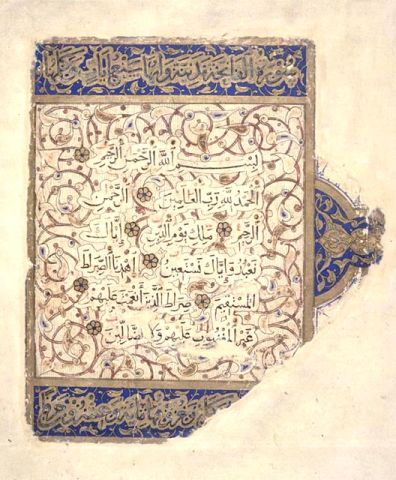
Image: 14th C. Qur'an, Mamluk origin, Library of Congress; Rights obtained.

A BREAKTHROUGH project which helps understand the Qur'an AS REVEALED -not just 'as explained.'

---------------------------------------------------------------------------

Monday, November 1, 2010

Day 229; Qur’an 40:1-9; page 467


Welcome Friends:  Ahlan wa sahlan!
Thank you dear Readers for your patience:  In 'real time' it's already March 29th, while in 'virtual time' it's still November 1st.  
I haven’t been able to sit at my desk for many weeks now!  Please pray for my dear Dad’s full return to health.  He is getting better, and I am trying to regain momentum… thank God…alhamdulil-Lah.
Our new chapter is titled ‘Surat Ghaafir,’ in reference to its third verse, which begins with the words ‘Ghaafir’ which I shall translate for now as ‘Pardoner.’
Yusuf Ali’s Translation of our new Chapter.
Muhammad Asad’s Translation of our new Chapter. 
Their commentaries can only be read in verse by verse view.


سورة غافر
Pardoner

From Yusuf Ali’s Introduction:

“The Surah is called Ghafir (Forgiver, see verse 3).  It is also called "The Believer (Mu'min) from the story of the individual Believer among the people of Pharaoh, who declares his faith and looks to the Future (verses 28-45). In Surah 23, called Believers (Mu'minun), the argument was about the collective force of Faith and virtue. Here it is about the Individual's witness to Faith and Virtue, and his triumph in the End.

We now begin a series of seven Surahs (40-46) to which are affixed the Abbreviated Letters Ha Mim. Chronologically they all belong to the same period, the later Makkan Period, and they immediately follow the last Surah in time.”

“The general theme of the whole series is the relation of Faith to Unfaith, Revelation to Rejection, Goodness to Evil, Truth to Falsehood.”

From Muhammad Asad’s Introduction:

“THE MAIN THEME of this surah is that false pride which often makes man think that he is the centre of the universe, and thus impels him to remain smugly satisfied with his own, empirically-acquired knowledge (verse 83), to worship all manner of imaginary forces and false values seemingly helpful to human aggrandizement - like wealth, power, or even the conceit of "progress" - and to deny validity to any truth, however obvious, which runs counter to his sense of self-importance.”

“As so often in the Qur'an, these ideas are illustrated by references to the stories of earlier prophets, and to what happened in the end to deniers of the truth in bygone times (verses 21-22 and 82 ff.)- "such being the way of God that has always obtained for His creatures" (verse 85).

The key-word by which the surah is known has been taken from verse 3, where God is spoken of as ghafir adh-dhanb ("forgiving sins"): but it has also been designated as Al-Mu'min ("The Believer"), alluding to the "believing man of Pharaoh's family" who tried to convince his erring compatriots of the truth of Moses' mission.

All authorities agree that the present and the six successive surahs (all of which are prefixed with the letter-symbols Ha Mim) belong to the later part of the middle Mecca period.”

COMMENTS:

I believe that ‘Ghaafiril thanb’ is best explained as ‘Pardoner of Repercussion’ because:

Human ‘misdeeds’ are varied, as we mentioned on Oct 27th.    
One type of ‘misdeed’ is called ‘thanbذَنْب- ’ - which starts out as a ‘private affair’ between us and God, a ‘wrong’ committed against our own Selves without infringing upon others.  This wrongdoing ENTAILS a negative outcome, both in life and on the ‘Day’ of Account (yawm il Deen):
Its negative outcome is, in fact, its ‘thanab[i]-ذَنَب- ’ -literally its ‘tail-ending.’ 
That is what I mean by ‘repercussion’= a ‘negative’ outcome. 
Please tell me if you find a better word.
Dear Reader:
By sincere Repentance, we can absolve ourselves of the ‘repercussions entailed’ as a result of our own ‘Self-wronging:’ 
As long as no one other than our Self is involved, God pardons all our repented ‘thunoob,’ absolving us without bringing the repercussion into effect and also without exposing our wrongdoing. 

Not only are we told in this beautiful chapter that God is ‘Ghaafir il thanb’ and ‘Qaabil il Tawb’… (‘Absolver of the Repercussions we entail by our deeds AND Acceptor of our Return in Repentance to Him’)…. but we also learn that:
One of the services rendered to us by ‘Those Who uphold the Arch’ or ‘structure’ of Existence’ -besides being in constant praise of God-.. is to remain in constant appeal for our well-being! 
That is indeed a wondrous fact -to stop at and appreciate -when we get to those verses!
PAGE 467 Arabic Qur’an.

1.     This Chapter is one of seven which begin with a ‘set’ of disjointed sounds/ letters: Hhaa-meem…حم as we can see here in Tanzil. 
When we look at context, we note that all these ‘sounds/ letters’ precede (5 times) the mention of ‘al Kitaab/ the Compilation,’ and (once) of ‘Tanzeel/ a ‘Transmission’ sent by God to Cognizant Humans,’ and (once) of ‘wahi / exclusive information’ conveyed to Prophet Muhammad, peace upon him, in chapters which are all thought to be ‘late Meccan.’

Here, we note that these sounds/ letters precede mention of the Compilation being a ‘Tanzeel/ Transmission’ (to Cognizant Humans) sent from God, The Almighty, The All-Knowing.
 
Verse 3 is one of those beautiful verses which mention several other exalted ‘Attributes/ Asmaa’ أسماء[ii] of God as: 

·         Pardoner/ Absolver’ of the Repercussions we entail by our deeds غافر الذنب…(He is also the Best of Pardoners خير الغافرين-  HQ 7:155)…It is important to note that God calls Himself ‘Ghafoor’غفور  91 times, and ‘Ghaffaar’ غفّار 5 times.
·        Acceptor of our Return in Repentance to Him’ ..قابل التوب
·        Exacting in (meting out) the Consequence’ (to actions)..شديد العقاب
·        OF Munificence (limitless Bounty)..ذي الطول
·        No god but He..لا إله إلا هو
2.     Verse 4 identifies the type of person who usually resorts to argument when presented with God’s Signs:  Such are persons who have denied, and no matter how they might ‘shift’ through the land (literally ‘turnover’ - which might refer to the ‘authoritative positions’ such persons gain by their unjust actions)… no matter how they ‘strut about/ move as they please’ (Ali/ Asad) the Messenger is told NOT to be deceived by appearances.  The same concept appeared in HQ 3:106.

3.     Verses 5-6 inform the Messenger/ us, that what people of his day were doing is similar to what people of earlier days had done to their Messengers:  They belied him, and plotted/ schemed against him, and disputed/ contended so as to condemn/ render void the Truth (Ali/ Asad)… until God ‘took them’… and with what Consequence عقاب: Denial renders them ‘companions’ of the Fire.

4.     Verses 7-10 are beautiful!
They tell us of ‘Those who carry the Arch’ and their relationship to us (scholars say that they are ‘custodian-angels’  ملائكة (.
We spoke about the meaning of ‘Arch’ on April 9th, and said:

“We should bear in mind that the word ‘arch’ in Arabic (see footnote[iii]) expresses BUILDING, complete with raising and fortifying what is built.  The 'arch' which the Qur'an ALWAYS mentions with regard to God's Creation, is directly related to the form and function of this universe, as the receptacle of LIFE.  Verse HQ 2:255 tells us about God, that "..no slumber nor sleep overcomes Him..."  The concept of the 'Arch' seems to have been well-understood by early Muslims who manifested it into their architecture; see 'The Arch Which Never Sleeps' in sidebar.”  

So, as explained by Ali/ Asad, what these ‘Arch-Bearers’ (together with others) also do is:

·        ‘Sing Glory and Praise to their Lord’/ Extol their Sustainers limitless glory and praise.’
·        ‘Believe in Him’/ ‘have faith in Him.’
·        ‘Implore Forgiveness for those who believe’/ ‘ask forgiveness for all [others] who have attained to faith’.. saying:

§  ‘Our Lord! Thy Reach is over all things, in Mercy and Knowledge. Forgive, then, those who turn in Repentance, and follow Thy Path; and preserve them from the Penalty of the Blazing Fire!’ (Ali).
‘O our Sustainer! Thou embracest all things within [Thy] grace and knowledge: forgive, then, their sins unto those who repent and follow Thy path, and preserve them from suffering through the blazing fire!’ (Asad)

§  ‘And grant, our Lord! that they enter the Gardens of Eternity, which Thou hast promised to them, and to the righteous among their fathers, their wives, and their posterity! For Thou art (He), the Exalted in Might, Full of Wisdom (Ali).
‘And, O our Sustainer, bring them into the gardens of perpetual bliss which Thou hast promised them, together with the righteous from among their forebears, and their spouses, and their offspring – for, verily, Thou alone art almighty, truly wise’ (Asad).

§  ‘And preserve them from (all) ills; and any whom Thou dost preserve from ills that Day,- on them wilt Thou have bestowed Mercy indeed: and that will be truly (for them) the highest Achievement’ (Ali).
and preserve them from [doing] evil deeds: for anyone whom on that Day [of Judgment] Thou wilt have preserved from [the taint of] evil deeds, him wilt Thou have graced with Thy mercy: and that, that will be the triumph supreme!’(Asad).


These verses have such far-reaching implications, and tell us so much about God Himself, and our unique Relationship with Him and other Beings!
Let me know what you think, dear Reader.

Also: These beautiful prayers are invoked by such magnificent Beings for the benefit of ‘Those who have attained Faith… so isn’t it CRUCIAL for us to attempt to be in this blessed category?

May we all be among them… Amen!  
 
Our next Reading is from HQ 40:10-23. 

Peace unto all!


[i]  ذنب: أصول ثلاثة: أحدها الجُرم، والآخر مؤخَّر الشيء، والثالث كالحظِّ والنّصيب.‏
فالأوّل الذّنب والجُرم. يقال أَذْنَبَ يُذْنِبُ. والاسم الذّنْب، وهو مُذْنِبٌ.
والأصل الآخر الذّنَب، وهو مؤخر الدوابّ ويقال للفرس الطويل الذّنب: ذَنُوب. والذِّناب: عَقِبُ كلِّ شيء. والذّانب: التابع؛ وكذلك المستَذْنِبُ: الذي يكون عند أذناب الإبل.

[ii] The Arabic word ‘Issm اسم- does not denote the ‘name’ of something/ someone, as most people think, but rather, as we can see from the root-verb ‘wasama-وَسَمَ- ’ it marks a certain distinction pertaining to something/ someone.  This ‘distinction’ could be ‘degrading’ as in ‘branding’ someone (HQ 68:16), or ‘dignifying’ as in ‘exalting’ someone (HQ 61:6).
Arabic is unlike any other language.  Each word bears its unique characteristics, and the ‘issm - simahاسم/سمة/ ’ of something is the distinguishing feature which marks something out from among others.  This feature ‘exalts’ it and ‘elevates’ it above others, which is why a ‘wissaam’ is a medal of honor,’ and the ‘samaa’ is the highest elevation; the sky!

The Arabic root-verb (wasama) is mentioned in the Etymology of the word ‘monsoon,’ which was originally pronounced ‘mawsimمَوسِم- ’ denoting a ‘season marked by certain occurrences’ such as winds, rain… and celebratory seasons where Arabs used to congregate for oration or Pilgrimage (put ‘etymology’ in ‘Search this Site’ for other English words of Arabic origin).

[iii] عرش: يدلُّ على ارتفاعٍ في شيء مبنيّ، ثم يستعارُ في غير ذلك. من ذلك العَرْش، قال الخليل: العرش: سرير الملِك....ثم استُعير ذلك فقيل لأمر الرّجُل وقِوامه: عرش. وإذا زال ذلك عنه قيل: ثُلَّ عَرشُه.  ومن الباب: تعريش الكَرْم، لأنّه رفعه والتوثُّق منه. والعريش: بناءٌ من قُضبانٍ يُرفَع ويوثَّق حتَّى يظلّل. ... ومن الباب العَرِيش، وهو شِبْه الهَوْدَجِ يُتَّخَذ للمرأة تقعُد فيه على بعيرها. ومن الباب: عَرَشْتُ الكرم وعَرَّشْتُه. يقال: اعتَرش العنبُ، إذا علا على العَرش. ومن الباب: عَرْش البِئر: طيُّها بالخشَب. قال بعضهم: تكون البئرُ رِخوةَ الأسفل والأعلَى فلا تُمسِكُ الطَّيَّ لأنَّها رَملة، فيعرَّش أعلاها بالخشَب، يُوضَع بعضُه على بعض، ثمَّ يَقُوم السُّقاة عليه فيستقون.

Saturday, October 30, 2010

Day 228; Qur’an 39:67-75, page 465-466


Welcome Friends:  Ahlan wa sahlan!
I noticed something today I wanted to share with you:
It seems that this Qur’anic chapter has the most calls, from God, unto His Worshippers:
يا عبادِ/ يا عبادي…!
Check out verses 10, 16, 17, 53.

Yusuf Ali’s Translation of this Chapter.
Muhammad Asad’s Translation of this Chapter. 
Their commentaries can only be read in verse by verse view.

COMMENTS:
PAGE 465 Arabic Qur’an.

1.    Before we begin today, let us discuss one word: ‘alaq’ (to help us get a better Reading):

Traditionally, ‘alaq’ is explained as a ‘clot of blood,’ which would cause HQ 96:2 to be understood as giving no distinction to Cognizant Humans as compared to other mammals.  By focusing on ‘form’ rather than ‘substance,’ we lost the true meaning! 
See ten side-by-side explanations at ‘islamitexts’ 96:2- click on RED ‘Translations’ Tab.

Actually, this verse is an excellent example of how interpretation can change with time, dependent on one’s knowledge:

·        When revealed, the first Recipients of the Qur’an understood what this verse meant.
·        Later, people explained the word ‘alaq’ according to what they perceived of visible early human ‘form’ (after a miscarriage) and interpreted it as a ‘clot of congealed, or clinging, blood.’
·        Later, when microscopes were invented, the interpretation of these verses was amended by some commentators who perceived the fetus being ‘leech-like’ (كالعلقة) in its early formation.
·        Later, when laparoscopes were invented, the interpretation of these verses was amended by some commentators who highlighted that the fetus ‘clings’ onto the womb.
·        Later, when the importance of DNA was discovered, the interpretation of these verses was amended by commentators who realized the importance of DNA in everything related to creation…including personality traits, tendencies and habits.
·        And now, dear Reader, take it from someone who has been ‘commenting’ on the Qur’an for 30 years and has often followed and (mistakenly) echoed these interpretations:  They are all contextually and linguistically inaccurate.  Not only that, but by continuing to repeat our predecessor’s perceptions, we cripple our own abilities and perceive the Live Qur’an as a Static Compilation:

On the other hand, we can come close to how the Qur’an’s earliest Recipients understood this verse by going back to their Language and its Context.

Language tells us that the Arabic root-word, ‘a-la-qa’ denotes Relationship, and Context tells us that Cognizant Human alone was created from ‘alaq’ (NOT the ‘human specie’ or ‘Bashar,’ but the cognizant individual).  So, if it is specific to Cognizance, it can be none other than the ‘quickening’ of God’s ‘spirit’ (نفخ فيه من روحه...) which rendered the ‘bashar’ into ‘insaan.’  Put ‘insaan bashar’ in ‘Search this Site.’

2.    Let us now continue with our Reading.

Verse 67 begins by informing any persons unaware of God’s attributes (including the ‘Ignorants’ mentioned in Verse 64) that they underestimate God, telling them quite clearly that their esteem of Him is lacking, and does not rise to its rightful ‘projection’ (qadr):

"وما قدروا الله حق قدره...."
Put ‘qadr’ in ‘Search this Site.’

This assessment of a ‘deficit’ in people’s esteem of God, appears three times in the Qur’an, and in each we find mention of His magnificent attributes (read HQ 6:91, 22:74 within context).

Although we might be ‘cognizant,’ we Humans do lack observation when we focus on one thing, and let everything else blur into the background.

The way I understand this issue now is: 

What has been in the foreground from the moment we were created, whether we notice it or not, is our relationship with God (‘alaq’ علق), FROM WHICH HE CREATED US COGNIZANT HUMANS!

This Relationship is an open channel from His ‘side’ جنب – it spans directly to Him, allowing us to proceed in His direction وجه. 

Our awareness of the ‘Alaq’ from which we were created, would bring everything else into focus, if- If -IF we did not get side-tracked into concentrating on lesser goals.

So, although there is a huge deficit in our ‘esteem’ of God, we CAN begin to breach that gap as we come to know more about Him.  And what is THE Source for such knowledge?  The self-explanatory ‘Arabi’ Qur’an!

Note the definitions of the root-verbs ‘qabaDda[i]’ and ‘yamana’ (قبض....يمن).

QabaDda’ indicates ‘something taken or held’/ a ‘clutch, gathered together.’  Note the seven times this word (its variations) appear in the Qur’an; 3 times related to people taking hold of something; once to birds ‘gathering;’ and 3 times to God ‘assembling’ or bringing together and ‘holding’ control over.  A ‘miqbaDd’ is the ‘grasp/grip/ hilt/ handle’ of a tool, such as a knife, a sword, a doorknob.

Yameen’ means ‘right’ (as in ‘right’ hand), or ‘rightful’ pledge, and it can also mean ‘Power.’  The noun ‘Yumn’ indicates ‘abiding benefit’ or ‘barakah.’ 

So when the Qur’an announces that we underestimate God, and then it goes on to describe the entire Earth being His ‘clutch/ grasp’ on the Day of Resurrection, and the Heavens folded in His ‘Power….’ isn’t it ironic that we immediately demote that magnificent report.. by narrowing it down (in our understanding).. to a ‘handful’ or a ‘right hand?’

Now, although traditional commentators have mentioned such interpretations, they made sure to tell us that such descriptions were ‘figurative’ (as did Ali/ Asad)… but I believe that the entire concept of God’s figurative ‘organs or limbs’ would NOT have evolved had commentators adhered to Arabic Language definitions and NOT repeated each other’s opinions.  THAT in itself, dear Reader, constitutes a large part of the ‘deficit’ we have in our esteem of God.

Every Qur’anic word is Truth.  We might not understand a Truth and it might seem figurative to us, but it remains nevertheless a Reality. 

PAGE 466 Arabic Qur’an.
Now, at the end of this Chapter, we arrive at a scene of magnitude. 
We were being led here, from the very beginning… gradually… just as this lesser Life leads to the Afterlife!

3.   Verse 68 seems to mention the نفخ ‘quickening of events /the swelling and rising’ of صور – the physical manifestations of changing Earth, as it fulfills its final stage of life (as we know it).
There will be two such major ‘events:’

·       The first seems to be like a thunder/lightning/ BOLT OF ENERGY which ‘stuns’ or ‘kills’ living creatures -صعق [ii]
·        The second one….causes us all to RISE IN ANTICIPATION قيام ينظرون .

Put ‘quickening’ and then ‘Ssoor’ in ‘Search this Site.’  Please note that this is NOT about ‘trumpets’ (Ali/ Asad): 
Not only is the explanation of ‘trumpet’ unfounded because there is nothing in the Arabic language to support it, but it is ‘gheyb’ (which we might attempt to understand but will not know for sure until we’ve experienced it)…PLUS there were scholars who were comfortable enough to admit that they did not know what it meant[iii]!  
But perhaps the saddest part is that it is an adopted Biblical Interpretation- or misinterpretation of their original Compilation… which ‘Muslims’ have made their own, only to help render the Qur’an, in the perception of so many generations, into a ‘static’ Compilation (put ‘static compilation’ in ‘Search this Site).

4.    Verse 69 tells us of the entire Earth becoming ‘openly’ radiant and resplendent- [iv]شرق-  in her Lord’s Light, and of the Compilation being ‘set down,’ and of the Prophets and Witnesses being brought forth where justice shall prevail between them all and none shall be wronged. 
I find Asad’s explanation of ‘witnesses’ interesting: ‘man’s newly awakened consciousness.’  Regular Readers already know that ‘shaheed’ does not mean ‘martyr.’

5.     And after these magnificent scenes unfold, we read Verse 70 which makes our hearts tremble:

“And to each Self will be delivered the sum total وفى of its work عمل, and He Knows best what they were doing/committing فعل (the COMPONENT actions which constitute each deed).”

Remember the meaning of ‘waffaa’ and also the difference betweenعمل (‘amala) andفعل  (fa’ala) which all helped us understand this verse.

Note that this verse does not mention the ‘recompense’ being delivered to each Self, but rather, that each Self is presented with the actual sum-total of its WORK…. its actual work, in entirety.  That is a staggering concept which I cannot even imagine.   

6.   But that staggering concept is what distinguishes two contrasting groups of people, the Deniers on one hand, and the Aware on the other (Verses71-75). 

Both shall be ‘led in troops/ throngs’ to their destination, and when they approach it, its doors shall be opened for them, and its keepers shall talk to them:

·        The Deniers shall be asked whether or not they’d received Messengers from amongst themselves presenting to them God’s Signs and warning of this Day..to which they shall admit that yes, indeed, they have, but that the word/ sentence of Suffering shall be effectuated against the Deniers… 
They will be told to enter the doors of Hell to rest securely in it خلد – bad indeed is the abode of the Arrogant.

·        The Aware shall be told:  ‘Peace upon you!  How ‘wholesome/ well/ good’ you are, so enter, secure therein.  And they shall respond with ‘Al Hamdulil-Lah!’ and shall give praise to God Who has fulfilled/ made true to them His Promise, and has given them the Earth as their heritage, to [v]بوأ return equally to any part of the garden they wish.. and Good, indeed, is the recompense of the Doers of ultimate Goodness (Muhsin).

Here we noticed that the Deniers were labeled ‘Arrogant’ at the end, while the ‘Aware’ were labeled ‘Doers of utmost Goodness.’  So, although a state of mind might be where we start out, Life inevitably translates our silent state into eloquent deeds, and the Afterlife enables each Self to be presented with the actual sum-total of its WORK before Justice is passed upon us.  Haunting is the statement which seems to be passed by the Deniers upon themselves: Yes, indeed, but the word/ sentence of Suffering shall be effectuated against the Deniers!

7. The final verse describes the Angels/Custodians who, [vi]حف from the periphery of the Structure which upholds this universe (put ‘arch’ in ‘Search this Site’), are in continuous motion and in praise of God’s Glory (‘tasbeeh’).  It seems that they too shall find ‘justice established between them’ depending on their various stations and duties.

The concluding statement to be made in this glorious Afterlife scene, and made in this magnificent chapter is ‘Al Hamdulil-Lahi Rabbil ‘Aalameen!’

Enough said!
 
Our next Reading is from HQ 40:1-22.  A new Chapter!

Peace unto all!


[i]  قبض: يدلُّ على شيء مأخوذٍ، وتجمُّع في شيء.
تقول: قَبَضْتُ الشَّيءَ من المال وغيرهِ قَبْضاً. ومَقْبِض السَّيف ومَقْبَضُه: حيث تَقبِضُ* عليه. والقَبَض، بفتح الباء: ما جُمِعَ من الغنائم وحُصِّل. وأمَّا القَبْض الذي هو الإسراع، فمن هذا أيضاً، لأنَّه إذا أسرَع جَمَع نَفْسَهُ وأطرافَه. قال الله تعالى: {أوَلَمْ يَرَوْا إلَى الطَّيْرِ فَوْقَهُمْ صَافَّاتٍ وَيَقْبِضْنَ مَا يُمسِكُهُنَّ} [الملك 19]، قالوا: يُسْرِعْن في الطَّيَران. من الباب: انقبَضَ عن الأمر وتقبّض، إذا اشمأَزَّ.

يمن: كلماتٌ من قياسٍ واحد. فاليَمين: يَمين اليَدِ. [و] يقال: اليَمِين: القُوَّة. واليُمْن: البَرَكة، وهو ميمونٌ. واليمين: الحَلِف، وكلُّ ذلك من اليد اليُمْنى. وكذلك اليَمَنُ، وهو بلدٌ. يقال: رجلٌ يَمانٍ، وسيفٌ يَمانٍ. وسمِّي الحَلِف يميناً لأنَّ المتحالِفَينِ كأنَّ أحدَهما يَصْفِقُ بيمينه على يمينِ صاحبه.

[ii]  صعق: يدلُّ على صَلْقَةٍ وشِدَّة صَوت. من ذلك الصَّعْق، وهو الصَّوت الشَّديد. ومنه الصَّاعقة، وهي الوقع الشّديدُ من الرَّعْدِ. ويقال إنَّ الصُّعاق الصَّوت الشديد. ومنه قولهم: صَعِق، إِذا ماتَ، كأنَّه أصابته صاعقةٌ.
[iv]  شرق: يدلُّ على إضاءةٍ وفتحٍ. من ذلك شَرَقَت الشّمسُ، إذا طلعت. وأشرقت، إذا أضاءت. وأيّام التَّشْريق سمِّيت بذلك لأنَّ لحوم الأضاحِي تُشرَّق فيها للشَّمس. وناسٌ يقولون: سمِّيت بذلك لقولهم: "أشرِقْ ثَبِير، لكيما نُغير". والمَشْرِقَانِ: مَشْرِقَا الصَّيفِ والشِّتاء. والشَّرْق: المَشْرِق. وقال قوم: إنَّ اللحمَ الأحمرَ يُسمَّى شَرْقاً.  فإنْ كان صحيحاً فلأنَّه من حُمرته كأنه مُشْرِق. ومن قياس هذا الباب: الشّاةُ الشّرقاء: المشقوقة الأُذُن، وهو من الفَتح الذي وصفناه.

[v]  بوأ: أصلان: أحدُهما الرُّجوع إلى الشيءِ، والآخر تساوِي الشّيئين.
فالأوّل الباءَة والمباءَة، وهي مَنزلة القوم، حيثُ يتبوّؤُون في قُبُلِ وادٍ أو سَنَدِ جبل. ويقال قد تبوَّؤوا، وبوّأهم اللهُ تعالى مَنْزِلَ صِدْق.
والمَبَاءة أيضاً: منْزِل الإبل حيثُ تُناخُ في الموارد. يقال أبَأْنَا الإبِلَ نُبِيئُهَا إباءةً -ممدودة- إذا أنختَ بعضها إلى بعض
قال الأصمعيّ: يقال قد أباءَها الرَّاعِي إلى مَبَائِها فتبوَّأَتْه، وبوَّأَها إيَّاهُ تَبْوِيئاً. أبو عُبيد: يقال فلانٌ حسن البِيئَةِ على فِعْلة، من قولك تبوَّأْتُ منْزِلاً. وبات فلانٌ ببيئة سَوء ويقال هو ببيئة سَوْءٍ بمعناه... ومن هذا الباب قولُهم باءَ فلان بذَنْبِه، كأنّه عاد إلى مَبَاءته محتملاً لذنْبه. وقد بُؤْت بالذَّنْبِ.
والأصل الآخَر قولُ العرب: إنّ فلاناً لَبَوَاءٌ بفلانٍ، أي إنْ قُتِل به كان كُفْواً. ويقال أَبَأْتُ بفلانٍ قاتِلَه، أي قتَلْتُه. واستَبَأْتُهُمْ قاتِلَ أخِي، أي طلبْتُ إليهم أنْ يُقِيدُوه. واستبَأْتُ به مثلُ استقَدْت.
ومن هذا الباب قولُ العرب: كلَّمْناهُمْ فأجابُونا عن بَوَاءٍ واحدٍ: [أجابوا] كلُّهُمْ جواباً واحدا. وهم في هذا الأمْرِ بَوَاءٌ أي سواءٌ ونُظَراءُ. وفي الحديث: "أنّه أمَرَهُمْ أَنْ يَتَبَاءَوْا"، أي يتباءَوْن في القِصاص.

[vi]  حف:  ثلاثة أصول: الأول ضربٌ من الصَّوت، والثاني أن يُطيفَ الشيءُ بالشيء، والثالث شِدَّةٌ في العيش.
  تفسير ذلك: الأول الحفيف حفيفُ الشجرِ ونحوِه، وكذلك حفيفُ جَناح الطائر.
 والثاني: قولهم حفّ القوم بفلانٍ إذا أطافُوا به. قال الله تعالى:{وَتَرَى المَلاَئِكَةَ حَافِّينَ مِنْ حَوْلِ العَرْشِ} [الزمر 75]. ومن ذلك حِفافا كلِّ شيءٍ: جانباه.
 ومن هذا الباب: هو على حَفَفِ أمْرٍ أي ناحيةٍ منه، وكلُّ ناحيةِ شيءٍ فإنها تُطِيف به. ومن هذا الباب قولهم: "فلان يَحُفُّنا ويَرُفُّنا" كأنّه يشتمل علينا فيُعْطينا ويَمِيرُنا.
 والثالث: الحُفُوف والحَفَف، وهو شدّة العيش ويُبْسُه. قال أبو زيد: حَفَّتْ أرضُنا وقَفَّتْ، إذا يبسَ بَقْلُها. وهو كالشَّظَف. ويقال: هم في حَفَفٍ من العَيش، أي ضيق ومحْلٍ، ثم يُجْرَى هذا حتى يقال رأسُ فلانٍ محفوفٌ وحافٌّ، إذا بَعُد عهدُه بالدُّهن، ثم يقال حَفَّت المرأةُ وجْهها من الشّعر. واحتفَفْتُ النبتَ إذا جَزَزْتَه.

Let's TWEET this!

Tweet me!