CLICK IMAGE: Tanzil Website


OUR MISSION:
UNCOVERING the original message of the Arabic Qur'an by using Lexicons compiled more than 1,000 years ago.

ISOLATING Fact from Fiction.


RECOVERING Hope and regaining the perspective where Humanity is one, God's Message is one, and our Future CAN become one we all look forward to!


© 2010 IQRATHECHALLENGE: INTELLECTUAL PROPERTY PROTECTED BY D.M.C.A. ALL RIGHTS RESERVED.

© 2010 IQRATHECHALLENGE: INTELLECTUAL PROPERTY PROTECTED BY D.M.C.A. ALL RIGHTS RESERVED.
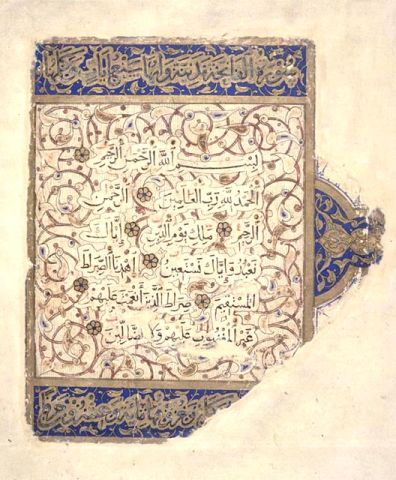
Image: 14th C. Qur'an, Mamluk origin, Library of Congress; Rights obtained.

A BREAKTHROUGH project which helps understand the Qur'an AS REVEALED -not just 'as explained.'

---------------------------------------------------------------------------

Tuesday, November 16, 2010

Day 246; Qur’an 44:17-59; page 497-498

Welcome Friends:  Ahlan wa sahlan
Our last Reading was tough. 
Try as we might, I think it is impossible for us to grasp the magnificence of the ‘Night of Utmost Projection/ Laylatul Qadr!’
Yusuf Ali’s Translation of this Chapter.
Muhammad Asad’s Translation of this Chapter.  
Their commentaries can only be read in verse by verse view.

COMMENTS:
PAGE 497 Arabic Qur’an.

1. Our last Reading ended by describing the conclusion to life on this earth, showing ‘suffering’ and ‘forceful seizure’ faced by those who were ‘toying around in doubt.’ Pointing to Quraish, these verses mentioned those who had called the Messenger an ‘indoctrinated person’ who also was ‘mad,’ or ‘possessed.’

Today’s Reading (Verse 17) reminds such persons of others before them, who were also ‘tested so that their true character was exposed’ (put ‘fatana’ in ‘Search this Site).  These were the people of Pharaoh to whom had (also) come an eminent and magnanimous Messenger. 

The next verses (18- 21) quote him (Moses) asking for the Worshippers of God to be delivered to Him, asserting that he is a trustworthy Messenger and that they (Pharaoh’s people) should not attempt to ‘rise above’ God, ‘overruling’ the manifest evidence of His authority; the 'SsulTtaan’ which Moses had brought them. 

He ends by seeking refuge in his Lord and THEIR Lord from whatever abuse they intend (put ‘rajama’ in ‘Search this Site’), telling them that if they do not trust and believe in him, they should at least hold their distance.

2.  Then, Moses calls upon his Lord in Verse 22, asserting that these people are indeed ‘Extractors/ Mujrims.’  (They certainly earn that title, having not only extracted themselves from Faith, but also having extracted the basic right of others, which is Freedom!)
We hear His Lord’s response in Verses 23- 24, commanding him to depart with His Worshippers by night, assuring him that they shall be followed, but that the soldiers pursuing them shall be drowned.
The next five verses (25- 29) seem to lament the misguided choices of such people, describing the beauty and bounty they leave behind for others to enjoy, and the fact that they shall not be missed, with neither sky nor earth shedding a tear for their untimely departure!

Verses 30- 33 show how Bani Isra-eel were saved from the painful suffering of Pharaoh, and were presented with Signs that were a manifest trial (بلاء[i]).

NOTE:
In Verse 32 we have the words ‘we selected them,’ related back by most commentators to Verse 30, which mentions Bani Isra-eel.  They tell us that this indicates God having –at that time- ‘selected’ Bani Isra’eel from among all other people, full-stop.
But there is no full-stop:  Verse 33 continues and the sequence is clear that this ‘khiyara[ii]’ or ‘bounty which God selected them for,’ is in the many Signs they received (not only from Moses, but from so many other Messengers), and that in these Signs there is Manifest TRIAL for them.  Does this sound like ‘preferential treatment,’ or more like a responsibility which Bani Isra-eel should have upheld?  In fact, the Qur’an speaks of these responsibilities, which many of Bani Isra-eel failed to fulfill (HQ 2:83, 246; 5:32, 70).
Anyway, it is interesting to read Muhammad Asad’s take on this, especially since he had a rabbinical Jewish background. 

P.S. Regular Readers will remember (see March 10th) that Asad’s explanation of what he calls the ‘Promised Land’ is incorrect.

3.   Verses 34- 36 are about Quraish’s allegations that there is only one death -with no resurrection.  They ask that their forefathers be resurrected, as proof of the Hereafter, after which Verse 37 reminds them of earlier peoples who had likewise ‘extracted themselves,’ only to be ‘expired.’

Then, Verses 37- 38 speak of God’s creation:  He did not create the Exalted Expanses and the Earth idly.  He created them solely in Truth/ Justice (see 10 occurrences), but most of them do not know.

PAGE 498 Arabic Qur’an.

4. After mentioning the Truth/Justice in which the Exalted Expanses and the Earth were created, Verse 40 speaks of the time of ‘faSsl,’ or ‘the Day of Distinction’ (see six instances in Qur’an).  At that time, erstwhile patrons will be of no help to their protégées, except for those upon whom was God’s Mercy, for He is the Invulnerable, The Unceasingly Compassionate.

5.  Verses 43- 46 speak of the horrendous fruit of the ‘zaqqoom tree,’ the hellish ‘boil-in-stomach’ diet for persons who, in life, had been ‘hindering and impeding.’  Note that such a person had earned ‘aathim’ as title.
(‘Zaqqoom’ is mentioned three times in the Qur’an.)

Dissuasion continues in verses 47- 50 (perhaps the Qur’an’s most fiery and fierce), reminding the persons who taste this suffering, that this is indeed what they had earlier been doubting.

6.   Then come verses of Persuasion; such a contrast!
The next ten verses (47-57) tell us of the Aware, secure in their beautiful state, protected from suffering, tasting only the physical death which returns them to the first point of reference الموتة الأولى- which probably indicates the return to God. 
It is they who have received the Bounty of their Lord (faDdl); it is they who are in a state of great Deliverance/Salvation (fawz). 

(Actually, the verse says ‘your’ Lord (masculine singular), which reminds us that it is the Messenger these verses are speaking to!) 

Within these verses we see the splendor of their clothing… their face-to-face assembly … their being paired with (companions) most honored/noble[iii] (‘Een), who ‘are pure’ /‘return to them’/ ‘conversant’ (Hhoor)…. and their summoning of all kinds of fruit.

NOTE:
The word ‘Een’ عين was discussed earlier. 

As for the word ‘Hhoorحور- ’:
When asked, the renowned authority on Arabic language and poetry, 'Abu Sa'eed al Assma'i الأصمعي (740- 831 AD/ 121- 216 AH) replied that he did NOT KNOW what these two words meant, and that there IS NO ‘Hhawar’ in a human’s eye (when others may have been alleging that the verse is about maidens, describing the whiteness of the area surrounding the cornea of their eyes.  When we see exactly what the Qur’an says, we find these explanations quite far-fetched and mostly ‘wishful thinking’ on the part of certain males who spoke many centuries after the time of Revelation.  Listen to the TED talk by Lesley Hazleton).

Since no one is certain what the word ‘Hhoor’ indicates, we’ll check our 1,000 year old Lexicon[iv] which gives us three connotations of this word, related to:

·  Whiteness in eyes of deer and cows (only in these animals; not in humans); ‘whiteness’ of color, mostly related to clothing.  Arabs still say ‘Hhawwaar حوّار- meaning ‘chalk.’
The Lexicon ‘Lissaan al ‘Arab’ tells us that ‘Hhawaree’ is related to being free of impurities, as in ‘pure flour,’ which may better explain the Qur’anic title given to the disciples of Prophet Jesus, peace upon him (plural: Hhawareeyoon .(حواريون- 

I think that the connotation of clothing/flour ‘being free of impurities’ somehow got mixed up with the ‘color white,’ which is why- after a passage of time- people came to that understanding. 
See what we said earlier about the ‘color’ we call ‘white’[v].

·   Returning back (Hhaar-yaHhoor حار- يحور-).

·   Moving in a circle around a fixed point (miHhwar); common usage of this connotation relates to dialogue ‘Hhiwaar حِوار-.’

7. The last two verses address the Messenger directly (and Quraish indirectly), telling him that God has indeed ‘eased’ this (Message) in his own tongue so that they (Quraish) would remember.  Then he is told to expect and observe, as they do indeed expect and observe ارتقب.  This ties in with Verse 10 which told the listener to expect and observe the evident 'smoke' brought on from the exalted expanse; painful suffering which shall envelop people. Unlike the Messenger (who had only the best to expect for himself, peace upon him), to Quraish this was an ultimatum!
 
NOTE:

Dear Reader: (رقب[i])

Our 1,000 year old Lexicon tells us that the verb ‘raqaba’ indicates standing erect so as to attend to something, and a ‘marqab’ is a high elevation where an observer stands. Most of us already know that ‘raqabah’ is Arabic for ‘neck,’ but we might not have known that its name comes from both its form and function: 


To best see and observe, our necks must be raised straight! 

Isn’t the Arabic language amazing?


[i] رقب: يدلّ على انتصابٍ لمراعاةِ شيءٍ. من ذلك الرَّقِيب، وهو الحافِظ. يقال منه رَقَبْتُ أرْقَب رِقْبة ورِقْباناً.
والمَرْقَب: المكان العالي يقِفُ عليه النَّاظِر.
والرَّقِيب: الموكَّل في الميْسِر بالضَّريب. ومن ذلك اشتقاق الرَّقَبةِ، لأنَّها منتَصِبة، ولأنّ النّاظرَ لابد ينتصبُ عند نظره.


Enough said!
 
Our next Reading is from HQ 45:1-22; a new Chapter!

Peace unto all!


[i] بلو/ي: أصلان: أحدهما إخلاق الشيء، *والثاني نوعٌ من الاختبار، ويحمل عليه الإخبار أيضاً.
فأمّا الأوّل فقال الخليل: بَلِيَ يَبْلى فهو بالٍ. والبِلَى مَصْدَرُه. وإذا فتح فهو البَلاَء، وقال قوم هو لُغةٌ.  قال الخليل: تقول ناقةٌ بِلْوُ سفرٍ، مثل نِضْو سفَر، أي قد أبْلاَها السَّفر. وبِلْيُ سَفَر، عن الكسائيّ.
وأمّا الأصل الآخَر فقولهم بُلِيَ الإنسانُ وابْتُلِيَ، وهذا من الامتحان، وهو الاختبار. ويكونُ البَلاءُ في الخير والشرّ. والله تعالى يُبْلِي العَبْدَ بلاءً حسناً وبلاءً سيئاً، وهو يرجع إلى هذا؛ لأن بذلكَ يُختبَر في صَبْرِه وشُكْرِه.

[ii] خير:  أصله العَطْف والميْل، ثمَّ يحمل عليه. فالخَير: خِلافُ الشّرّ؛ لأنَّ كلَّ أحدٍ يَمِيلُ إِليه ويَعطِف على صاحبه. والخِيرَةُ: الخِيار. والخِيرُ: الكَرمُ. والاستخارة: أن تَسْألَ خيرَ الأمرين لك.
  ثم يُصَرّف الكلامُ فيقال رجلٌ خَيِّرٌ وامرأةٌ خَيِّرة: فاضلة. وقومٌ خِيارٌ وأخيار.. ويقال خايَرْتُ فلاناً فَخِرْتُه. وتقول: اخْتَرْ بَني فُلاَنٍ رَجُلا. قال الله تعالى: {واختارَ مُوسَى قومَهُ سَبْعِينَ رَجُلاً} [الأعراف 154].

[iii] ‘Een’ عِين- عَين[iii]
We saw in our 1,000 year old Lexicon, that this word is:
-Primarily related to the ‘eyes’ and what we ‘observe’ or what is transparent to the eye, as in a clear water-spring.
-Also, cows are called ‘een’ because of their wide eyes.
-And in the language of ‘Ttayi’[iii][vi]  طيء the word means ‘new.’
-Also, the most ‘honored’ among people are called ‘ayn,’ plural ‘a’yaan' الأعيان.

The following story from our 1,000 year old Lexicon is quite telling: 

When asked the meaning of the word ‘Eenعين- ’ (and 'Hhoor') a renowned authority on Arabic language and poetry, ‘Abu Sa’eed al Assma’i الأصمعي (740- 831 AD/ 121- 216 A.H.) replied that he did NOT KNOW.  The compiler of our Lexicon (Ibn Faris) adds that this gentleman probably said that he did not know out of humbleness and awe in God, because he was unwilling to explain Qur’an. 

[iv]  معجم المقاييس في اللغة:
حور: ثلاثة أصول: أحدها لون، والآخَر الرُّجوع، والثالث أن يدور الشيء دَوْراً.
  فأما الأول فالحَوَر: شدّةُ بياض العينِ في شدّةِ سوادِها. قال أبو عمرو: الحَوَر أن تسودَّ العين كُلُّها مثلَ الظباء والبقر. وليس في بني آدمَ حَوَرٌ. قال وإنما قيل للنساء حُورُ العُيون، لأنهن شُبِّهن بالظِّباء والبقر قال الأصمعيّ: ما أدري ما الحَوَر في العين. ويقال حوّرت الثيابَ، أي بيّضْتُها، ويقال لأصحاب عيسى عليه السلامُ الحواريُّون؛ لأنهم كانوا يحوِّرون الثِّياب، أي يبيّضونها. هذا هو الأصل، ثم قيل لكلِّ ناصر حَوَاريٌّ. قال رسول الله صلى الله عليه وآله: "الزُّبير ابنُ عمَّتي وحَوارِيَّ من أمّتي".
  والحُوَّارَى من الطَّعام: ما حُوِّر، أي بُيِّض. واحورَّ الشيءُ: ابيضّ، احوراراً.
وبعضُ العرب يسمِّي النَّجم الذي يقال لـه المشترِي "الأحورَ".
  وأمّا الرجوع، فيقال حارَ، إذا رجَع. قال الله تعالى: {إنَّهُ ظَنَّ أَنْ لَنْ يَحُورَ. بَلَى} [الانشقاق 14- 15]. والعرب تقول: "الباطلُ في حُورٍ" أيْ رَجْعٍ ونَقْصٍ، وكلُّ نقص ورجوع حُورٌ.
  والحَوْر: مصدر حار حَوْراً رَجَع. ويقال: " [نعوذ بالله من الحَوْر بعد الكَوْر". وهو النُّقصان بعد الزيادة.
  ويقال: "حارَ بعد ما كارَ. وتقول: كلَّمتُه فما رجَعَ إليّ حَوَاراً وحِوَاراً ومَحُورَةً وحَوِيراً.
  والأصل الثالث المِحْور: الخشبةُ التي تدور فيها المَحَالة. ويقال حَوّرْتُ الخُبْزَةَ تحويراً، إذا هيّأتها وأدَرْتَها لتضعَها في المَلَّة.

لسان العرب :
الحواريين في اللغة الذين أُخْلِصُوا ونُقُّوا من كل عيب؛ وكذلك الحُواَّرَى من الدقيق سمي به لأَنه يُنَقَّى من لُباب البُر.

[v] When we look at the 12 instances in the Qur’an where ‘abyaDd’ أبيض is mentioned, we find the word clearly related to Light.

Monday, November 15, 2010

Day 245; Qur’an 43:74-89, 44:1-16; page 495-496

Welcome Friends:  Ahlan wa sahlan
Yusuf Ali’s Translation of our new Chapter.
Muhammad Asad’s Translation of our new Chapter.  
Their commentaries can only be read in verse by verse view.

COMMENTS:
Continuing 43:74-89
PAGE 495 Arabic Qur’an.

1.  While our last Reading ended with a ‘persuading’ scene (where we saw the Aware persons /‘Muttaqeen’ in their joyful presence in the Hereafter), today’s Reading begins with a dissuading scene (Verses 74- 78), where we see those who, in life, had extracted themselves (from Faith in God).  These are the ‘Mujrimeen,’ now suffering the consequence of their deeds, finding themselves stuck fast in Hell (khaalidoon). 

Their sorry state is further illustrated by the eloquent word ‘mublisoon’ which, as we noted earlier, indicates being ‘immobile, dumbstruck, and in despair’ (root-verb ‘balasa’ بلس- which helped us recognize characteristics of Iblees before he became the Deviant/Sheytaan).
Here we are told once again that God did not wrong them, but it is they who wronged (themselves).
Then we hear a discourse between them and a Custodian/ Angel, beseeching the angel that his Lord bring about their end, to which they get the reply that they shall abide, and that Truth was delivered to them but that most of them abhorred it. 

(I am amazed at their not having said ‘our’ Lord, even at their time of utmost distress and hopelessness….) 

The next two verses 79- 80 challenge them, showing the difference between matters conducted by such persons and matters conducted by God -who not only hears their conversations, but also whatever they happen to say to themselves.. PLUS He has His Messengers among these persons, compiling evidence!   

Note: 
Readers may have noticed that Muhammad Asad believes these verses to be about those who have taken Jesus as their Lord, but there is no need to point to a specific group when the verse does not name anyone and fits any persons who have ‘extracted themselves’ from faith in their One True Lord, and could allude to people of any background.
Indeed, when we search the Qur’an, we note that the particular argument in this verse related best to Quraish at the time, as we can see (HQ 23: 64-74), and will remain forever universally applicable, providing all listeners with warning and dissuasion.

2.   Then, Verses 81 -83 challenge the allegation that God has a (begotten) ‘child’ (‘walad’) which seems to refer to certain Christians AND also refers to Quraish itself, as in HQ 21:26 with regard to their opinion on ‘custodians/ angels’ being His ‘daughters,’ as we read earlier in this chapter.  Certain Jews have also alleged that Ezra is the ‘son’ of God (HQ 2: 116).

Verse 81: ‘abada:’

Dear Readers: 
Neither Yusuf Ali nor Muhammad Asad have mentioned the fact that there are a few Arabic words, each of which holds OPPOSITE connotations, and that the word ‘abada عَبَدَ[i]’ is one of them!
 
‘Abada’ is of the ‘aDdaad أضداد’ category of words which could carry a connotation AND its opposite, with meaning derived from context (which early Arabs would have had no problem recognizing) :

‘Abada:’
·         servility and acceptance.
·         disdain and rejection.

A linguistic fact which seemed to present TWO possible meanings to Verse 81:

‘Say (O Muhammad), if The Unique Creator had a child, then I am the first of Worshippers.

‘Say (O Muhammad), if The Unique Creator had a child, then I am the first of Rejecters.

As you can see, the second interpretation – that of rejection- is more valid, for many reasons:
Firstly, the Qur’an mentions THE Rahmaan here, the Unique Creator –which makes the whole idea of ‘begetting’ preposterous.
Secondly, these allegations are no sooner presented than they are immediately and severely refuted.
Thirdly, the perpetrators of such allegations are direly warned.
Does that compute with the Messenger indicating worship, or rejection of such worship?

Furthermore, it is impossible that this verse would indicate -even indirectly- the existence of a 'child.' You can see for for yourself that the words 'rahmaan' and 'walad' come together ALWAYS in the negative in the Qur'an.
Read HQ 19:91-92; click on link .

I also just realized that the Arabic 'inn' إن which we commonly consider conditional (like 'if') DOES SOMETIMES OCCUR AS A NEGATIVE similar to "ما"- meaning 'not/never.' This is something most of us do not know, or have overlooked.
Scholars have put forth many Qur'anic examples of 'inn' being a 'negative,' such as HQ 14:46 and 46:26 (see Asad's interpretation of the latter where he translates the Arabic 'inn' as 'never.'


So I see this verse indicative of the fact that there is NO child, and that the Messenger was to assert that, adding that he is foremost among the worshippers of the Unique Creator, in certitude that He is Alone.

And as this Chapter draws to an end, we see Verses 84- 87 mention glorious characteristics of God; Him being God in the Heavens and on Earth; His retaining all signs/ knowledge of the Hour; Him being the One to Whom all humans return; His limiting intercession on a person’s behalf to those who bear True witness and knowledge…. and the fact that, when asked as to who their Creator is…persons who lie about everything else will say ‘God!’

The final two verses of this Chapter tie in with its beginning: 
Here, we hear the frustration of someone (probably the Messenger himself) calling unto his Lord that indeed these people do not believe (!). 
Following that, comes the direct command to him, to overlook/discount (their current Denial) and say ‘Peace!’ for THEY SHALL SURELY KNOW!


PAGE 496 Arabic Qur’an.
سورة الدخان
‘Smoke/ Vapor’

From Yusuf Ali’s Introduction:
“For the chronology and the general theme of the Surahs of  Ha Mim series of which this is the fifth, see below[ii].
The theme of this particular Surah is how worldly pride and power are humbled in the dust if they resist spiritual forces, and how Evil and Good find their true setting in the Hereafter.
The title of Dukhan occurs in verse 10.  It means smoke or mist, and may refer to a drought or famine, as explained in the notes to the verse.”

From Muhammad Asad’s Introduction:
“MECCA PERIOD
REVEALED at the same period as the other six chapters of the Ha-Mim sequence - that is, in the later half of the middle Mecca period - this surah derives its customary title from the word dukhan occurring in verse 10.”

Comments:
As Readers can see, this is the 5th Chapter in the ‘Hha-meem’ series.  The purpose of such disjointed letters/ sounds usually has to do with introducing ‘the Compilation/ the Qur’an,’ as it does here.  These letters/sounds’ also have numeric function, but it is difficult for us at this time to ascertain their full purpose.
New Readers:  Put ‘disjointed letters’ in ‘Search this Site.’

The parallels between the introduction to this Chapter and the one before it cannot be missed, as they both begin:

حم ﴿١﴾ وَالْكِتَابِ الْمُبِينِ ﴿٢﴾
Hhaa-Meem (1) By the clarifying Compilation (2)

3.  After the first verse ‘Hhaa-meem,’ the second verse in this Chapter vows by the clarifying, or expounding Compilation that it is ‘We’ (God) Who ‘sent it down’ on a night of Abiding Benefit (Barakah: Everlasting Blessings/ Grace).

Readers of the Qur’an know that this refers to the Qur’anic Compilation being sent down from its secured state (of radiance) ‘Looh MaHhfouth’  (في لوح محفوظ-)  to a humanly comprehendible state, and they will recall that this ties in with the famous verse HQ 97: 1-5 which gives a clear statement that ‘We have indeed sent it down on the ‘night of power/ utmost projection…’  (See all 3 instances of ‘We have indeed sent it downإنا أنزلناه......’)

But before our mind wanders to what the benefit of this ‘night’ might encompass, let us reacquaint ourselves with this magnificent event of the Qur’an’s being ‘sent down’:

·        Firstly, HOW: 
Although the Qur’an tells us that it was ‘sent down’ (in its entirety) in Ramadan, we were not told how that took place, so all we can do is speculate about that magnificent event.

·        Secondly, WHEN:
The Qur’an tells us that it was ‘sent down’ (in its entirety) in Ramadan, specifically in the ‘Night of Power/Utmost Projection.’  
Also, historical traditions[iii]  state that the first Qur’anic word ‘iqra’ and its verses were revealed to Prophet Muhammad, peace upon him, during the final ten days of Ramadan (many specify the night preceding the 24th [iv]) …. so Ramadan is important on account of both the Qur’an’s descent ‘in entirety’ into unperceived (yet perceivable) existence, and then the beginning of its gradual apportioned descent to Human perception. 

·        Thirdly, WHY: 
In the same verse (44:3)- we read of its ‘barakah’/ its abiding benefit in having been sent down.  This abiding benefit is linked to God verily having ‘warned;’ a small detail overlooked by most of us ‘Muslims.’ 
We have overlooked the fact that this linking of Revelation and Divine warning in fact grants the abiding benefit/ ‘barakah’ of this event, first and foremost, to those who heed it and are warned by it. 

Isn’t it obvious?  
People who are well-aware of what the Qur’an says will naturally be foremost in reaping the ‘barakah’ of its descent.  Compare that requirement and its unlimited benefits (our spiritual growth as Cognizant Humans; our physical existence at higher levels on this earth and thereafter in His Divine ‘Presence’)... compare all that to what we ‘Muslims’ have limited ourselves to: 

With regard to this verse, we have traditionally limited what is required of us to one night’s worship every year, believing that its benefit lies in our becoming ‘unbound from the Fire (of Hell).’ عتق من النار....

(I am not addressing the pessimistic outlook of most of us ‘Muslims’ at this point; I am addressing our shortsightedness in not being able to see the abiding benefit of the magnificent Qur’an AND how we have belittled ourselves in not realizing the immeasurable potential we can reach when we strive towards ‘utmost projection’!)

Many scholars tell us that there is no fixed ‘night’ in OUR earthly life which commemorates the original ‘Night of Power/ Utmost Projection,’ the humanly unseen phenomenon named ‘Laylatul Qadr’ when the Compilation was actually sent down; they advise us to commemorate this event throughout the year: 

Ibn Mas’ood is reported to have said: 
‘Whoever is up throughout the entire year shall hit it.’
 (("وقال ابن مسعود: من يقم السنة كلها يصبها"[v]

Q. Up doing what, all year round? 
A. Doing ‘iqra’ of the Qur’an, of course, whether in prayer or in study, choosing nighttime… a time of minimal disturbance.

So, rather than spend effort speculating how and when (in earthly ‘time’) the Qur’an was revealed, isn’t it better to spend time on why God had sent it to us in the first place, and then put all our effort into understanding it?

But then again, our Lord answers our prayers… and our standing all together- even if for a few special hours every year- is in itself quite a magnificent human feat, which no one should detract from!
                                                                               

4. Verses 4-5 mention what occurred during this event, which is the division/distribution of all matters of wisdom which, originating with God, were ‘sent’ (by way of emissaries/ messengers) as Mercy from ‘your’ Lord; it is He Who is the All-Hearing, All-Knowing.

5. Then come more beautiful verses describing Him as Lord of the Exalted Expanses and the Earth and all in between… no God but He, Bestower of Life and Death… telling listeners that He is ‘your’ Lord and Lord of your first forefathers, if you but ascertained.

6.  Then Verse 9 speaks of such persons who are ‘toying around in Doubt.’

The loss of such persons’ time and effort becomes apparent when we read the next verses:

Verses 10- 16 tell the listener to await the evident ‘smoke’ brought on from the sky… a painful suffering which envelops people.  We hear their anguished call unto their Lord and listen to His response, reminding them of their Messenger and what they had said about him. 

The last verses in today’s Reading tell us that God (answers their call and) indeed relieves their suffering for a short while, during which they return to their old ways.

He then implements THE Great forceful seizure (see definition of ‘baTtsh’ بطش) whereby (with denunciation and condemnation) He implements the consequence (of the acts denounced- see definition of ‘naqama’ (نقم.

Listen to these awe-inspiring verses, dear Readers, as you read and watch natural wonders.  Or choose your preferred Recitation and Translation at Tanzil.

Enough said!
 
Our next Reading is from HQ 44:17-42.

Peace unto all!


الزمخشري: وقيل: إن كان للرحمٰن ولد في زعمكم فأنا أول الآنفين من أن يكون له ولد من عبد يعبد: إذا اشتد أنفه فهو عبد وعابد.

عبد: أصلانِ صحيحان، كأنَّهما متضادَّان، والأول يدلُّ على لِين وذُلّ، والآخر على شِدّة وغِلَظ.
فالأوّل العَبد، وهو المملوك، والجماعةُ العبيدُ، وثلاثةُ يقال هذا عبدٌ بيِّن العُبُودَة. ولم نسمَعْهم يشتقُّون منه فعلاً، ولو اشتق لقيل عَبُد، أي صار عبداً وأقرَّ بالعُبُودة، ولكنّه أُمِيت الفعلُ فلم يُستعمل. قال: وأمّا عَبَدَ يُعبُد عِبادةً فلا يقال إلاّ لمن يُعبُد اللهَ تعالى. يقال منه عَبَد يعبُد عبادة، وتعبَّد يتعبّد تعبّداً. فالمتعبِّد: المتفرِّد بالعبادة. واستعبدتُ فلاناً: اتخذتُه عبداً. وأمّا عَبْد في معنى خَدَم مولاه فلا يقال عبَدَه، ولا يقال يعبُد مَولاه. وتعبَّدَ فلانٌ فلاناً، إذا صيَّره كالعبد له وإن كان حُرَّاً. ويقال: أعْبَدَ فلانٌ فلاناً، أي جعله عبداً. ويقال للمشركين: عَبَدة الطّاغوتِ والأوثان، وللمسلمين: عُبّادٌ يعبدون الله تعالى.
ومن الباب البعير المعبَّد، أي المهنُوء بالقَطِران. وهذا أيضاً يدلُّ على ما قلناه لأنّ ذلك يُذِلُّه ويَخفِض منه. والمعبّد: الذلول، يوصَف به البعير أيضاً.
ومن الباب: الطريق المُعَبَّد، وهو المسلوك المذلَّل.
والأصل الآخَر العَبَدة، وهي القُوّة والصَّلابة؛ يقال هذا ثوبٌ له عَبَدة، إذا كان صَفيقاً قويَّاً . ومنهُ علقمة بن عَبَدَة، بفتح الباء.
ومن هذا القياس العَبَد، مثل الأنَف والحميّة. يقال: هو يَعْبَدُ لهذا الأمر. وفسِّر قوله تعالى: {قُلْ إِنْ كَانَ لِلرَّحمنِ وَلدٌ فَأنَا أوَّلُ العابِدِينَ} [الزخرف81]، أي أوَّلُ مَن غَضِبَ عَنْ هذا وأنِف من قولِه. وذُكر عن عليٍّ عليه السلامُ أنّه قال: "عَبِدتُ فصَمَتُّ"، أي أنِفْتُ فسكَتّ.
وقال آخر:”وأعبَدُ أن تُهجَى كليبٌ بدارِمِ” أي آنف من ذلك وأغضبُ منه.

[ii] According to Yusuf Ali:
The “series of seven Surahs (40-46) to which are affixed the Abbreviated Letters Ha Mim.. chronologically .. belong to the same period, the later Makkan Period…
The general theme of the whole series is the relation of Faith to Unfaith, Revelation to Rejection, Goodness to Evil. Truth to Falsehood.
It is shown that the first in each of these pairs is the real friend, helper, and protector of man, while the second is his enemy.

The very word Hamim in that sense is used in Surah 40 and 41 (40:18 and 41:34), while in the other Surahs we have words of equivalent import, e.g.

·         wali or nasir (42:8 and 42:31);
·         qarin (43:36), 43:38);
·         mawla (44:41);
·         awliya' or nasirin (45:19, 45:34); and
·         awliya (46:32).”


And then Yusuf Ali asks?

“Is it permissible to connect the abbreviated Letters Ha Mim with these ideas as expressed in the word Hamim?”

Note that Ali is wondering whether we might consider the disjointed letters Hha-Meem ح – م  (which introduce these seven chapters) to mean what they almost sound like, which is the (shorter vowel-sounding) word ‘Hhameem- "حميم meaning ‘intimate’…? 

It might be an interesting suggestion, but as Yusuf Ali himself says:

“Again this is mere conjecture, and should not be taken for more than it is worth.”

[iii]  "...قال في فتح الباري : وهذا الحديث مطابق لقوله تعالى {شهر رمضان الذي أنزل فيه القرآن} ولقوله {إنا أنزلناه في ليلة القدر} فيحتمل أن تكون ليلة القدر في تلك السنة كانت تلك الليلة فأنزل فيها جملة إلى سماء الدنيا ثم أنزل في اليوم الرابع والعشرين إلى الأرض أول {اقرأ باسم ربك الذي خلق} انتهى. وقوله : فيحتمل الخ إنما يأتي على انتقالها الذي اختاره النووي وغيره لا على المذهب أنها تلزم ليلة بعينها فعليه يجاب بأن هذا الحديث مع انضمام الآية إليه يدل على أنها ليلة أربع وعشرين وعليه كثيرون ، وأطال بعضهم النفس في الاستدلال له.".
[iv] And there are other reports on other days as well.
[v] Page 505, Ibn Atiyyah al Andalusi; deceased 506 A.H./ 1112 A.D.

Let's TWEET this!

Tweet me!