CLICK IMAGE: Tanzil Website


OUR MISSION:
UNCOVERING the original message of the Arabic Qur'an by using Lexicons compiled more than 1,000 years ago.

ISOLATING Fact from Fiction.


RECOVERING Hope and regaining the perspective where Humanity is one, God's Message is one, and our Future CAN become one we all look forward to!


© 2010 IQRATHECHALLENGE: INTELLECTUAL PROPERTY PROTECTED BY D.M.C.A. ALL RIGHTS RESERVED.

© 2010 IQRATHECHALLENGE: INTELLECTUAL PROPERTY PROTECTED BY D.M.C.A. ALL RIGHTS RESERVED.
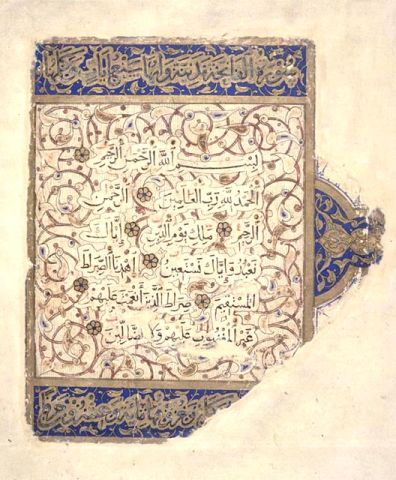
Image: 14th C. Qur'an, Mamluk origin, Library of Congress; Rights obtained.

A BREAKTHROUGH project which helps understand the Qur'an AS REVEALED -not just 'as explained.'

---------------------------------------------------------------------------

Tuesday, December 14, 2010

Day 274; Qur’an 67: 1-30, pages 562-564


Welcome Friends:  Ahlan wa sahlan!
Yusuf Ali’s explanation of this Chapter.
Muhammad Asad’s explanation of this Chapter.
NEW: Laleh Bakhtiar’s explanation of this Chapter.

سورة الملك
‘Dominion’

From Introduction of Yusuf Ali:
“But these short Quranic Surahs have a grandeur, a beauty, a mystic meaning, and a force of earnestness under persecution, all their own.  With their sources in the sublimest regions of heaven, their light penetrates into the darkness recess of Life, into the concrete facts which are often mistaken for the whole of Reality, though they are but an insignificance portion and on the surface and fleeting.”

From Introduction of Muhammad Asad:

THE FUNDAMENTAL idea running through the whole of this surah is man's inability ever to encompass the mysteries of the universe with his earthbound knowledge, and, hence, his utter dependence on guidance through divine revelation.”

COMMENTS:

Congratulations are in order:  With God’s Grace, we’re now starting on the final two Parts (Juze’/ جزء) of the Qur’an!  Here we find the shortest chapters which are quite familiar to most Muslims, oft-recited and treasured in memory.

Since most of them were revealed in Mecca, we’ll find them discussing the ‘Who’s Who’ of faith:
 
·    God/ Allah.  He is The One and Only God, Creator and Sustainer of all.
·    Us:  We Cognizant Humans are the only Beings ‘quickened’ from His Divine Spirit and therefore transcendental; we had a primal existence and shall be resurrected after this life into the next, each according to accomplishment.  In this life we seem to be closeted within time and space for the purpose of learning and growing towards potential.
·   Messengers: Two ‘species,’ whether Human or Spirit, their role is to accurately deliver us information from God.

For more on the difference between Mecca and Medina Chapters, put ‘difference revealed Mecca’ in ‘Search.’ As mentioned earlier, scholars have sometimes disputed as to what was revealed where and on what occasion but: 

The Qur’an is one unit, revealed by the Living God for Cognizant Humans who are living at any given time and in any given place!

Upon that note, we feel truly blessed to find that this chapter in particular REINFORCES our understanding of the term ‘Al RaHmaan’ being about God, the ‘Source’ of Life, ‘The Creator/ Generator’ of all existence, who is ‘superlative and active’ with it (a linguistic REcovery made through linguistic and contextual research at this site).  Indeed, this chapter is as important as the chapter of Al RaHmaan (HQ 55) in DEFINING this term for us.

See HQ 25:59 and 67:3.

New Readers: Please put ‘al Rahmaan’ in ‘Search.’

This Chapter is magnificent in what it tells us about God as it encourages our observation of what is around us of His Dominion: 
Creation (the part we are told of) seems to be represented in a timeless continuum which, emanating from its Divine Source, is intended just for us.
WE, Cognizant Humans, are the ‘raison d’etre’ for ALL that we observe of His Creation!


PAGE 562 Arabic Qur’an

1.     The Chapter begins by asserting that:
‘Abiding in Exaltation is He in Whose Power is The Dominion, and He is over all things Omnipotent Creator and Projector.’
(New Readers: Put ‘Qadeer’ in ‘Search.’)
Note that the two words تبارك الذي’, appear together four times in the Qur’an, 3 of which are in Chapter 25, al Furqaan.
Indeed, subject-wise, this chapter on God’s Dominion in general -as observable by us- seems like an introduction to that chapter, which speaks more specifically about the role of the ‘Furqaan’ as beneficial to us!
(Reminder: Furqaan = the Inviolables on the Straightened Path, similar to the ‘Ten Commandments.’  Put words in ‘Search.’)
Then Verse 2 continues: 
(He) Who created Death and Life to try you (pl.), which of you is better in deeds, and He is the Invincible, The Forgiving.’
The word بلو/ى here is literally about being under a certain degree of ‘wear and tear/ exertion/ strain,’ which drives us to action.  When both our character and performance are brought to light, we begin to change for better or for worse, (shrinking or growing)!
So, THAT is one reason (‘li’) for ‘Death’ and for ‘Life!’
It is interesting to note that ‘death’ is ALWAYS mentioned first, which might be because every ‘Self/ Nafs’ has emanated from God, our Living Source, so our origin in the Ever-Living is what ‘our Selves’ began with, ‘quickened from His Spirit.’  After that, we shall die, then we shall be brought to life in the Hereafter.
There is however another verse (HQ 2:28) which tells Deniers that they were dead, then brought to life.  That might be pointing to their physical existence, because they believed in nothing else.  Anyway, this is a matter of ‘Gheyb,’ un-witnessed by us, and therefore never fully conceivable.

2. Verse 3 continues telling us ABOUT the Creator, still indirectly (by looking at Creation, without naming Him) encouraging and challenging EACH of us (singular) to look again and again to the ‘mantled/ layered/ طبق[i]’ Creation of the Seven Exalted Expanses. 
Then He is ‘named’:
‘Do you see in Al RaHmaan’s creation any imperfection…?’
So it is The RaHmaan’s Creation!  The RaHmaan is THE Creator.
Other verses of the Qur’an mention that the Creator had adorned the lowest ‘exalted expanse’ (our sky) with ‘lanterns’ (light-giving stars), for 2 reasons:  
‘Beauty’ to be beheld by us, AND for our protection (HQ 41:12).
Here, in Verse 5 we are told more about this ‘protection.’  These celestial bodies function as ‘rujoom’ or DETERRENTS to Transgressors/ ShayaTeen. 
·     ‘SheyTaan (sing) ShayaaTeen (pl.)’ is about ANY transgressor, human or non-human (see HQ 2: 14 where the word ShayaaTeen is understood by all traditional commentators and linguists as the chieftains/ leaders of HUMAN transgressors.  New Readers: Put ‘Deviant’ in search).
·     The root-verb ‘rajama’ is about throwing something at someone (stones, words), or throwing them off or away, as in ‘to banish’ someone (‘sheyTaan rajeem,’ ‘banished’). 
So the function of these celestial bodies is to keep transgressors at bay with the ‘suffering by fire’ awaiting them.  I will leave the scientific explanation of this to someone who knows more about the cosmos.
Verses 6- 11 are strongly Dissuasive as they SHOW us how the ‘lot’ of those Who Had Denied shall be ‘suffering in Hell/ Jahannam, and a dire destination. 
(Regular Readers will remember that ‘Jahannam’ means the bottom of the Abyss. Put word in ‘Search.’) 
Listeners can almost see and ‘hear’ Hell, as it boils over in fury, sucking-in those who are thrown into it.  And when the Custodians of Hell ask these people whether or not they had received a Warner, they admit that they had… but had BELIED, alleging that God had sent nothing.  Then, besides admitting to their guilt, they acknowledge the fact that they had not been listening, and had not used their intellect to secure knowledge (‘aqala).       

3.  Verse 12 shows us, in brief, a CONTRASTING situation, telling us of ‘Those Who are in Awe of their Lord beyond perception/ in the Unseen’…. for whom there is forgiveness and great reward!
Although briefly described, we know about such persons and what awaits them of God’s Bounty from other verses which mention people who are in awe / ‘khashyah’ of their ‘Lord/ The Creator.’  See HQ 50: 33-35 and note that these verses also come after verses of dire Dissuasion.

PAGE 563 Arabic Qur’an
4.    Verses 13- 17 again address us all directly (‘you’ plural), telling us in Verse 13 that whether we keep our communication/ ‘qawl’([ii]) secret, or broadcast it, He indeed is Knowing of What is in the Hearts/ minds! 
Let us allow this to sink in for a moment, as we realize that being told of His intimate knowledge of us is a powerful reminder of WHO HE IS, punctuated by the question in Verse 14:
‘Does He not know WHOM He created, and He is ‘The LaTeef / Subtle’ ([iii]), ‘The Khabeer / Fully acquainted?’
Note that WHO/ ‘mann/مَن’ is for Cognizant Beings (while ‘maa’ما / ‘what’ is for incognizant entities). 
And as we mentioned earlier, every question gets it response from listeners, even in silence.
Although Verse 15 may seem similar to other verses which mention God’s earthly Provision (rizq) given to us in life, we should note that other verses have a different context.  There, they may have called upon people to have ‘taqwa’ and ‘shukr’ in their lives and livelihoods (to be aware and to make the most out of their provision so it achieves abundance), while here our relationship with God and this earth is summed up in a few words: 
‘It is He Who has rendered the Earth subject to you (pl.), so walk in its winding trails (‘manaakib/ bends’ -[iv]) and consume of His Provision, and TO HIM IS THE OPEN EMERGENCE (from the graves upon resurrection)!’
What a nutshell to ponder upon!
Verses 16- 18 ([v]) are directed to those who might have a false sense of security regarding the stable earth beneath them, or the clear expanse above them, asking them whether they are secure/ safe from Him Who is GOD in this Earth AND in the Exalted Expanse, and can overwhelm them with quakes from below and storms from above…? ‘…so you  shall know how was my warning!’
Verse 18 indirectly alerts listeners to benefit from the experience of others:  ‘Indeed, others before them have belied, so how was my rejection?
Verse 19 makes a beautiful observation regarding birds flying above in formation, their wings outspread and then drawn in:
‘Nothing retains them (in midair) except The Rahmaan/ Lord Creator,’ He is, of everything, Seeing.’ (Also see HQ 24:41).

5.    Then we find Verses 20- 22, each asking a question, each getting its response, even in our silence!
·     Who, other than The RaHmaan, begets and disperses Goodness to you? 
The Deniers are in no (state) other than Deception.
·     Who would provide for you, if He withheld His Provision?
Yet they persist in conceited contempt, and aversion.
·     Who is better guided? 
--Someone who walks, stumbling onto his face, or
--Someone who walks evenly/ upright on a Straightened Path?
REMEMBER, DEAR READER, THAT THE WHOLE PURPOSE OF RECITING THE ‘OPENER/ FAATIHA’ 17 times in our prayers throughout the day, is to seek ‘guidance to/ the gift’ of the Straightened path, a path delineated for us in the Qur’an (see HQ 6: 151- 153 and 17: 23- 39).
Also remember this (HQ 55):
“The Rahmaan! 
‘Distinguished/ demarcated/ manifested’ the Qur’an. 
Created the Insaan.
Distinguished him in articulation/ eloquent self-expression.”

الرَّحْمَـٰنُ ﴿1﴾
عَلَّمَ الْقُرْآنَ ﴿2﴾
خَلَقَ الْإِنسَانَ ﴿3﴾
عَلَّمَهُ الْبَيَانَ (4) 
(New Readers: Put words in ‘Search.’)
Verses 23- 24 continue, informing listeners WHO God is, telling the Messenger to:
‘Say: It is He Who raised you (pl.), and rendered for you hearing, sight, and Fou’ad/ mental capacities, little do you bring to abundance what you have been given.’ 
‘Say: It is He Who propagated you in the earth, and to Him shall you all be converged.’
Since the first time we encountered the word ‘Fou’ad, we’ve been trying to understand what it means both linguistically (from lexicons) and contextually (from Qur’an), and how to best translate it.  We said earlier, that it seemed to point to our ‘mental response’ to any given situation.  Does that sound like ‘intention,’ dear Reader, seeing that we are responsible for it and shall be questioned in its regard?  (See HQ 17:36)  Let me know what you think.
In Verse 25 the Deniers ask about the timing of that promise, while Verse 26 tells the Messenger to respond by saying that the knowledge (of that) is with God, and ‘….. I am indeed an evident Warner.’
Here we actually have SIX verses with the command ‘Say,’ as an introduction to important Qur’anic statements.

PAGE 564 Arabic Qur’an
6.    Verse 27 continues to respond to the Deniers about the promise of Judgment, giving them a glimpse of how things will look and feel on that day, when they finally come face to face with it after having denied it throughout their lives!  Here we see their faces, distressed by utter vulnerability and helplessness at that time, and we hear what shall be said to them, about the promise which they had been denying in life!
Verse 29- 30 all begin with the command, ‘Say..’   First, the verses inform the Deniers that it is up to God whom He will ‘terminate/ cause to expire’ ([vi]) and whom He will have mercy upon, asking them:
‘….Then who is it, who will save the Deniers from a painful suffering?’

Then, the Messenger is told to tell them:
‘Say, ‘He is Al RaHmaan!  We have faith in Him and upon Him do we depend, and you (pl.) shall come to know who is in evident misguidance!
Say, ‘Consider/ See,’ what if your water becomes sunken (underground), who would then bring you attainable water?’

A question which listeners respond to, even in silence!
Peace unto all!

[i]
طبق: يدلُّ على وضع شيء مبسوط على مِثله حتى يُغطِّيَه. من ذلك الطَّبَق. تقول: أطبقْت الشيءَ على الشيء، فالأول طَبَق للثاني؛ وقد تطابَقَا.
وقولهم: طَبَّق الحقَّ، إذا أصابه، من هذا، ومعناه وافقه حتى صار ما أراده وَفْقاً للحقّ مطابِقاً لـه. ثم يُحمَل على هذا...
وطابقت بين الشيئين، إذا جعلتَهما على حَذْوٍ واحد. ولذلك سمَّينا نحن ما تضاعف من الكلام مرَّتين مُطابَقاً. وذلك مثل جَرجَر، وصَلْصَل، وصَعْصَع.

Regular Readers will remember that our ‘qawl’ is what we communicate by way of speech, demeanor, or action.
لطف:  يدلُّ على رِفق ويدلُّ على صغَر في الشيء. فاللُّطف: الرِّفق في العَمل؛ يقال: هو لطيفٌ بعباده، أي رؤوف رفيق.

نكب: عن الشَّيء يَنكُبُ. قال الله تعالى: {عَن الصِّراطِ لَناكِبُون [المؤمنون 74]. والنَّكباء: كلُّ ريح عَدلَتْ عن مَهبِّ الرِّياح الأربع.
والأنكَب: الذي كأنَّه يمشي في شِقّ. والمَنْكِبُ: مُجتَمَع ما بين العَضُد والكَتِف، وهما مَنكِبان، لأنَّهما في الجانبين.

[v]
Commentators have had a problem explaining مَن في السماء / ‘Who is in the Exalted Expanse,’ since God cannot be ‘in’ anything.  Research shows us that HQ 43:84 says it well.  He is not ‘in’ it Himself, but He certainly is God IN both! 

Regular Readers will remember (HQ 28: 88) that EVERYTHING expires except God’s Direction!

Monday, December 13, 2010

Day 273; Qur’an 66: 1-12, pages 560-561

 Welcome Friends:  Ahlan wa sahlan!

Yusuf Ali’s explanation of this Chapter.
Muhammad Asad’s explanation of this Chapter.
NEW: Laleh Bakhtiar’s explanation of this Chapter.

سورة التحريم
‘The Banning/ Prohibition’

From Introduction of Yusuf Ali:

“The point dealt with here is: how far the turning away from sex or the opposition of one sex against another or a want of harmony between the sexes may injure the higher interests of society.
The date may be taken to be somewhere about A.H. 7.”

From Introduction of Muhammad Asad:

“REVEALED in the second half of the Medina period - probably in 7 H. - this surah has been occasionally designated as "The Surah of the Prophet" (Zamakhshari) inasmuch as the first half of it deals with certain aspects of his personal and family life.[i].”


COMMENTS:

New Readers: Please, before you go any further: 
The distinction between the Qur’an’s address to Muhammad as ‘Prophet’ versus ‘Messenger’ is CRUCIAL here.  See the previous chapter where we explained this in detail.  Put ‘difference prophet messenger’ in ‘Search.’

The address ‘O Prophet’ appears twice in this Chapter.  This is an important distinction (we’ve spoken of this many times, the last of which was in Chapter 65).  Here it is CRUCIAL because the chapter starts out by calling upon him with him a serious question: 

‘O Prophet, WHY are you prohibiting something which God had made permissible for you, seeking your wives’ goodwill/ good pleasure?’

Muhammad, as Messenger, NEVER would or could change anything in a Message which God had taken upon Himself to compile (also see important footnote [ii]).  The verse here reprimands the ‘Prophet’ (NOT the ‘Messenger’) who made an oath in haste, prohibiting himself from what is permissible, in his desire (as a husband) to please his wives.  But it was quite fortunate that he did that, giving us occasion to learn important lessons, one of which is that any wrongful oaths we make in haste can -and indeed should- be annulled and expiated. 
NOTE:
Everything on earth is considered ‘permissible’ unless it has been made ‘prohibited/ inviolable’ in the Qur’an (put ‘inviolables’ in ‘Search’).
Q. What did the Prophet forbid himself from?
A. That is not important TO US.  Had it been, the Qur’an would have told us. 
Stories we hear from other sources are conflicting.
More Q&A in footnote ([iii]).

PAGE 560 Arabic Qur’an

1.    Although the first verse spoke directly to the Prophet, it also serves to show us that we should never make ‘prohibited’ what God has made ‘permissible,’ even if we risked the ‘goodwill/ pleasure’ of others.  The verse ends on a note of forgiveness and compassion.
Verse 2 speaks directly to us all (plural ‘you’) telling us that: 
God had ‘faradha’ FOR you /bequeathed to you the expiation/ atonement of your pledges/ oaths (aymaan), He is your Lord/Sustainer, The All-Knowing, The Wise.
Regular Readers will remember the difference between ‘faradha ala’ (upon), and ‘faradha li’ (for), the first being a responsibility and the second a bequest.  Put ‘faradha’ in ‘Search.’
The Qur’an is clear in HQ 2:225; 5:89 that this is about oaths that are made WITHOUT premeditation; they are of the ‘frivolous/ laghu’ type, which should NOT have been made in the first place.  So the ‘bequest’ mentioned here is the ‘method of atonement’ presented to us so that we can correct something we wrongfully promised in God’s name. 
The ‘bequest’ itself, with its FOUR CHOICES of expiation methods, was delineated in Verse (HQ 5:89).  Note that it states at the end: ‘..and protect your oaths…’  We’ve already discussed this in detail, and said that informal oaths are unnecessary because a Believer’s word should be equivalent to an oath.  Put ‘word equivalent oath’ in ‘Search’ to read the discussion.
As for FORMAL oaths which are untrue, or bearing false witness, that is a grievous deed called ‘Zoor,’ which is strictly Prohibited.
Being honest of word (to the degree of going against kin when necessary) is a MUST and is among the Inviolables/ MuHarramaat of the Straight Path (HQ 6: 152); not doing so is so serious it is mentioned together with the worshipping of idols (HQ 22:30)!  Lying in an oath or bearing false witness is an INVIOLABLE!
Regular Readers will also remember that we are told NOT to use God’s name in any oaths which impede us from being Forthcoming, Aware, or Reconciling people together (HQ 2:224).  We cannot use His name in any way to harm ourselves or others, as that would be MISUSE of His beautiful name! 
If we find that we have MISUSED God’s name in haste or temper, we must break the oath and expiate/ atone for our deed as delineated in HQ 5:89. 
According to a well-known ‘Saying/ Hadeeth’ of the Prophet:
“If anyone takes a solemn oath [that he would do or refrain from doing such-and-such a thing], and thereupon realizes that something else would be a more righteous course, then let him do that which is more righteous, and let him break his oath and then atone for it.”

2.   Verses 3- 5 is about a certain CONFIDENTIAL ‘hadeeth/ discourse’ told by the Prophet to ‘some/ one’ (unnamed) of his spouses, and was divulged (by ‘her’).  Only when the Prophet informed her about what she had divulged, did she discover that it was God Himself who had informed him of her breach of confidence! 
(The word used is ba’Dh/بعض –‘some’- but the common understanding is ‘one.’ Perhaps this issue was left unspecified for posterity NOT to name names!)
Verse 4 then reprimands two people, showing them their options (the ‘dual’ address is always ‘masculine,’ even regarding females):
·      Were you both to repent to God, you would have rightly inclined your hearts/minds, or
·      Were you to ‘back each other’ against him (the Prophet), then certainly God is his Protector, and Gabriel, and the righteous Believers, and (all) the angels after that, backing him up!    
3.  Then Verse 5 shows us that this matter overtook the Prophet’s household, with more than 2 spouses sharing in it because the Qur’an now speaks in the feminine PLURAL, warning the Prophet’s spouses that were he to divorce them, God would replace them with spouses better than they, who would have ALL these beautiful SIX character traits COMBINED ([iv]).  
I’ll list these qualities so we can aspire to them:
·      Purely reverent (to God).
·      Faithful and Trusting (in God).
·      Compliant (to God in Faith and Accountability ([v]).
·      Repentant (to God).
·      Worshipping (of God).
·    ‘Saa-eH’/ Progressing/ traveling/ migrating… literally: ‘flowing like water; this word also appears in HQ 9:112; see سيح.
This word has also been thought to indicate ‘fasting,’ because a ‘Saa-eH’ is a traveler who does not carry food ([vi]).  Anyway, it certainly is about having the self-drive to improve oneself without limits, flowing like water wherever there is self-growth to be had (probably fasting at times too, since fasting was prescribed for the growth of our Awareness).
Then, after these 6 traits, we have the final description:
‘Retirees/ Thayyib' or ‘Maidens/ Bikr.’  This description (unlike all the previous traits which were combined in each woman ([vii]), is ‘either-or,’ because a person is either ‘previously married,’ or ‘never married.’

‘Thayyib:’ One who has ‘returned’ from a marriage.
‘Bikr:’ One in the ‘prime, early state’ ([viii]).
(See previous footnote. The conjunction ‘wa’ has appeared here between the two 2 words because no person can be both at once).

IMPORTANT NOTE:

Both physical states (‘Previously-wed’ and ‘Unwed’) are held in the same regard, and the preference we see in Islamic communities for seeking ‘maidens’ for marriage is NOT characteristic of early Muslims, or of the Qur’an!  Indeed, during the Prophet’s lifetime, the most ‘sought after ‘women for marriage were the widows. 
Indeed, all the Prophet’s wives, except Aisha, were widows when he married them. Khadija was not only TWICE-widowed (and 15 years his senior), but she also was a mother of three (some say five) when they married.
How much healthier our society would have been had we NOT allowed warped, narrow-minded attitudes to prevail.  How far we have regressed!

4.  Verse 6 calls upon Those who had attained Faith, telling them to avert/ ward off, from themselves and their families, a Fire fueled by people and stone.  Here we learn of the Custodian/ Angels who oversee this; they do not disobey what God commands them, and do as they are bid.
That seething verse makes us think of our beloved families, and try to raise our children in the best way possible… and it also sets the scene for the next verse. 
Verse 7 speaks to Those who have Denied, showing them that, on that day, they are to offer no excuses:  They shall be recompensed as per their deeds.

PAGE 561 Arabic Qur’an
5.    Then there is a second call to Those who had Attained Faith, beginning by telling them/ us to repent to God with a ‘naSooH’/ ‘restorative’ Repentance, so that God would ‘cover/ compensate’ for us our misdeeds (against others), and admit us into gardens beneath which rivers flow….  
Note:
I found the 1030 year-old definition of the root-verb ‘naSaHa’ VERY interesting ([ix])!  It is about ‘restoring/ amending,’ actually weaving something back together with genuineness, and is the opposite of ‘to cheat.’  What perfect Repentance this is, lifting us (after we’ve truly regretted our misdeed) to a higher level of Awareness and confidence as it mends our relationship with God and with others!  Isn’t Arabic beautiful?  (Now we can grasp a fuller meaning to the 10 other verses mentioning this word… we passed over them all without looking it up!)
The verse then continues (after saying that Those who had Attained Faith shall be admitted into gardens) it describes that day/ time, when neither the Prophet nor those who, with him, had attained Faith, shall be ‘subjugated/ humiliated,’ which is probably the Day of Judgment.  In fact, on that day when others shall face humiliation, the Prophet, AND Those who had Attained faith with him, shall find their Light running forth in front of them and to their right (as in HQ 57:12), and they shall be saying: Our Lord, complete for us our Light and forgive us, You are of all things ‘Qadeer’/ Capable of PROJECTING them to their ultimate end.
Notes:
-Besides calling upon all Who Have Attained Faith to repent and restore their relationship with God, this verse is ‘a pat on the back’ to the life-companions of Prophet Muhammad… those men and women whose entire lives were dedicated to his support.  It is such beautiful Persuasion to them all, especially his wives!  
-Notice, dear Reader, the precision of our earlier definition of ‘Qadeer’ and ‘qadar:’ 
At the time of judgment their Light is there for them but not yet complete.  God shall bring it to completion when it is projected it to its ultimate end.  

6.     Verse 9 addresses the Prophet.  This is the second personal address to him in this Chapter.  Here it calls upon him again (as Prophet in a specific situation, NOT as Messenger) to exert himself with regard to the Deniers and the Hypocrites -both groups labeled, and in this case, combined.

‘O Prophet, (جاهِد) continuously exert yourself against the Deniers and the Hypocrites, and (أُغلُظ عليهم) be stern/ severe against them, and their refuge is ‘Jahannam’ (the bottom of the Abyss), and a dire destination.’

We’ve already read an identical verse in HQ 9:73, discussed it at the time, and marveled at how often it has been taken out of context by extremists on both sides:
-‘Muslim’ zealots who take it as a directive towards battle.
-Islam-bashers who allege that the Qur’an sanctions ‘Holy War’!
Let us FOCUS on this for a minute:
·     Firstly, such persons have mis-explained the noun ‘jihaad’ (exertion) and the command ‘jaahid’ (exert yourself).
·    Secondly, they have failed to point out that this commanded EXERTION IS TO BE THROUGH THE USE OF THE QUR’AN ITSELF, and not by use of force or weaponry; see all verses with this command).
·      Thirdly, they have missed an obvious point:  
These commands are directed against two parties, ‘the Deniers and the Hypocrites,’ mentioned together here, to be ‘dealt with’ identically.

Q. So how did the Prophet throughout his entire life deal with the Hypocrites?

A. He was known to have treated them with leniency, neither calling them to account, nor rebuking them for their actions or inaction.  He accepted them in the mosque just like everyone else, attended their burials, and even prayed for them! 
Therefore ‘jihaad’ CANNOT be understood as attacking someone by use of weaponry or force. That is NOT a valid understanding of the word ‘jihaad’ (put words in ‘Search’)!

·      Finally, the ‘jihad’ and the ‘severity’ in this verse cannot be related to warfare or armed struggle because, as we see at the end of this verse, the Deniers and Hypocrites both taste the consequence for their actions DELIVERED by God Himself and NOT by any human hand! 
7.     Verses 10-12 bring us back to a major topic in this chapter:
The importance of not breaching trust.
In that and all respects, Community-Leaders have a greater responsibility:
They should be transparent in everything they do so as not to be suspected of wrongdoing.  They must maintain higher standards than anyone else because they are MODELS to their community.
This may be one reason why the Qur’an has brought this issue to light, with a public reprimand no less!
Another verse we’ve already read indicates that the Prophet’s wives would get double the reward for their good deeds and compliance to God and His Messenger, AND ALSO double penalty if they ever committed a ‘pervasive atrocity’ (see HQ 33:31-31) [x]

Bringing the subject of ‘Breaching Trust’ to conclusion, especially with regard to high-profile women, the Qur’an strikes ([xi]) a CONTRAST for us:
·      The first being an example ‘for Those Who had Denied,’ is about both the wife of Noah and the wife of Lot, who were ‘under’ righteous ‘Worshippers of God,’ but BETRAYED THEM.  Nothing availed them from God, and they were told to enter the Fire along with others. 
·      The second being an example ‘for Those Who had Attained Faith,’ is about two women as well: the wife of Pharaoh, and the Daughter of Imraan, Mary (mother of Jesus).

-The wife of Pharaoh’s prayer is beautiful, as she asks God to save her from Pharaoh AND from his misdeeds, asking God to ‘build’ her a home in the Garden, and to be saved from the Wrongdoing people.
(Remember what she said in HQ 28:9 when the infant Moses was found in the water- that perhaps he would comfort them, benefit them, and they would take him as their own child?  Indeed, he became her adopted son; she helped raise him and therefore believed in him, going against the might of her power-hungry husband.)
-Mary, daughter of Imraan, is also mentioned as an example for Those who had Attained faith.  She ‘fortified/safeguarded her vulnerable part’ (her ‘womb,’ as the rest of the verse indicates). 
Put ‘furooj’ in ‘Search’ and see Arabic definition below ([xii]). 
Also see all nine verses relating to root-verb ‘faraja’ in Qur’an, and notice that two of them are about the sky/ the Exalted Expanse, having no flaw/ no vulnerability…. but later coming apart at the time of Judgment!
Here we also notice something important which we hadn’t seen earlier. Remind me to go back, dear Reader, and add this info to previous posts:
Whereas ALL verses related to Believers’ and their ‘furooj’ in the Qur’an are about ‘protecting’ them ‘Hafatha’ حفظ ...... the two verses mentioning Mary tell us that she ‘FORTIFIED’ ‘HaSana-‘ حصن  hers…!
‘Conserve /Hafatha ([xiii]) versus ‘Preserve/ HaSana’:
By ‘conserving’ something we use it wisely, sustainably, and within our rights.  By ‘preserving’ something we leave it untouched, as it is, in its primal state.
That shows us the difference between what is required of us, and what Mary achieved, may God’s peace and blessings be upon her: 
What is required of us is to CONSERVE our ‘Furooj.’  Conserving our ‘farj’ should be part of our identity as Believers whether we do or do not marry. What she did, however, was more than that.  She PRESERVED her ‘farj.’ Since ‘preservation’ of her ‘farj’ is part of her identity, this indicates that she never married and remained sexually untouched throughout her life (but God knows best).
So, having PRESERVED her ‘vulnerable part/ farj,’ God ‘quickened’ into it of His Spirit (‘vivified/ brought life’ into it, hence came Jesus, peace upon him), and she was strengthened by her belief in her Lord’s Words and His Compilations ([xiv]), and was of those ‘Compliant’ (to God in Faith and Accountability). 
Put ‘quicken’ in ‘Search.’
Put ‘Sadaqa’ in ‘Search.’
See all instances of (qanata/ compliant-قنت-) in Qur’an, ALL of which are related to our compliance to GOD ALONE.
Notice that prophet Abraham, peace upon him, was ‘qaanit’ to God (HQ 16:120).
‘Qunoot’ /Compliance in faith and accountability is owed to God.
One person CANNOT be compliant in faith and accountability to another ([xv]). 
As to the Prophet’s wives – who are UNLIKE any other women in their geographical proximity to the Revelation itself, the Qur’an indicates that they should maintain impeccable standards in their ‘qunoot,’ drawing lesson from Mary, who accepted every responsibility that was given her despite duress, to the degree that childbirth made her wish death upon herself (HQ 19:23)… even so, she fulfilled her duties so well that she became the paragon of ‘qunoot.’ 
The compliance ‘qunoot’ of the Prophet’s wives is neither to Muhammad (the man), nor to the ‘Prophet’ (leader of his community).  Their compliance is to God and HIS Messenger HQ 33:33- it is towards the SOURCE of the Message AND its DELIVERY that they should be compliant.  That should outdo anything else in importance; all their concerns are petty when compared to his concern regarding the Message and his delivery of it.  The wives (spoken to here) were told that they should, and indeed they later did, fulfill their roles well.  It seems that the Prophet’s gentleness and the need for us to learn from this experience were both cause for this public Revelation from God.
May we rise to the high ranks of ‘Qaniteen,’ and may we, when entrusted, never breach trust.
Peace unto all!

[i]
There are several essentially conflicting – and, therefore, in their aggregate, not very trustworthy – reports as to the exact reason or reasons why, at some time during the second half of the Medina period, the Prophet declared on oath that for one month he would have no intercourse with any of his wives. Still, while the exact reason cannot be established with certainty, it is sufficiently clear from the above-mentioned ahādīth that this emotional, temporary renunciation of marital life was caused by a display of mutual jealousy among some of the Prophet’s wives. In any case, the purport of the above Qur’anic allusion to this incident is not biographical but, rather, intended to bring out a moral lesson applicable to all human situations: namely, the inadmissibility of regarding as forbidden (harām) anything that God has made lawful (halāl), even if such an attitude happens to be motivated by the desire to please another person or other persons. Apart from this, it serves to illustrate the fact – repeatedly stressed in the Qur’ān – that the Prophet was but a human being, and therefore subject to human emotions and even liable to commit an occasional mistake (which in his case, however, was invariably pointed out to him, and thus rectified, through divine revelation).” End Quote.

A messenger would no longer be a true ‘messenger’ if he corrupted the message he bore.  Any deviation of his would become part and parcel of the ‘message’ and he would be reneging on his duty as ‘messenger.’
The Qur’anic Message is, word for word, NOT the Messenger’s, but God’s.  That is why Muhammad is often addressed in the Qur’an as ‘O Prophet’ (13 times).  By so doing, the Qur’an speaks to him as a PERSON, a man, a leader, and a model to his community…. advising him on measures to be taken with a specific enemy at a specific time, or on the personal level, especially with his wives… reproaching him for a wrong move and showing him how to make amends.  In short, showing the world that Muhammad the man is SEPARATE from the Message:  He is under obligation just like everyone else to do the best in any situation, and is also vulnerable to making mistakes. 
Therefore, as ‘Muhammad the Prophet’ (the person) he does get his mistakes exposed by God AND corrected in the Qur’an so that everyone would learn.  On the other hand, as ‘Muhammad the Messenger’ (the deliverer of the Message), he is safeguarded from making mistakes and therefore he dutifully delivers, word for word, all PUBLIC DISCLOSURE OR REPRIMAND of ‘Muhammad the Prophet’ for all time.  Amazing!

Q. What about covert matters –done without outside witnesses- made possible through today’s technology, UNKNOWN at the time of revelation (therefore not specifically mentioned in Qur’an as ‘Forbidden’ or ‘Permissible’)?

A. When related to extra-marital SEX, we find them twice included in the verses which speak of ‘…Pervading Atrocities, that which is overt thereof and that which is COVERT…’ (6:151; 7:33).
They ARE mentioned under another title (see 7:157) as either:

---‘Wholesome/ tayyibaat…’ of benefit to the individual and to society– therefore Permissible, OR
---‘Unwholesome/ khabaa-eth’- harmful to the individual and to society- therefore Forbidden.

See this MAJOR STATEMENT which points to what would be ‘the future’ to Prophet Moses and his generation, peace upon him. 
Delivered in the present continuous, it is Timeless:

 [7:157]
Those who follow the Messenger, the Non-indoctrinated[iii] Prophet whom they find (reports of) compiled in the Torah and the Evangel: who commands them to what is mutually acceptable and forbids them of what is objectionable, and makes lawful to them all that is Wholesome and forbids them of the Unwholesome, and relieves them of them their burden and the shackles that were upon them. Those, therefore, who believe in him, and honor him, and support him, and follow the Light that was sent down with him– they are indeed the Successful!"

Dear Reader:
Anyone who believes purely in God, without bias to the teachings of a certain creed, would realize that this verse illustrates the continuation of God’s single Message, which achieves its finality in Prophet Muhammad, peace upon him, as the Light sent down with him. 
This verse shows us that the timeless enlightenment contained in this Qur’an, although sent to all Humanity, is most appreciable when recognized by followers of Moses’ Torah and Jesus’ EvangelIsn’t one of the Qur’an’s stated purposes to relieve their burden and free their shackles? 
Many were those wonderful Seekers of God, followers of the Torah and Evangel, who upon opening to God’s Light, seamlessly continued their journey towards Him through the Qur’an. One such Seeker was our Muhammad Asad, born Leopold Weiss!

[v]
Regular Readers will remember Mary, mother of Jesus peace upon him, as the best example here.  Put ‘qaanit’ in ‘Search.’

[vi]
سيح: أصلٌ صحيح، وقياسه قياسُ ما قبلَه. يقال ساح في الأرض....والسَّيْح: الماء الجاري...
والسَّيْح:  العَباءة المخطَّطة. وسمِّي بذلك تشبيهاً لخطوطها بالشَّيء الجاري.

طنطاوي: سائحات: ذاهبات في طاعة الله أي مذهب، من ساح الماء إذا سال في أنحاء متعددة. وقيل مهاجرات وقيل صائمات تشبيهاً بالمسافر الذي لا يحمل مع الزاد غالباً فلا يزال ممسكاً عن الطعام حتى يجده.
A.     How do we know that the Qur’an intends these characteristics to all be combined in each woman?
B.      There is no ‘and’ between the words.  Had there been a conjunction between the 6 words, they would have been referring to women of one kind AND women of the other.

[viii]
 بكر: أصلٌ واحدٌ يرجع إليه فرعان فالأوّل أوّلُ الشيء وبَدْؤُه. والثاني مشتقٌّ منه، والثالث تشبيه. فالأول البُكرة وهي الغَداة، والجمع البُكَر. والتبكير والبُكور والابتكار المُضِيُّ في ذلك.
والتَّمَرَةُ باكورةٌ، ويقال هي البَكيرةُ والبَكائِرُ. ويقال أرضٌ مِبْكَارٌ، إذا كانت تنْبِتُ في أوّل نبات الأرض.
فهذا الأصلُ الأوّل، وما بعده مشتقٌّ منه. فمنه البَكْر من الإبل، ما لم يَبْزُلْ بَعْدُ. وذلك لأنَّه في فَتَاءِ سِنِّهِ وأوّلِ عُمْرِه، فهذا المعنى الذي يجمَعُ بينه وبين الذي قبلهَ، فإذا بَزَلَ فهو جَمَلٌ. والبَكْرَةُ الأنثى، فإذا بَزَلَتْ فهي ناقة.
قال الخليل: والبِكْرُ من النّساء التي لم تُمْسَسْ قَطُّ. قال أبو عبيدٍ: إذا وَلَدَتِ المرأَةُ واحداً فهي بِكْرٌ أيضاً. قال: وبقرةٌ بِكْرٌ فَتِيّةٌ لم تَحْمِلْ. والبِكْرُ من كلِّ أَمرٍ أَولُه.
والبِكْرُ: الكَرْم الذي حَمَلَ أوّل مرّة.
قال الخليل: عَسَلٌ أبْكارٌ تُعَسِّلُه أبكار النَّحْل، أي أفْتاؤُها، ويقال بل الأَبكارُ من الجَواري يَلِينَهُ. فهذا الأَصلُ الثاني، وليس بالبعيد من قياس الأوّل. وأما الثالث فالبَكَرَةُ التي يُسْتَقَى عليها. ولو قال قائل إنها أُعِيرَتْ اسمَ البَكْرَة من النُّوق كان مذهباً، والبَكرة معروفة.
وَثَمَّ حَلَقات في حِلْية السّيف تسمّى بَكَراتٍ. وكلُّ ذلك أصلهُ واحد.

نصح: أصلٌ يدلُّ على ملاءمةٍ بين شيئين وإصلاح لهما. أصلُ ذلك النَّاصح: الخَيّاط. والنِّصاح: الخَيطُ يُخاط به، والجمع نِصاحات، وبها شبِّهت الجلود التي تُمدُّ في الدِّباغ على الأرض.
ومنه النُّصح والنَّصيحة: خِلاف الغِشّ. ونَصَحْتُه أنْصَحُه. وهو ناصح الجيْب لمثَلٍ، إذا وُصِف بخُلوص العمل والتَّوبة النَّصُوح منه، كأنَّها صحيحةٌ ليس فيها خَرْقٌ ولا ثُلْمَة وقميصٌ مَنصوح: مَخِيط.

[x]
Notice, what is required is compliance (in faith and accountability) to God and HIS MESSENGER, not to the ‘Prophet.’

[xi] Notice the phrase ‘God ‘STRUCK an example/ Dharaba Allahu mathalan’- it’s not about ‘hitting’..!  Put ‘Dharaba’ in ‘Search’ and see all instances of ‘striking example’ in Qur’an.
فرج: يدلُّ على تفتُّح في الشَّيء. من ذلك الفُرجة في الحائط وغيرِه. الشَّقُّ. يقال: فَرَجْته وفرَّجته. ويقولون: إنَّ الفَرْجة: التفصِّي من همٍّ أو غمّ.
والفَرْج: ما بين رِجْلَي الفَرَس.
والفُروج: الثُّغور التي بين مَواضِع المخافة، وسمِّيت فُرُوجاً لأنَّها محتاجةٌ إلى تفقُّد وحِفْظ. وكلُّ مَوضعِ مَخافةٍ فَرْج.
وقوسٌ فُرُجٌ، إذا انفجَّتْ سِيَتُها. قالوا: والرَّجُل الأفْرَجُ: الذي لا يلتقي أَليتاه. وامرأةٌ فَرْجاء. ومنه الفُرُج: الذي لا يكتُم السِّرّ، والفِرْج مثله.

حفظ: أصلٌ واحد يدلُّ على مراعاةِ الشيء. يقال حَفِظْتُ الشيءَ حِفْظاً. والغَضَبُ: الحفيظة؛ وذلك أنّ تلك الحالَ تدعو إلى مراعاة الشيء. يقال للغَضَب الإحفاظ؛ يقال أحفَظَنِي أي أغضَبَني. والتحفظ: قلّة الغَفلة. والحِفاظ: المحافَظة على الأمور.


[xiv] 
There is a valid ‘reading’ in which ‘Word’ and ‘Compilation’ appear in the SINGULAR, the first pointing to Jesus as God’s ‘Word’ (similar to HQ 3:45; 4:171; the written letters are the same but the pronunciation of vowel sounds is longer.  Both fit the context for now; this may deserve further study later).

HQ 6: 115 tells us that God’s ‘word’ (singular) has been fulfilled, and no change can occur to His ‘words’ (plural).

‘Qaanit/ compliant in faith and accountability.’ 
This word has often been mis-explained as ‘obedient TO HUSBAND.’
First of all, obedience is ‘Ta’ah’ in Arabic, and if we check all commands to ‘obedience’ or ‘Taa’ah/ طاعة in the Qur’an, we’ll note that ‘obedience’ is owed to God primarily, God and the Messenger secondly, and thirdly to God and the Messenger and ‘Possessors of Command’ from amongst ourselves. 
In other words, on the topic of obedience we must also obey the leaders WE have chosen through ‘Shura/ mutual consultation’ HQ 42:38), since we are the ones who found them best qualified to take command.  That has more to do with knowledge, mental capacity, and a cool temper than it has to do with physical strength or ‘battle-prowess,’ as we see from this telling verse (HQ 27:33), in which the Queen of Sheba is addressed by her army commanders (she decides to send gifts to her would-be-attacker!!).
What about in a family? 
In many respects, that might be the father-head of the family, and in other respects that might be the mother-head.  There should be agreement among the pair (because that is what they are: A PAIR) as to how they can best guide the ‘ship’ of life which they share.  And the helm will slip from one hand into another, depending on the capability of the helmsman… and that too is natural transfer of duty (put ‘qawwaamoon’ in ‘Search’).  

Let's TWEET this!

Tweet me!