.jpg)
Welcome
Friends: Ahlan
wa sahlan!
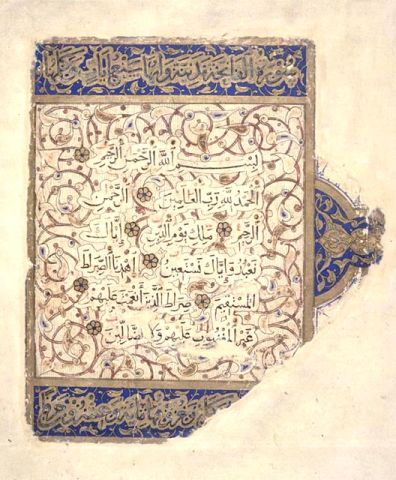
سورة
النبأ
'The
News’
From
Introduction of Yusuf Ali:
“This
This beautiful Makkan Surah is not quite so early as the last (Sura
77) nor quite so late as Sura 76, but nearer in time to the later
It
sets forth God's loving care in a fine nature passage, and deduces
from it the Promise of the Future, when Evil will be destroyed and
Good will come to its own; and invites all who have the will, to seek
refuge with their Lord.
From
Introduction of Muhammad Asad:
“THE
THEME of this undoubtedly late Meccan surah is the continuation of
human life after bodily death, i.e., resurrection and God's ultimate
judgment. Its conventional title is derived from the word naba
appearing in the second verse.”
COMMENTS:
This
Chapter takes its name from the نبأ
عظيم /
'tremendous news' mentioned twice in Qur'an, answering with great
eloquence and imagery what we came across earlier, when' an inquirer
inquired as to 'impending suffering' HQ
70:1
1. This
Chapter begins with Verses 1-3, asking a rhetorical question,
referring to something which people (the Deniers of Mecca) were
wondering/ asking about: They were differing/ disputing on the
subject of 'The
Great News'
which later, Verse 17 calls: 'Yawm al FaSl/ the
'Time/ Day' of Differentiation/ Distinction/ يوم
الفصل'.
Verses
4- 5 assert that 'No,
but indeed, they shall come to know
(all about the subject they dispute). Then/
In time, no, but indeed, they shall come to know!'
The
form of the emphatic 'No, but indeed/ kallaa/كلّا'
appears in
the Qur'an
33 times each time highlighting
an important assertion.
In
Verses 6- 16 (speaking
directly to listeners in the second person plural 'you'), we
find listed a few of God's bounties upon us, and we are asked whether
or not God had rendered the earth a smoothened cradle (for us)? And
the mountains as 'pegs' (into the earth, keeping it stable)? Then it
gets personal, asking about Him having created us in pairs, and made
(rendered) our sleep a repose, the night a robe/ garment, and our day
a living/ livelihood (see HQ
25:47). Then further questions regarding the seven firmaments
built above us, and the flaming Torch (indicating the sun; quite a
'Scientific Marvel' for it to be so accurately described at that
time), and the gushing water, made to descend upon us from the
'Compressors/ Mu'Siraat/معصرات'
(another
Scientific Marvel), with which seeds and plants are brought out,
and gardens intertwine (i).
Remember,
dear Readers, what we said earlier about 'questions' in the Qur'an.
The Qur'an interacts with us, and every question that it asks its
Recipients will get its response, even in their silence... so we
should say 'Yes!' to ourselves right here. If we Cognizant Humans
thought about these bounties, we would indeed be humbled to the
thought that:
Life
on earth as we know it, can NOT be all there is for us. Our presence
here can't be just to subsist.. to eat.. sleep.. congregate..
propagate.. age.. and die.. like the animals and plants.. as if human
Awareness had no worth.
There
is no way that The Creator could have intended the constructs of
'right and wrong,' 'justice,' and 'recompense' and His 'Flawless
Standard of Accountability' to remain mere, unrealized words.
Within
the space of our existence, because there is a Perfect and Just
Creator, and because we are Cognizant, highly Aware Beings, we know
that Justice must reign.
And,
dear Reader, it shall.
Let
us try to be of 'The Successful' at that time.. (put 'FalaaH' in
'Search').
- Verses 17 onward are all about the Hereafter.While Verse 17 assures us that The 'Day' of Distinction (ii) shall be a 'Designated time/ place'/ Meeqaatiii, we find Verses 18- 20 speaking of the 'Quickening of Events' (put 'Soor' in 'Search') after which all of us (second-person pl. 'you') shall come forth in groups/ crowds (فوج).Then, what a cataclysmic scene appears to us in Verses 19- 20:We are told of the Exalted Expanse being 'opened' and becoming gateways, and the mountains being 'moved' so that they spread and sink into the earth (iv 'saraab' is more than a 'mirage').
- Verses 21 -30 are of dire Dissuasion, as they speak of the Abyss (Jahannam) lying in wait for 'The Overbearing/ Tyrannical Persons' (put 'Ttaghaa' in 'Search'), a Destination for them, wherein they shall remain 'in holding/for ages' (vحقب). These verses speak of the foul liquids they shall be drinking as fitting recompense seeing that they were not anticipating 'Reckoningvi' and they widely belied God's Signs, while God 'aHSaa' everything in a Compilation (as explained earlier, 'aHSaa' is about evaluating each part with reference to the whole).This section ends with an invitation to these 'Tyrants/ Taagheen' to 'taste' (eat-up on this foulness), for they shall only be given more suffering (vii).
- With regard to 'sensual imagery,' we've already spoken of 'QaaSsiratul Ttarf' -put words in 'Search'- and had a very important discussion on this topic.Come on, people:--Don't the words being about 'desirable females' for seemingly 'male-only' inhabitants of the Garden, seem neither fair nor logical to the other half of 'The Faithful' populace, who seek their Lord of Infinite Grace, and are promised His Garden and bliss?--Did the Qur'an EVER downgrade females in spiritual worth and blame them for greater sin (as other well-known Scriptures seem to do)?--When the Qur'anic verse mentions actual acts of a sexual nature (in life), does it give sensual reference and name body-parts (as other well-known Scriptures seem to do), or does it allude to such acts sublimely, using dignified words?--If we truly believed that God is just and unbiased, shouldn't we also feel certain that such an explanation is wrong?ATRAAB أتراب:From the root-verb 'taraba,' we get the noun 'turaab' -the dust/sand of the earth. Different derivatives indicate different meanings, and context helps clarify:'Atraab' refers to things which are equal (like level grains of sand), or to what is abundant (like countless grains of sand). Now although 'atraba' (which this verse is about) indicates equality/plentifulness, another derivative 'taraba' would indicate being 'dirt-poor' ..! This is Arabic, where each syllable has a meaning!CONCLUSION:We said earlier that it is okay for us to feel uncertain as to what/who these images allude to, because it is far better to accept the fact that our knowledge and understanding of analogous/allegorical verses is limited, than to allege knowing exactly what this means!
4.
Verses 31- 37 are of beautiful Persuasion, speaking of the Aware,
and the Deliverance that is deservedly theirs:
Their
dwelling is in gardens and vineyards.
Their
companions are 'well-heeled'/ eminent/ prominent,
well-matched/prosperous.
Their
consumables are full-to-the-brim.
Their
conversation-partners offer what is neither false nor
superficial.
So
the scene is one of pure enjoyment of what is both abundant AND
genuine. The fact that some people have included their
'wishful-thinking' into the explanation of these verses, while
others have taken that for granted, does not make it true.
We
shall now take a look at Verse 33 which is made up of only TWO words
which have taken imaginations on far-fetched journeys:
KAWA'EB
كواعب:
The
word 'kawaa'eb' literally means 'well-heeled'
from 'ka'b' which refers to the prominence/ protrusion of the
ankle-bones (base of tibia on inner side, base of fibula on outer
side. See
Qur'anكعب
where
it tells us that our feet should -up to that point- be included in
the 'wudu/ ritual cleansing' for prayer).
Any description related to this word indicates prominence mainly,
and perhaps prosperity, as we can see from the definition below (viii).
But
the problem we face today is that the term 'kawaa'eb' is being
repeated and promoted by many 'scholars' (especially among young
Muslim men) as a sensual description of young women's bust-line. In
fact, the word itself is quite innocent, much like the term
'well-endowed,' which English-speaking men might say among
themselves with a wink. It is no more than sexual innuendo. To be
fair though, many traditional Commentators have asserted that
although 'kawa'eb' is about 'prominence,' it is not the 'prominence
of the bosom' which is referred to, but the 'prominence of womanhood
and the coming of age.'
Take
a look at all
47 English explanations, and note that -except for the
'Progressive Muslims, who explain these two words as 'grapes that
are ripe' (ix)-
everyone relied on the COMMON understanding of the word and its
usage at a certain point in time. They either emphasized the youth,
the voluptuousness, or just the companionship of these 'maidens.'
No one referred to the Arabic root-verb of the word (كواعب)
'kawa'eb',' or to the fact that feminine-plural nouns refer to
ANYTHING plural, and therefore might NOT be related to
humanlike-females at all.
Take
a look at a good example (قواعد)'
'qawa'ed' from the Qur'an, with
similar grammatical structure (x).
Perhaps
the toughest thing for us, as we attempt to understand such analogous
‘mutashaabihaat’ verses, is to restrain our imaginations so as to
stay within the parameters offered. And although we cannot help
but wonder, we must make sure that our voices and our pens DO NOT
WANDER, which is why we are told to seek refuge in God.
Still
speaking about The Aware/ Al Muttaqeen, Verses 36 states that this is
their recompense, from your
Lord, an Award and a Reckoning. Notice the address 'your Lord,'
speaking directly to the listener/ the Messenger.
Verse
37 concludes this scene by elaborating: 'Lord of the Exalted Expanses
and the Earth, and what is between the two; The Unique Creator/ Al
RaHmaan, they do not possess, from Him, any (right to) dialogue
'khiTaab' (xii).
6. Verse 38 speaks about the Time/ Day when 'The Spirit' and the
Custodians/ Angels shall rise/stand forth in (unison, in an
unbroken) file, not speaking, except for whoever The Unique Creator
has 'athina'/ made known that He shall listen to,' and (then) speaks
with right purpose.
Note:
–'Al
RaHmaan' is The Unique Creator, as we saw, time and time again,
throughout our Blog.
--Al
RooH/ The Spirit is probably the Custodian/Angelic Messenger who
delivers exclusive information from God to His Messengers, believed
to be Angel Gabriel.
At
the end of this chapter we are called back to its beginning, where
people were asking about the 'Great News' which turned out to be -as
we discovered- Yawm al FaSl/ the
'Time of Differentiation/ Distinction,' with its suffering for some
and bliss for others.
Verse
39 wraps up, asserting that, THAT 'Time' is in fact, 'THE True/ The
Just/ Al Haqq,' urging whoever wills to make a 'return' unto his
Lord (here we should intend, in our hearts, that we do in fact
'will' to make that return).
The
final verse cautions listeners of a suffering drawing near, warning
them of the time when each person shall observe what his hands have
brought forth and presented (for him), and the Denier shall say: 'I
wish I were dust!'
Peace
unto all!
__________________________
'Yawm
al FaSl/ the
'Time/ Day' of Differentiation/ Distinction/ يوم
الفصل'
is a 'Meeqaat/ (mentioned six
times in the Qur'an).
We
had explained 'meeqaat' earlier as 'recognized end/ limit to a great
event.' I think 'designated time/ place' is easier to understand.
سرب:
يدلُّ
على الاتّساع والذهاب في الأرض.
من
ذلك السِّرْب والسُّرْبة، وهي القطيع
من الظِّباء والشاء.
لأنَّه
ينسرب في الأرض راعياً.
وقال:
يعني
الطريق.
ويقال
انسرَبَ الوحشيُّ في
سربه.
ومن
هذا الباب:
السَّرَب
والسَّرِب، وهو الماء السائل من المزادة،
وقد سَرِبَ سَرَباً.
بفتح
الراء وكسرها.
ويقال
:
سَرَّبت
القربةَ، إذا جعلتَ فيها ماءً حتى ينسدّ
الخَرْز.
والسَّرْب:
الخَرْز؛
لأن الماء ينسرب منه، أي يخرج.
والسارب:
الذَّاهب
في الأرض.
وقد
سَرَب سروباً.
قال
الله جلَّ ثناؤه:
{وَسَارِبٌ
بِالنَّهار}[الرعد
10].
والمَسْرَبة:
الشّعر
النابت وسط الصدر، وإنما سمِّي بذلك
لأنَّه كأنه سائل على الصدر جارٍ فيه.
فأمّا
قولهم:آمِنٌ
في سِرْبِه، فهو بالكسر، قالوا:
معناه
آمنٌ في نفسه.
وهذا
صحيح ولكن في الكلام إضماراً، كأنه يقول:
آمِنَة
نفسه حيث سَرِب، أي سعى.
وكذلك
هو واسع السِّرب؛ أي الصدر.
وهذا
أيضاً بالكسر.
قالوا:
ويراد
به أنّه بطيء الغضب.
وهذا
يرجع إلى الأصل الذي ذكرناه.
يقولون:
إنَّ
الغضب لا يأخذ فيَقْلَق؛ وينسدّ عليه
المذاهب.
حقب:
يدلّ
على الحبْس.
يقال
حَقِب العام، إذا احتبس مطرُه.
وحَقِب
البعيرُ، إذا احتبسَ بولُه
ومن
الباب الحَقَبُ:
حبلٌ
يُشَدّ به الرحْلُ إلى بطْن البعير، كي
لا يجتذبه التَّصدير.
فأمّا
الأحقبُ، وهو حِمار الوحش، فاختُلِف في
معناه، فقال قوم:
سمِّي
بذلك لبياض حَِقْويه.
وقال
آخرون:
لدقّة
حِقوَيه.
والأنثى
حَقْباء.
فإنْ
كان هذا من الباب فلأنه مكانٌ يشد بحِقاب،
وهو حبلٌ.
ومن
الباب الحقيبة، وهي معروفة.
ومنه
احتقب فلانٌ الإثم، كأنه جمعَه في حقيبةٍ.
واحتقَبَه
من خَلفه:
ارتدفَه.
والمُحْقَِب:
المُرْدَفِ.
فأمّا
الزمان فهو حِقْبة والجمع حِقَب.
والحُقْبُ
ثمانون عاماً، والجمع أحقاب، وذلك لما
يجتمع فيه من السّنين والشّهورِ.
ويقال
إنَّ الحِقابَ جبلٌ.
ويقال
للقارَةِ الطويلة في السماء حقباء.
قال:
:حسب:
أصول
أربعة:
فالأول:
العدّ.
تقول:
حَسَبْتُ
الشيءَ أحْسُبُه حَسْباً وحُسْباناً.
ومن
قياس الباب الحِسْبانُ الظنّ، وذلك أنَّه
فرق بينه وبين العدّ بتغيير الحركة
والتّصريف، والمعنى واحد، لأنّه إذا قال
حسِبته كذا فكأنّه قال:
هو
في الذي أعُدُّه من الأمور الكائنة...
من
الباب الحَسَبُ الذي يُعَدُّ من الإنسان.
قال
أهل اللغة:
معناه
أن يعد آباءً أشرافاً
ومن
هذا الباب قولهم:
احتسب
فلانٌ ابنَه، إذا مات كبيراً.
وذلك
أنْ يَعُدّه في الأشياء المذخورة لـه
عند الله تعالى.
والحِسْبة:
احتسابك
الأجرَ.
وفلان
حَسَنُ الحِسْبة بالأمر، إذا كان حَسَن
التدبير؛ وليس من احتساب الأجر.
وهذا
أيضاً من الباب؛ لأنه إذا كان حسنَ التدبير
للأمر كان عالماً بِعِدَادِ كل شيءٍ
وموضِعِه من الرأْي والصّواب.
والقياسُ
كله واحد
والأصل
الثاني:
الكِفاية.
تقول
شيء حِسَابٌ، أي كافٍ.
ويقال:
أحسَبْتُ
فلاناً، إذا أعطيتَه ما يرضيه؛ وكذلك
حَسَّبْته.
والأصل
الثالث:
الحُسْبَانُ،
وهي جمع حُسبانَةٍ، وهي الوِسادة الصغيرة.
وقد
حسَّبت الرّجلَ أُحَسِّبه، إذا أجلسته
عليها ووسَّدْتَه إياها
ومنه
قولهم أصاب الأرض حُسبان، أي جراد.
وفُسِّرَ
قوله تعالى:
{وَ
يُرْسِلَ عَلَيْهَا حُسْبَاناً مِنَ
السَّمَاء}
[الكهف
40]،
بالبَرَد.
والأصل
الرابع:
الأحسب
الذي ابيضَّت جِلدتُه من داءٍ ففسدت
شَعرته، كأنَّه أبرص
وقد
يتّفق في أصول الأبواب هذا التفاوتُ الذي
تراه في هذه الأصول
الأربعة
The
verb ‘Ttaghaa’ has to do with literal overpowering,
overwhelming, and breaching boundaries. Such domineering
persons, overwhelm and crush others without concern. See the
39
times this word and its derivatives
appear
in the Qur’an, 6 times as a plural noun /طاغون
طاغين;
8 times as ‘Ttaghoot’
طاغوت-
;
6 times as the root-verb Ttaghaa
طغى-.)
كعب:
يدلُّ
على نتوٍّ وارتفاعٍ في الشيء.
من
ذلك الكَعْب:
كعب
الرّجل، وهو عَظْم طرَفَيِ السّاق عند
ملتقَى القدمِ والسّاق.
والكعبة:
بيتُ
الله تعالى، يقال سمِّي لنتوِّه وتربيعه.
وذو
الكعَبَات:
بيتٌ
لربيعة، وكانوا يطوفون به.
ويقال
إنَّ الكَعْبة:
الغُرْفة.
وكَعَبَتِ
المرأةُ كعَابةً، وهي كاعِبٌ، إذا نتأ
ثَديُها.
وثوبٌ
مكعَّب:
مطويٌّ
شديد الإدراج.
وبُردٌ
مكَعَّب:
فيه
وَشْيٌ مربع.
والكعْب
من القَصَب، أنبوبُ ما بين العُقْدتَين.
وكُعوب
الرُّمح كذلك.
والكَعْب
من السَّمن:
قِطعةٌ
منه.
ixQ.
Since we are not certain what/ who these 2 words refer to, could it
be 'grapes'?
A. I don't think so, simply because vines were
already mentioned in a previous verse as (a'naab), and the second
word 'atraab' must fit in with the recurrence of this word in other
verses, which do not seem to refer to fruit.
Here
we see the word 'qawaa'ed' which refers twice to structures-in-place
(such as foundations) and once to women (who are sedentary). Note
how the Qur'an specifies that it is referring to the women.
[i]
ترب:
أصلان:
أحدهما
التّراب وما يشتقّ منه، والآخر تساوي
الشّيئين.
فالأول
التُّراب، وهو التَّيْربُ والتَّوْرَاب.
ويقال
تَرِبَ الرجل إذا افتقَرَ كأنّه لصِق
بالتُّراب، وأتْربَ إذا استَغْنى، كأنّه
صار لـه من المال بقَدْرِ التُّراب،
والتَّرباء الأرضُ نفسها.
ويقال
ريحٌ تَرِبَةٌ إذا جاءَت بالتُّراب
وأمّا
الآخر فالتِّرب الخِدْن، والجمع أترابٌ.
ومنه
التَّرِيب، وهو الصَّدر عند تساوي رؤوس
العظام
فالخِدْن:
الصّاحب.
يقال:
خادنْتُ
الرّجُلَ مخادنَةً.
وخِدْنُ
الجارية محدِّثُها.
قال
أبو زيد:
خادنت
الرّجلَ صادقته.
ورجل
خُدَنةٌ:
كثير
الأخْدان.
خطب:
الخاء
والطاء والباء أصلان:
أحدهما
الكلامُ بين اثنين، يقال خاطبهُ يُخاطِبه
خِطاباً، والخُطْبة من ذلك.
وفي
النِّكاح الطّلَب أن يزوّج، قال الله
تعالى:{لاَ
جُنَاحَ عَلَيْكُمْ فِيمَا عَرَّضْتُمْ
بِهِ مِنْ خِطْبَةِ النِّساء}
[البقرة
235].
والخُطْبة:
الكلام
المخطوب به.
ويقال
اختطب القومُ فلاناً، إذا دعَوْه إلى
تزوج صاحبتهم.
والخطب:
الأمرُ
يقع؛ وإنما سُمِّي بذلك لِمَا يقع فيه
من التَّخاطب والمراجعة.
وأمّا
الأصل الآخرَ فاختلافُ لونَين.
قال
الفرَّاء:
الخَطْبَاء:
الأتان
التي لها خَطٌّ أسودُ على مَتْنِها.
والحمار
الذكر أخْطَبُ.
والأخطَب:
طائر؛
ولعله يختلِف عليه لونان.

